A study of the ancient practice of... spitting
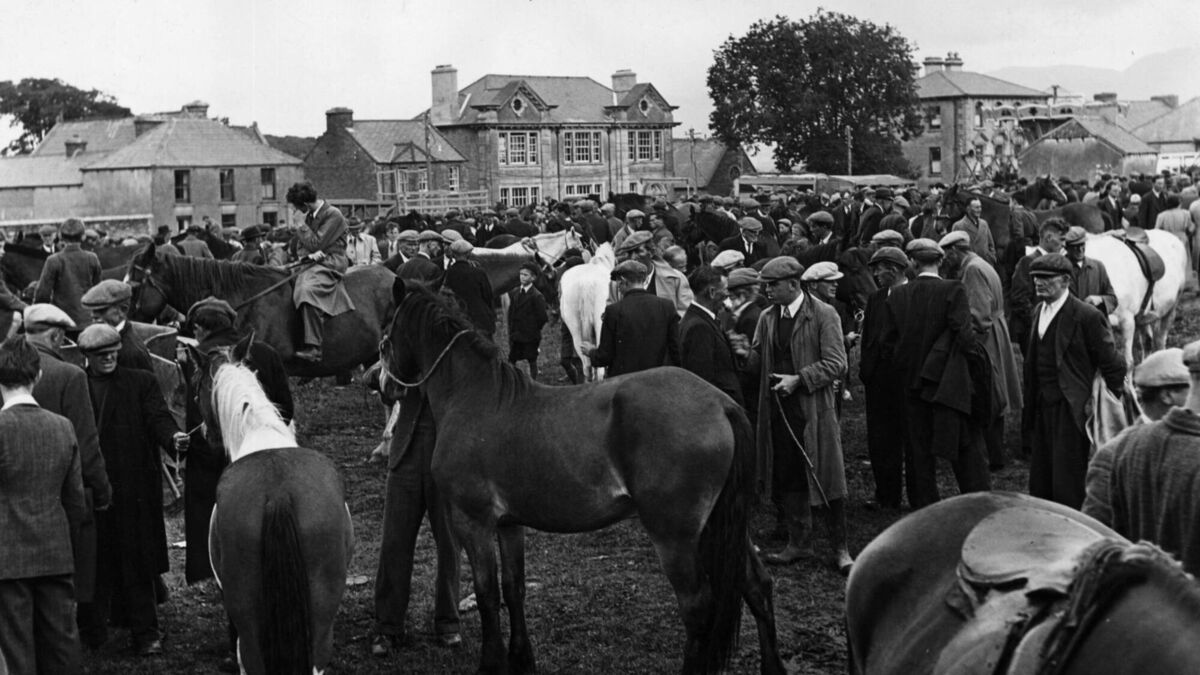
Deals are made at the Killorglin Horse Fair in County Kerry in August 1951. Picture: Fox Photos/Getty Images
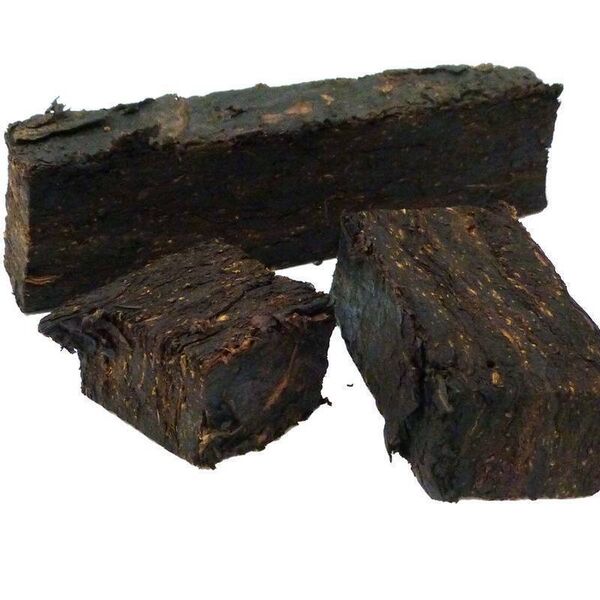
Firstly, I am guilty... guilty as can be! As a proud pipe smoker of 40 years (retired now), and a former “chew-tobacco” on very odd occasions, I frequently had to spit out the bitter juices of the tobacco plant!
Now that I have humbly confessed my decadence, please bear with me while we elucidate further on this rare topic of debate. Don’t put on your 'panama of perfection' and abandon me while I struggle to clarify the complexity of the ancient practice of spitting. It is though fair to say, spitting is considered by many 'a taboo topic'.
The ancient Greeks believed spitting was an antidote to witchcraft and from there originated the custom and practice of spitting for luck. They believed that spitting banished bad luck, the devil, Lucifer himself and misfortune of every sort. It may seem crazy to people now, but in that era and ancient culture, spitting was regarded as a sure-fire method of protecting people.
Globally, spitting was quite common, especially in rural communities. Parts of China traditionally were strongly associated with the habit. Strangely, the act of spitting across the globe has two very different interpretations, one associated with 'good luck' and protection from the 'evil eye', etc, while the other association is with insult, anger and hatred!
When I was a young fellow, my father was a pipe smoker as was his father before him. Quite often, on the odd occasion when he got a chance to relax, there would be a shock of spits on the concrete floor dotted around his chair. If one of his contemporaries, also a pipe smoker, visited our house, then there would be a double shock of spits visible on the floor. Needless to say, it was an abstract art creation that did not impress my mother.
It is difficult to reveal just how regular spitting was in my childhood years, especially among rural men. Two generations ago it was common to see folk spitting on their hand before extending a warm shake hands with a friend.
“Well, it’s yourself that’s in it! It’s great to see ya” was common banter accompanying a spit-adorned outstretched hand.
At the traditional monster fairs and markets of yesteryear as a deal was being made, a middle man, with one hand, would firmly grasp the hands of the seller and the buyer to be. He would then spit on his other hand and slap it down firmly on the hands he had clinched urging the conflicting parties to 'split the difference and seal the deal'. This was common practice.
When the bargain was made, a 'luck-penny' was given by the seller to the purchaser. The custom then was that the seller would spit on the coins to ensure the buyer had 'good luck' with the animal or the produce he had purchased (perhaps animal feed).
House card games of 25 were especially popular in Mayo and indeed in Connacht and many rural parts of Ireland. It was pretty regular to see a player niftily spitting on his hand of cards to bestow good luck before he viewed them. Also if a player was down to his last stake, a penny or small bit, he would spit on it for luck before placing it on the board. He wanted urgently to win and be able to remain at the table. There was little saliva in those spits, just a miniature amount, an almost dry version like a snappy cat might omit.
Before cigarettes became the norm, clay pipes or dúidíns were the main means of smoking in Ireland. These dúidíns were popular for over 300 years with both men and women indulging in the habit. At the Museum of Country Life in Turlough Park there is a picture of a woman smoking a clay pipe in the 1800s. Those particular pipes are one of the most common artefacts found in Irish archaeology.
Now if the male of the species didn’t find tobacco bitters wholesome enough to swallow then it is fair to assume ladies didn’t either. They too hastily dispatched the bitters by spitting!
A neighbouring woman I knew six decades ago (now surely a saint) used to test the heat of her frying pan with a spit. Perhaps she didn’t have any lard in the house, but then she didn’t need lard, as home produced rashers in those days (no chemicals added) would fry in their own gravy.
If there was wagering or a competition for spitting, my money would have been on that lady. She would sit back arms folded on a sturdy chair, about five feet away from the open flaming fire. She could correctly aim a sharp spit that would penetrate the flame and fizz for some seconds on the fire block at the back of the fireplace.
Out of doors she excelled entirely. While conversing with my mother, I often witnessed her inhale deeply and launch a spittle rocket that would trip a traveller at forty feet.
And what about the ironing, a most tedious task always left to the women folk. Before the electric irons were devised, the old 'Sad' iron was heated in the fire on a bed of hot coals. Invented first in China, it became highly popular in Europe and America from the 17th to the 20th centuries. The only method to discover whether it was hot enough for its purpose was for the user to launch a deft spit and see if it sizzled.
Incidentally, poor families could usually only afford one iron – wealthy families had many irons – hence the term 'too many irons in the fire' came into vogue.
Readers might find this unbelievable and consider it shocking, but here in Mayo and in certain parts of Ireland, there was an ancient custom of spitting on babies. It was regarded as the right thing to do on holding a new-born baby for the first time. Usually, the old lady (a Cailleach) would do it covertly and utter a small blessing as Gaeilge. It had no malicious intent whatsoever but it was an age-old traditional protective practice against the evil forces of the otherworld, fairies, goblins and the puca-man.
Now... let’s examine the practice of spitting today! Golf has long been acknowledged as a prime gentlemanly sport. Close observation will enlighten that many golfers frequently spit and the sport’s governing body has acknowledged that modern golfers have a strong urge and tendency to spit. One very prominent and perhaps the world’s most famous golfer has been fined for the offense.
And so too with some of the greatest tennis players of all time - many of the greats of both sports - do indeed indulge prolifically in ridding their oral cavity of excess saliva due I am certain to the tremendous exertions their sport entails.
Jockeys also are almost certain to spit. With races ran at 30mph approx. and sometimes in wet conditions they are sure to inhale muddy substances. Surely convention shouldn’t expect them to swallow it? Premiership soccer players are seen to spit regularly as indeed do ugby and GAA players (ladies included), understandable perhaps with the intense physical exertion on their bodies during training sessions and matches.
In 1966 in Mississippi, USA, the first national Tobacco Spitting Contest was held as a fundraiser. Crowds of 3,000 or 4,000 attended. Distances of over 60ft were recorded and are listed in the Guinness Book of Records. Though Tobacco Spitting Contests have decreased in the USA due to diminished smoking and cancer-related concerns, cherry pit (seed) and Ping Pong ball spitting competitions currently take place in the USA, Canada, Germany and France.
The cherry pit is very small, slippery and easy to blast-off. According to the Guinness Book of Records, the record cherry pit spitting distance was 28.51 metres (93 feet and 65 inches) and was set in 2004 by Brian 'Young Gun' Krause.
A memorable spitting scene took place in a famous 1976 Western movie, . Clint Eastwood, who played 'Josie Wales', is seen chewing tobacco which was crushed with his teeth to release the flavour and nicotine. Finally, 'Josie' spits the remaining offending juices into the eye of an accompanying dog. A mean act, the scene wouldn’t be acceptable today because animal rights folk would be correctly up in arms.
In the past, many commercial and retail outlets locally, nationally and internationally had 'spittoons' to accommodate those who wished to spit. Spittoons were common in public houses in Ireland up to the late 1950s.
'No Spitting' signs were erected in housing estates and on streets in Dublin in the 1950s. Health authorities discovered that after a spit dried out, the Tuberculosis survived and became a dust particle. It was a sensible and justified health prevention measure when Tuberculosis was such a major cause of illness and death.
Some younger boys currently indulge in spitting because they consider it 'cool and macho' and they witness their sporting heroes do it on TV. Spitting, especially at another human being, is always totally unacceptable, repugnant because it implies anger, hatred and contempt.
Covid-19 and the preventative mask wearing initiatives promoted in recent years have brought a new dimension and awareness. Spitting openly is definitely considered rude and a social taboo in many parts of the world. Yet in some other parts of the world where traditional customs flourish, it is considered normal and socially acceptable.
Overall then the current status of spitting is a conundrum. It is not completely unacceptable in all situations and is understandable according to custom and tradition in some societies, but is totally taboo to many disapproving persons even if it is very natural to many competitive sporting athletes.
Phew! Spitting is a thought-provoking modern-day enigma. I may soon recommission my Peterson Pipe or indulge myself in another bout of bitter tobacco chew!
I am 'The Boss' in our house and I have my wife Mary’s permission to say so! But I doubt if such permission would be forthcoming to recommence the ancient Irish, almost obsolete custom of pipe smoking, tobacco chewing and… er… spitting!
- Sean Hallinan publishes a Facebook page on history and heritage called 'Echoes of Mayo'.