Tenth edition of 'Clann Mhuiris' to be launched
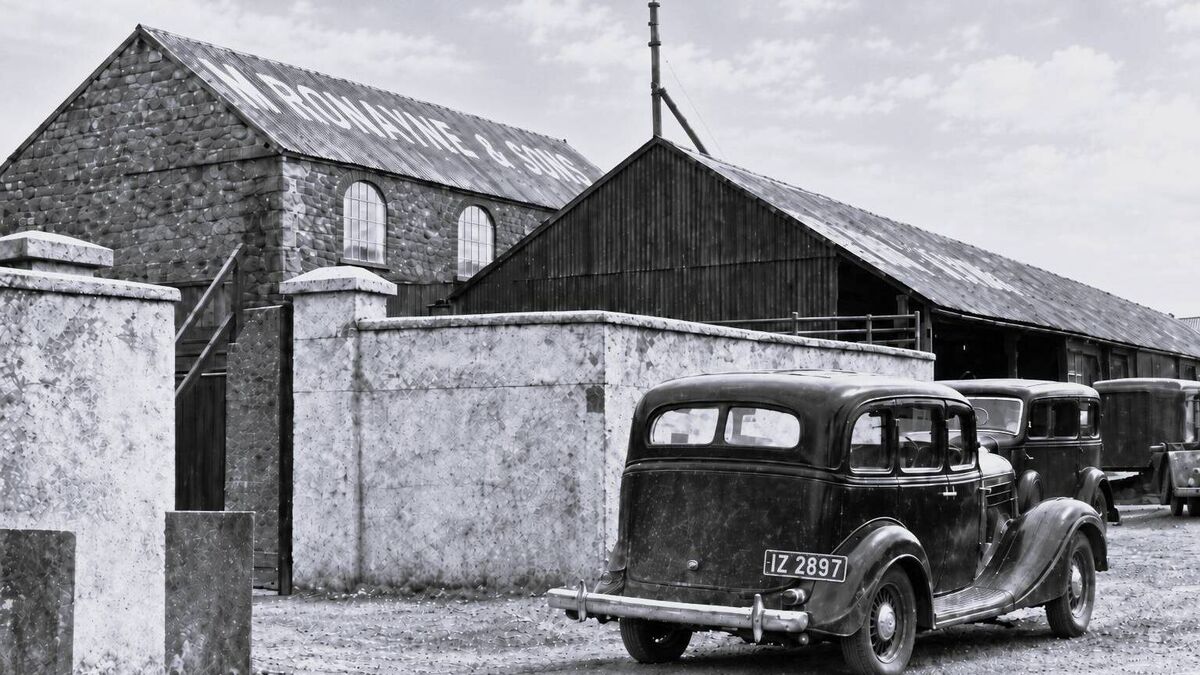
Ronayne’s Brush Factory, pictured here in April 1936, featured prominently in children’s geography books for several decades as one of the chief industries associated with Claremorris. It was located at the railway station where the manufactured brushes and chairs were entrained for various parts of Ireland. Initially, they also manufactured chairs and special boxes for the safe transport of eggs. The factory was originally established in the early 1920s by Michael Ronayne whose name can be seen in large letters on the roof. It was later taken over by his son, J.J. and continued to employ large numbers of local people right up to the mid 1950s. It is thought to have been the only brush factory in Ireland outside of Varian's in Dublin.
The tenth edition of Clann Mhuiris, the annual journal of Claremorris Historical Society, will be launched by well-known broadcaster and journalist Liamy MacNally at Claremorris Library on this Friday, November 13th, at 7.45pm.
This landmark edition features a wide range of articles exploring the history of Claremorris and the surrounding area, with contributions covering local families, businesses, railways, political history and life in the town over the past two centuries. As in previous editions, the journal opens with a selection of photographs from the Main Street Gathering archives, featuring local people and places, with some images dating back to the 1880s.
Among the photographs is a restored nineteenth-century image of a tenant family on the Carrodoyne House estate near Claremorris, believed to have been taken in the 1870s. The photograph is part of a collection taken by relatives of the estate's then owner, John Charles Sheffield.
Another photograph recalls Ronayne's Brush Factory, which operated at Claremorris railway station from the early 1920s until the mid-1950s. Established by Michael Ronayne and later operated by his son J.J., the factory was a major local employer, producing brushes, chairs and specially designed boxes for transporting eggs. For decades, it featured in children's geography books as one of the principal industries associated with Claremorris.
The Government's announcement that the railway between Mayo and Galway is to reopen has prompted two articles examining the town's railway heritage. Rail historian and campaigner Frank Dawson, whose family has three generations of railway connections, traces the history of the railway in Claremorris and its social and economic importance to the town. The journal also reproduces a memorable account of the closure of the Claremorris to Limerick railway service in April 1976, written by the late Michael Finlan, the celebrated Western Correspondent of The Irish Times.
Two of Claremorris's longstanding business families, the Gilligans and the Kean(e)s, are featured in articles by Pat Keane and Andrea Kean respectively, tracing family connections with the town dating back to the nineteenth century. Jarlath Sweeney examines a recently discovered Claremorris calendar from 1926, containing advertisements for local businesses, while Aishling Cunniffe explores the largely forgotten work of local photographer P. W. Leamy.
Assistant editor Michael Kelly contributes an account of the remarkable life of Claremorris Fenian Michael J. Louden, including Louden's own description of his imprisonment in Galway Gaol following the Fenian Rising of 1867. Another article, entitled 'Hidden History', examines the experiences of a group of Claremorris Republican prisoners incarcerated in England during the 1940s. It includes details of their trial, conviction and the prolonged campaign to secure their release.
John Coakley contributes a detailed study of land and people in Clanmorris between 1838 and 1914, examining changes in landownership and society against the background of Claremorris's growth during the eighteenth and nineteenth centuries.
The publication of the tenth edition marks another milestone for Claremorris Historical Society in its efforts to research, record and preserve the history of the town and its people. With its combination of historical research, family stories and rare photographs, the journal will be of particular interest to Claremorris people at home and abroad.
The launch in Claremorris Library on Friday, November 13th, is open to everyone, and refreshments will be served. Clann Mhuiris costs €12 and will be available from the usual outlets in Claremorris from that weekend. The journal also makes an ideal Christmas gift for anyone with an interest in the history and heritage of the area.