Spurs are engulfed by that sinking feeling
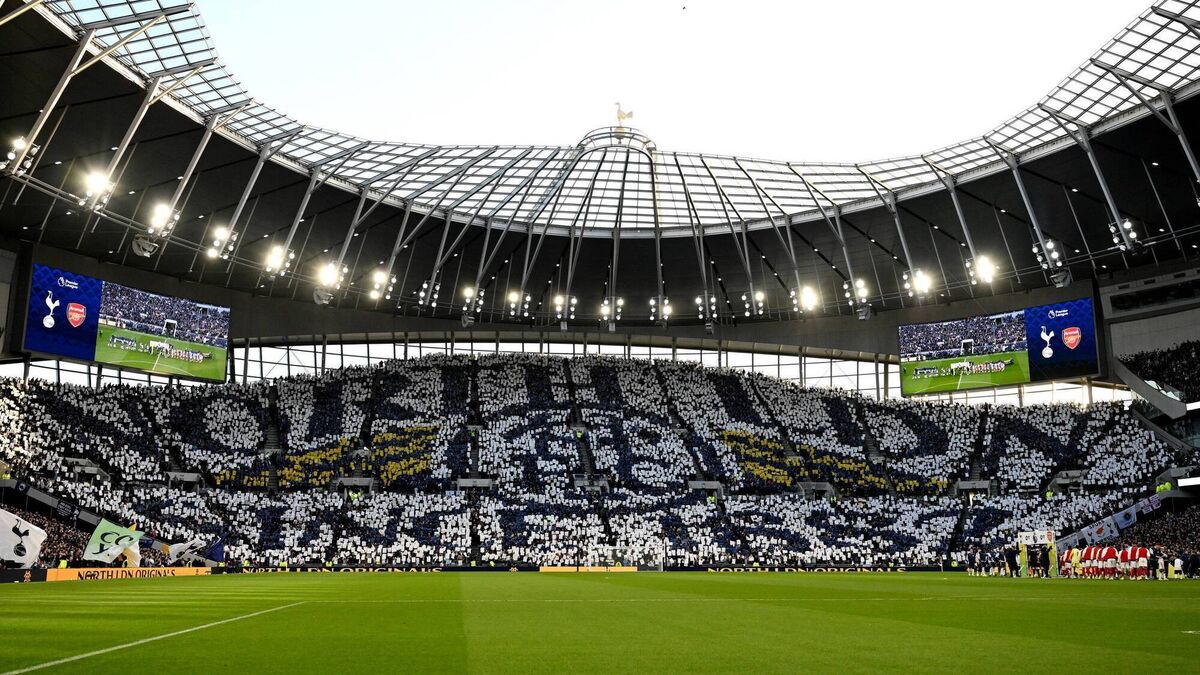
Tottenham Hotspur can boast a remarkable stadium but a less than remarkable team and are in real danger of being relegated from the Premier League to the Championship despite some good form in the Champions League. Picture: Mike Hewitt/Getty Images
The League of Ireland – and, maybe, a World Cup appearance – will satisfy our soccer appetite over the summer months but, in most places, the season is entering the business end, not least in the Champions League, with the last 16 getting underway tonight.
For all the criticism of the Premier League this season and the dour approach of many of the sides in England’s top tier, all six sides competing in the Champions League have reached this stage of the competition. That is as good an indication as any as to the strength of the Premier League when compared to the other top domestic leagues around the Europe.
The strength of the league is also underlined in the fact that, while clubs have struggled domestically, they’ve been able to coast through on the European front.
Newcastle have endured a difficult campaign and remain in the bottom half of the table, yet they’ve advanced with relative ease to this stage for the first time in their history, while Chelsea and Liverpool have also made it through despite being rather erratic at home.
No club sums up the contrast in form better than Tottenham, though. They are 16th in the Premier League table, and just one point outside the relegation zone, yet finished fourth in the league phase of the Champions League. Go figure!
If you were to do a league table of clubs dealing with turmoil this season, there’d be quite a few in contention to be involved.
Liverpool spent close to half a billion pounds last summer, yet they’ve had several mini crises and, less than a year after winning the Premier League title, Arne Slot looks less than secure in the managerial position.
Chelsea got rid of Enzo Maresca to replace him with Liam Rosenior; Manchester United sacked Ruben Amorim and appointed Michael Carrick; Nottingham Forest have gone through three managers and have, for now, settled on Vitor Pereira.
Further north, Celtic and Rangers have also endured calamitous campaigns in Scotland with managerial upheavals, fan revolts and a lot of average football.
Tottenham, though, are top of the pile. The club is now in serious danger of being relegated to the Championship; in fact, they look so rudderless right now that they are arguably the favourites to join Burnley and Wolves in the second tier next season.
As a club, Tottenham have been the butt of many a joke given their lengthy trophy droughts over the years, yet oftentimes it was unwarranted. Certainly in my memory, from the early noughties onwards, Spurs were always highly competitive – the club of Keane, Kane, Defoe and Bale – and always capable of landing a blow, if not quite able to land enough to sustain a title challenge.
Spurs is also the club of Jennings, Hoddle, Gascoigne and Blanchflower. It has been home for some of the biggest names in the game, both on the pitch and on the touchline.
But the way in which Spurs has been run in recent years, in particular, has led to their current predicament. Those chickens – or cockerels might be more appropriate, given the club’s crest – are now coming home to roost.
It’s just shy of seven years since one of the greatest nights in the club’s history, when Lucas Moura scored a dramatic hat-trick in Tottenham’s Champions League semi-final win over Ajax and sent the club through to the decider. Sure, Spurs lost to Liverpool in the final but it was obvious that, under Mauricio Pochettino, the club had a flair and an identity that matched the wishes of the fans: they were daring, exciting to watch and capable of competing with the best.
Since that high, it has been a slow slide to mediocrity and now something even worse than that beckons.
Hindsight is a wonderful thing, but it’s hard not to look at Poch’s departure in 2019 as the turning point. Where was the backing when he needed it?
When he was relieved of his duties after a poor start to the 2019/20 season, Spurs were 14th in the table. Fair enough, you might argue, but surely he had enough credit in the bank at that stage from previous seasons to be given the space to turn it around?
Then came the arrival of Jose Mourinho, who lasted just 17 months. His style of play wasn’t easy on the eye, but it was relatively effective; Spurs finished sixth in his first season, and were seventh when he left just days before a Carabao Cup final meeting with Manchester City. The decision to part company with Mourinho so close to a major final remains a mystery.
Four permanent managers have come and gone since the Portuguese left the building – so too has influential chairman Daniel Levy – and while the club may have the best stadium in England, its form on the pitch has been nothing short of abysmal.
Igor Tudor is the man currently in charge, having been appointed to see things through until the end of the season. He’s a decent manager – having already had spells at the likes of Juventus, Marseille and Lazio – but is he really equipped to deal with what appears to be a sinking ship?
The fact that Spurs felt it was appropriate to appoint him as manager until the end of the campaign, in what is his first taste of English football, suggests complacency on their part. Three defeats on the spin has put an even worse look on things – and with Nottingham Forest and West Ham picking up points and looking sharper by the week, Spurs could well be caught.
Tonight’s Champions League tie with Atletico will provide something a break from the churn of the Premier League, but it could all be in vain if they fail to retain their league status – an unthinkable possibility for a club that regards itself as one of the strongest in Europe.
But right now, it's the reality.