Where to next for Mayo GAA in their CEO quest?
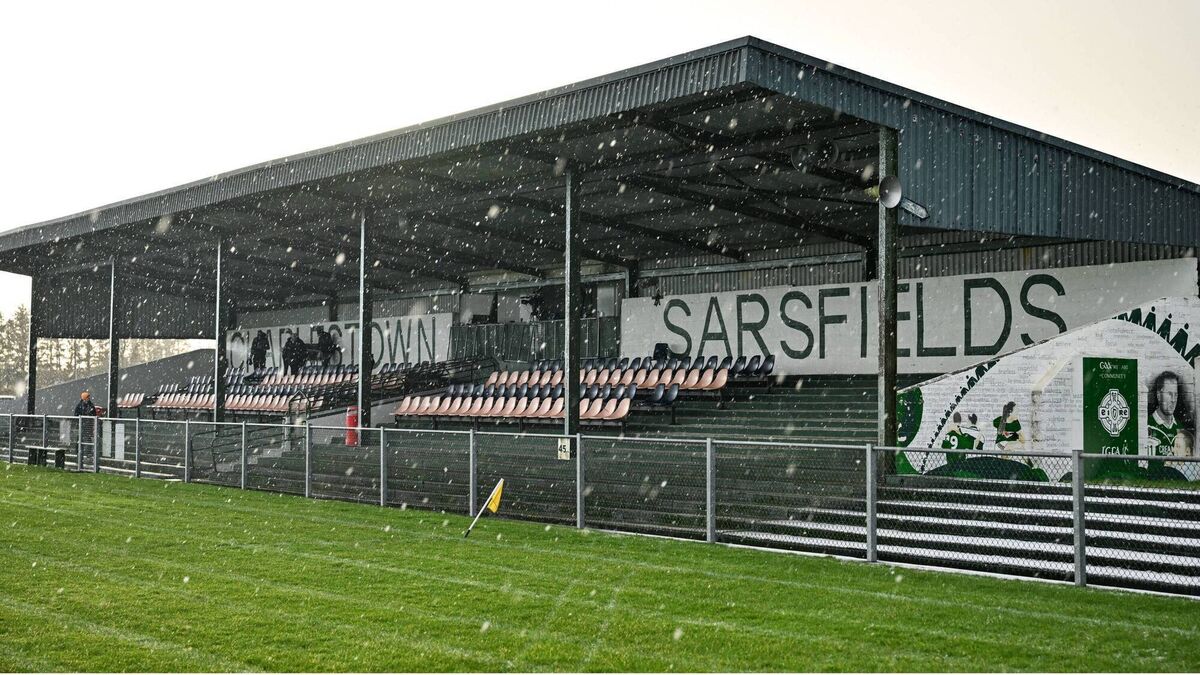
The scene at Fr O’Hara Park in Charlestown as snow falls before last Saturday's FBD Connacht SFL Round 1 match between Mayo and Sligo. Over many years, the link between clubs and Mayo County Board has become badly fractured. Picture: Sam Barnes/Sportsfile
By now the deadline has closed for applications for the role of CEO of Mayo GAA and high-ranking board officials are sifting through applications.
How many will have come through the door is hard to be certain about, but there definitely seemed to be considerable interest in the post when the news was announced in November.
Mayo GAA also said then that they will be using a twin-track approach, that is, seeking applications and targeted approaches or head-hunting.
The two-man committee who explored the need for a CEO and set up an appointment framework, Donal Walsh from Kilmaine and Daithí Gallagher from Castlebar Mitchels, set out very well in November many of the shortfalls that are apparent within the administration of Mayo GAA. This included that Mayo GAA ‘are playing catch-up’ with other counties who already have such full-time roles in place; that more effort needs to be put into administration; the enticement of some younger, newer volunteers; the ‘underdevelopment’ of Mayo GAA’s commercial potential; player pathways in terms of coaching and strength and conditioning development across various underage grades is ‘at times fragmented’.
Donal Walsh outlined how the CEO will initially take over responsibility for governance, finance, commercial revenue, marketing and communication, volunteer engagement and performance development, which is quite a wide remit. One could argue that there needs to also be an emphasis on leadership, vision and cultural change, of which more anon.
The Mayo GAA AGM took place on Sunday, December 7 last and afterwards, Mayo GAA issued a press release regarding a ‘multi-year infrastructure investment plan’, which also focused on the CEO process.
The role of the CEO outlined in the press release had shrunk considerably.
The role will, the press release declared, ‘allow for sustainable and strategic growth in Mayo GAA’s commercial operations while providing professional support to the clubs, volunteers, players, and stakeholders across the county’.
These are, it must be pointed out, important aspects of the role but it would seem like a quite limited role for a CEO. It appears to be more of a commercial director who will also be tasked with reducing the workload on volunteers. Again, not unimportant considerations but a CEO should not just be limited to commercial operations and ‘providing support’ to volunteers.
According to Sport Ireland in their Governance Code for Sport, a CEO of a sports organisation should ‘bring vision, strategic leadership and effective management across all the functions of the organisation to ensure that it achieves its overall aims and purpose as set out in the organisation's governing documents’.
Vision and strategic leadership have been noticeably absent from discussions around a CEO of Mayo GAA but ought to be cornerstones of the role.
It is clear that more full-time roles are needed – this appointment is not before time. Previous efforts were made but were unsuccessful for a variety of reasons.
Mayo GAA do have two full-time roles – Michael Cummins is the administrator while Kevin Fitzmaurice is financial controller.
It is a very shallow staffing for an organisation with an annual turnover of over €4 million.
But one would hope that Mayo GAA do not see this role as merely a commercial manager who can also lighten the workload of officers.
There will be a big commercial imperative coming down the track with plans for a €15 million centre of excellence in Bohola seemingly ploughing on, despite many reservations people have. I have written about it in the past and spoken to countless people across the county and can count on one hand those I’ve spoken to who are in favour.
As an aside, Mayo GAA have said that the clubs will not have to contribute towards the cost of this. Now even if that is the case, for me it spells out the systemic disconnect between the clubs and the board. Whether it is coming out of their finances or not, clubs in the county ought to be very invested in any decision and discussion around such a big financial outlay because their focus ought not to be just on their own internal club but on the county as a whole and the long-term success and viability of Mayo GAA Inc. The passion for the county as a whole is self-evident but, somehow, over many years, the link between clubs and the county board has become badly fractured.
Reigniting that connection ought to be a central theme for any CEO. The CEO will, with Bohola, have a big job of work in front of them from the get go. It is quite possible that the right appointment can make Bohola more financially viable than many of us fear it is right now. But one hopes that if a high calibre candidate comes through that they are given the scope to ‘bring vision, strategic leadership and effective management across all the functions of the organisation’, to quote Sport Ireland.
Central to the CEO role will be a five-person strategic leadership committee (SLC) which was revealed in November. That will consist of the chairperson, secretary, treasurer and two members of the executive. Right now, those five are: Séamus Tuohy, Ronan Kirrane, Valerie Murphy, Daithí Gallagher and Donal Walsh.
They will be the direct point of contact with the CEO and will also be central to the appointment process too.
Mayo GAA have a very transparent and thorough process for the appointment of county team managers, levering both board officials and outside expertise. One would expect that such professional expertise in the form of human resource professionals or high-level industry or business nous will be sought for the interview process. I dare say they ought to then be maintained to ensure a smoother development of the CEO/SLC relationship and kept on board as long as needed.
It was very encouraging to hear Mayo GAA chairperson Séamus Tuohy talk to delegates about whether Mayo GAA should seek, in addition to the CEO, a performance director or a full-time strength and conditioning coach. Tuohy appeared to lean towards the strategic, long-term importance of a performance director, whose role can encompass oversight of strength and conditioning as well as coaching across county teams, schools and even clubs.
It would be a hugely positive step and would lighten one of the aspects ascribed to the CEO role in November.
In the coming weeks we will find out who the new CEO of Mayo GAA is. It will take longer than that to see how successful they are and how well they are enabled to fulfil the role of a CEO or if their responsibility does not stretch too far past a commercial manager.