Harvest of ’51 (Men of Tarmon)

Ryan O'Donoghue of Mayo and Belmullet celebrates after last Sunday's All-Ireland SFC Final at Croke Park where the county's 75 year wait for victory came to a spectacular end. Picture: INPHO/James Crombie
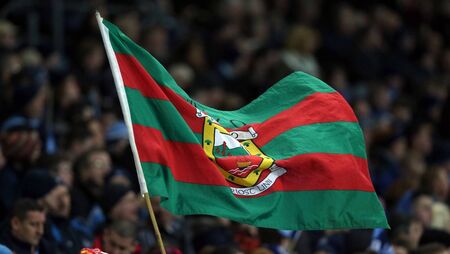
Forests will fall, printing presses will overheat and the blogsphere will bust talking about this great Mayo win. A victory now with a thousand fathers and a host of ‘didn’t I always tell you it would happen’. The above poem is a recognition that sometimes Mayo football is a bit more about Mayo than its ballers. It’s the red in our blood, the green of our lands, the salt from our wild Atlantic, the smell of our heather from our brown bogs, our twin peaks of Nephin and Croagh Patrick that watched us come and go over the millennia.
It’s about people like the father of Kevin Rowland of Dexys Midnight Runners digging timber a trench in 1950s Birmingham whilst trying to learn a Mayo song brought back via a fellow navvy during a shovel break. It’s about two characters in Breandán Ó hEitnir’s brilliant book about the GAA, ‘Over The Bar’. Ò hEithir was in London lodgings, a house owned by a widow. Two Mayo labourers heads glued to the wireless listened as Mayo defeated Louth in the All-Ireland Final of 1950.
On the full-time whistle, two bottles of strout were raised with a hefty ‘Up Mayo!’ Downstairs the landlady’s live-in lodger banged the door with a brush handle telling them to pipe down. The Mayo men were oblivious to his interference until he called them ‘filthy Irish pigs’. Ó hEithir recalled the deathly silence that descended upon the house with that fatal sentence. He surmised that most other men would have taken note of the silence and cleared away. The Welsh man, the landlady’s lover, didn’t read that deadly calm. The door burst open, the broom banger flung over the banister, down the stairs to the roars of ‘over the bar and up Mayo’ as they raced out the door and down to the pub.
Those few words are in memory of the haemorrhage that bled from our county from the 1930s onwards, the droves that left, most who never came back but sent back the stuffed envelopes to those left behind.
A few years ago in a bar in Drumcondra a man from Erris told me that he recalled men from my area, the men from Tarmon breaking their journey to pick the potatoes and snag the turnips, gathering England’s harvest in places like Lincoln and the huge farm lands in the south of England. Having seen Mayo beat Louth, they then got the train to Dun Laoghaire, the boat to Holyhead, the overnight trains to the big English cities, and walked to the farms for work. Just like my own grandfather did in Ayrshire in the 1910s.
Many harvests have grown since 1951 but never fully reaped. This one has been gathered, successfully at last, 75 years later. We have much to be grateful for. Let us now wear it with the dignity shown by the men and women, boys and girls of Mayo who couldn’t remain here but deserved to.
To the Men of Tarmon who reflect who we are from across this broad and beautiful county. Up Mayo… at last.