The early years of the Ballina Salmon Festival
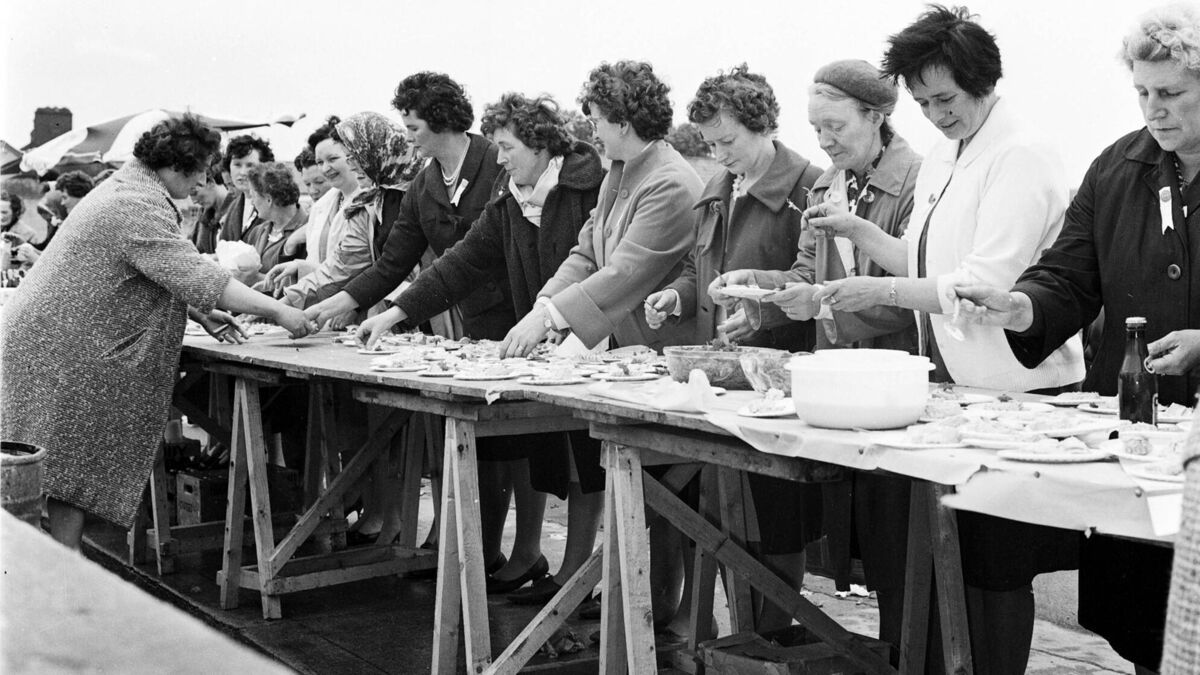
Women serving food at the salmon banquet during the first Moy Festival in 1964. Picture: Western People Archives
The Salmon Festival that we all know and love wasn’t always what it is now. The festival started back in June 1964 and was named The Moy Festival of Ballina. Over the last sixty-two years, the town has seen thousands of festival goers enjoying the various activities, competitions and entertainment, but what exactly was it that started it all.
In 1964, the country’s first salmon festival was held in Ballina, Co. Mayo. Gay Byrne, TV personality, and his fiancé Kathleen Watkins declared the festival open. He expressed that he had high hopes for the festival and “there was nothing to stop Ballina from becoming the centre of a truly great festival”. The festival chairman Ben Walkin, worked aimlessly with the committee to create weeklong festivities for all ages, genders, and interests.
The committee members started preparing in the previous Autumn and put in generous amounts of hard-work, long hours and co-operation with each other. Guinness and the Irish Ale breweries were the main sponsors for the week, providing over £1,000 for prize money per year. The festival in 1965 was opened by Sr Richard Levinge, the assistant managing director of Messrs Arthur Guinness.
Walkin believed that the quiet and peaceful town of Ballina had a lot to offer with a great sense of community spirit. Ballina was a prime target spot for tourists and holiday makers. One of the great aims of the festival was a boost in tourism for Ballina and he knew it would be “the town’s greatest tourist selling promotion”.
The committee wanted to push tourism in the town by making the festival bigger and better each year. The angling competitions were put in place to get anglers into The Moy and hopefully to make them stay. The festival catered towards Dublin visitors as they were given special badges indicating that they were to receive V.I.P treatment during the week. Over the three years, there were thousands of guests in attendance and Ballina soon became a major holiday attraction.
The hospitality staff of Ballina were said to be “friendly” and “welcoming” according to newscaster of Radio Telefís Éireann, Charles Mitchel. The festival was broadcast on television and radio platforms. The committee also pledged to make the third festival the best, after two incredibly successful running's. They did this through the free salmon and Guinness offered, as well as engaging the public in competitions of sport, singing and dancing.
The appeal for the first few festivals was the public house singing and dancing competitions. There were live concerts inside pubs but also in the Market Square. Will’s bar offered free musical instruments and tape recordings for the singers to use during the tournaments. The bar was located in the alley adjacent to Tone Street and Market Lane car park.
The festival was based in Ballina and one of the main reasons for this was The Moy. The river was used for regatta races, organised by the Ballina boat club. They opened the docks for easier access to the river and to allow the judges to see clearer. Water skiing, paddle boating and swimming contests also took place over the week. The most unusual event was the greasy pole competition, where you had to walk along a slippery pole eight feet up from the water. Then you had to pick your salmon at the end. All the people entered in these competitions had the chance to win prize money. For example, the golf tournaments first place prize was £18, and second place was £8.
The Lady of the Moy is the current contest for most prestigious female title during the festival, whereas previously it was known as the Queen of the festival. The queens were picked during the opening dance on the first day in Market Square. In 1964, Mary Cronin took home the prize of a new cocktail dress, matching shoes and a set of brand-new cosmetics. The role of the winner is to hand out prizes to other first place contestants throughout the week. The response to these events was “tremendous” and it was “a great source of encouragement” for the members to know how appreciated they were.
The Brass Band members of Foxford, the Order of Malta and the Catholic Boy Scouts used to parade across the town to St Muredach’s Cathedral for the allocated mass. The clubs and organisations that participated and offered their services helped make the festival into such a raging success that it is today. For example, The Ballina Guild of the Irish Country Women’s association took on the role of serving salmon and Guinness on the opening night held in the towns hall. This event was to welcome the festival goers and tourists that had travelled far to be involved in this yearly tradition. It was also referred to as the salmon banquet.
The biggest names involved in the festival were Guinness and Irish Ale Breweries. In the words of Guinness’s public relations Al Byrne, “we know we are on a winner”. The fishermen and anglers also made their sacrifice for serving their catches for free to allow the town to indulge. There was an emphasis for free food and activities which also allowed the town to be the centre of entertainment.
The attractions of the unique infringements and water festivities is the huge reason for the ongoing popularity of the town's festival. The committee and organisations undoubtedly “left no stone unturned in their efforts to make the festival the premier festival in Ireland”. To this day, the festival is still booming with a lot of the older traditions still taking place. The water sports, dancing and singing are going to be present this year, with newer events taking place also. The famous firework night and Heritage Day will be going ahead as well. This is a special day dedicated to the older ways of life, such as during the 1900’s.