Landowners told they need to tackle dangerous trees
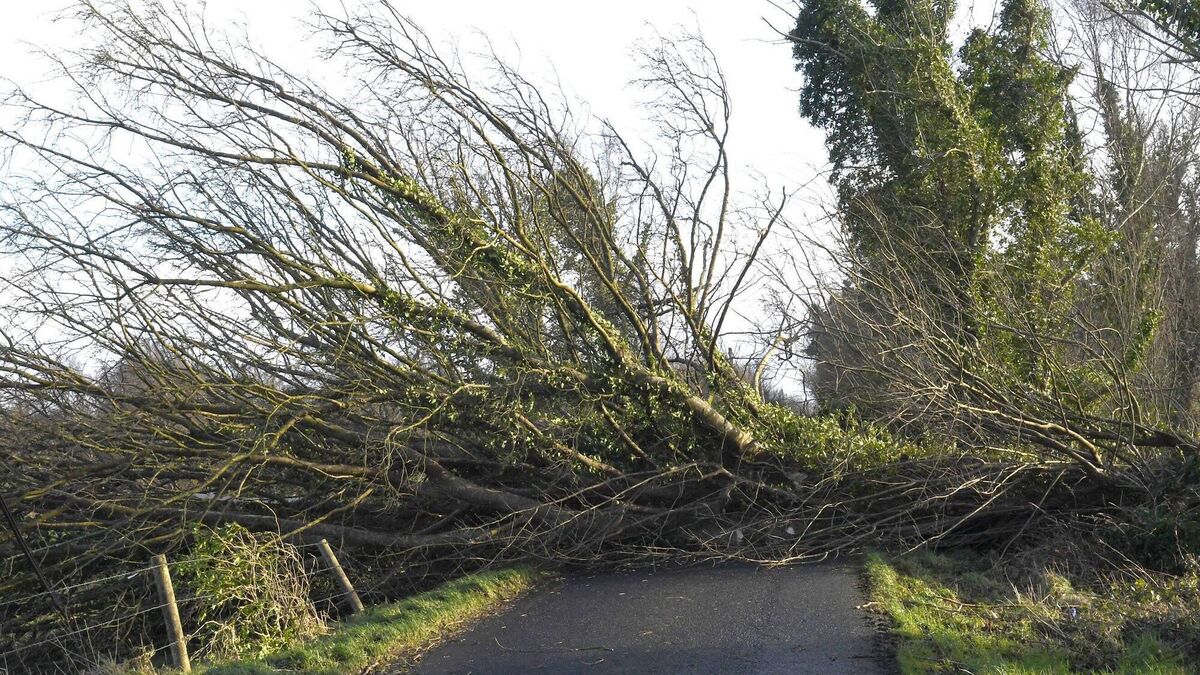
Dangerous trees will only be removed by the council if they are on public property. Picture: David Farrell Photography
Mayo County Council will only remove overhanging and dangerous trees on roadways when they are on public property.
The matter was raised at last week's council meeting by Fine Gael Cllr John O'Hara who claimed the council was doing nothing to remove dangerous trees in the Ballina Municipal District. A lengthy discussion followed during which several councillors identified the locations of dangerous trees and overgrown hedges around the county.
However, Director of Services David Mellett outlined regulations around the issue, reiterating the message that dangerous trees on private property are the responsibility of landowners, who may be subject to prosecution and fines if they are not removed.
“Each municipal district carries out an annual programme of hedge and verge trimming along public roads," he said. "As part of this work, overhanging branches and tree canopies are cut back where required for road safety and where it is practical to do so within the resources available. The purpose of this programme is to maintain road width, sightlines and visibility for road users. It is not intended as a programme for the removal of mature or structurally dangerous trees on private lands.
“The management of mature, damaged or dangerous trees is specialist work and is very different from routine hedge or verge trimming. Depending on the location and condition of the tree, works may require traffic management, specialist equipment, arboricultural expertise, coordination with utility providers and suitably trained contractors. Care is also required to ensure that works do not create additional risks by destabilising the remaining tree. As a result, the cost of dealing with individual dangerous trees can be considerably higher than routine verge and hedge maintenance works."
Mr Mellett explained that under section 70 of the Roads Act 1993, the responsibility for ensuring that trees, hedges and other vegetation do not present a hazard to road users rests with the owner or occupier of the land on which they are growing. Where necessary, the council may require a landowner to take action to cut back, make safe or remove a tree that is considered a risk to the public road.
“The need for financial support for landowners dealing with dangerous roadside trees has been raised on a number of occasions with the Department of Agriculture, Food and the Marine, including recent correspondence from Ballina Municipal District. The response received has consistently been that responsibility rests with the landowner. While supports exist for certain forestry plantations affected by ash dieback, there is currently no dedicated national scheme to assist with the removal of individual roadside trees on private lands.
“In practice, the municipal districts generally engage directly with the relevant landowner where concerns are identified, to make the landowner aware of the issue and to give them an opportunity to address it. In some cases, and subject to available resources, traffic management requirements and the nature of the works involved, opportunities may arise to address issues as part of other programmed maintenance works. While this cooperative approach has helped resolve a number of local issues, it does not change the fact that responsibility for trees on private land rests with the landowner.
“Where a significant risk is identified and the matter is not addressed, the council has powers under the Roads Act to take further action. In situations where a tree presents an immediate and serious danger to road users, the council may undertake the necessary works and seek to recover the associated costs from the landowner.
“The adopted 2026 Roads Programme includes €400,000 from council's own resources for hedge and verge maintenance across the county. Members will be aware that this allocation was increased significantly a number of years ago, in part to allow municipal districts to address issues arising from overhanging branches and tree canopies affecting larger vehicles and the safe use of public roads.
“The funding continues to support that work as part of the annual verge and hedge-trimming programme but is not intended for the specialist pruning or removal of large dangerous trees on private property. The concerns raised in relation to dangerous roadside trees are acknowledged and shared. However, the council must work within both the legislative framework and the resources available to it.
“Where trees are located on private land, primary responsibility rests with the landowner, and the council will continue to engage constructively with landowners and, where practical, seek to facilitate solutions to identified safety concerns.”
- Published as part of the Local Democracy Reporting Scheme.