Knock Airport is like a beacon in the west
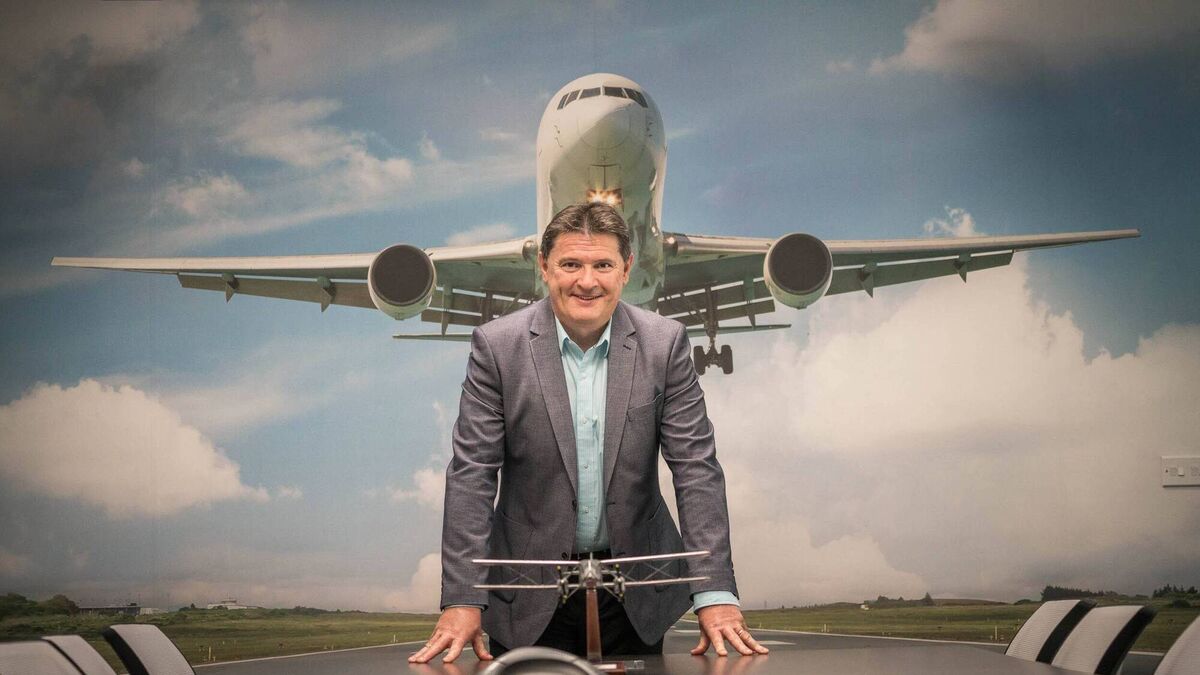
At the helm for the last 17 years, CEO Joe Gilmore has been part of a core management team which has guided the success of Ireland West Airport.
He never met Monsignor James Horan, but the pioneer of Ireland West Airport is foremost in the thoughts of chief executive officer Joe Gilmore when he reflects on the airport’s 40th anniversary.
The Monsignor’s drive and vision created a piece of infrastructure that is a source of pride to so many from the west and, 40 years on, his presence still lingers.
And while being the man in charge at such a beloved airport is a ‘privilege’, it brings its own ‘weight of responsibility’ too for Joe Gilmore.
Because this is not an ordinary airport. It is one that people in this region feel a deep connection to and a real sense of ownership of.
That sense of responsibility runs through everything in Gilmore’s role - from extensive long-term expansion plans to minute, daily operational tasks.
Though they never met, there is a clear alignment in how both men view the airport - not just as infrastructure, but as a driver of regional development.
And Joe Gilmore has never been a man to stand still. Though he is more inclined to credit others, the reality is that the airport has expanded considerably since he came on board as CEO in 2009.
He is now seeking to bring the airport to new heights - surpassing the one million passenger barrier for the first time and all the accompanying development that such a leap will entail.
The airport once considered impossible continues to grow and defy expectations.
Gilmore’s own path to the role was not immediately obvious. A native of Brickens, near Claremorris, he was a talented footballer, winning an All-Ireland Under 21 title with Mayo in 1983.
Though it began near Shannon Airport, his early career was far removed from aviation. After university, he was an engineer with General Electric at Shannon. He then spent six years working with Enterprise Ireland in the Netherlands, followed by a role with Volex in Castlebar.
Volex is a reminder of how transient such roles in multinationals can be.
“You can’t move an airport,” he says simply.
At one point, Volex employed over 1,200 people in Castlebar, but is no longer there at all. The airport is different.
“It is a key piece of infrastructure. It is local, it creates employment, and the benefits remain here. You can see the fruits of your labour much more tangibly too.”
The job is ‘by far’ the most enjoyable he has had in his 40 years of working.
He started at a challenging time in 2009, in the wake of the financial crash and credits the board and the staff for navigating everything ‘from ash clouds to pandemics’.
“At the time, the first task was to bring the airport to a stage where it was accepted as one of the key pieces of infrastructure. Before that, there was always a question as to whether the airport could really deliver and compete internationally on the same basis as Dublin, Cork and Shannon.”
By 2017, the airport had reached a key turning point - it was elevated and positioned in the National Development Plan as one of the four main international airports with the aforementioned Dublin, Cork and Shannon.
“That gave us a platform - pivotal really - to grow, access funding and look at increasing passenger numbers,” he explains.
Joe deflects personal credit and remains very attuned to the legacy of the place and those who have helped make it what it is.
“I have been fortunate to be the flagbearer, because that is really all I am,” he said.
He refers to the ‘iconic team’ that built the airport under Monsignor Horan and the people who kept the airport going through ‘very lean and bleak years’ in the 1990s.
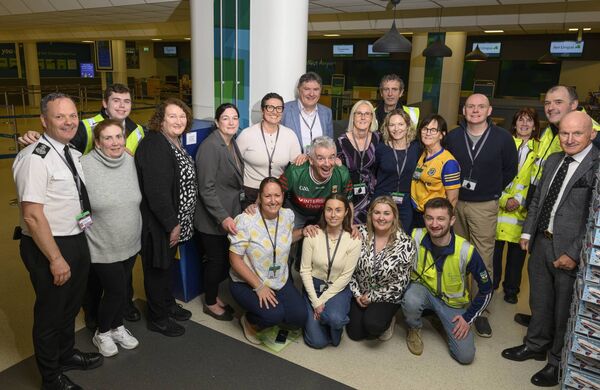
Of course, one man looms larger than everyone else when it comes to the history of Ireland West Airport.
Monsignor James Horan’s statue looks out onto the airport and he casts a long shadow in a most positive sense. Building on his legacy is a major part of the philosophy of the airport.
“From everything I have seen, read and heard from people who worked with him, he was an amazing and iconic individual - way ahead of his time," says Joe. “He was not in it for personal gain or ego, he was a man of the people. He had to put himself out there to achieve what he did, but what he achieved was extraordinary."
Asked what the Monsignor would make of the airport in 2026, Joe Gilmore says there is much he would be satisfied with, particularly around connectivity.
“I would like to think he would see that, from an air access point of view, it is servicing most of what he envisaged.
“He built a two-and-a-half-kilometre runway with the objective of bringing jet aircraft here and creating international connectivity, and we have largely met those objectives in terms of UK and European connectivity.”
But one of the key features of his vision for the airport was the need for employment opportunities in the west. Monsignor Horan saw the airport as having the potential to be an industrial hub. Plans for a Strategic Development Zone (SDZ) remain more conceptual at the moment, though.
“From an economic development point of view, he might be disappointed that more has not happened around that side of things,” notes Joe Gilmore.
He points to the Shannon Free Zone and how it was an economic driver for the south-west, something the Monsignor felt needed to be replicated at Knock - an outlook Gilmore readily shares. The plans for the SDZ at Knock may yet be ‘that quantum leap’ in the coming years.
The SDZ has kick-started again after Covid with Dominic Healy appointed project manager with the objective of developing a roadmap. Overall, it is still effectively a conceptual landbank but there are advanced plans for key services like power, water, gas and wastewater.
There are live projects developing and strong interest but continued state support is vital in terms of enabling infrastructure.
“I think the airport has proven its value and worth to the region and to the state in terms of the spin-off benefits it provides," says Joe. "The natural progression now is to develop the SDZ site alongside that. It will take time, but that is where we would hope to see further government commitment."
The day-to-day at Ireland West Airport involves the reality of running multiple businesses under one roof.
“We are probably ten different businesses in one here,” remarks the CEO.
There is car-parking, car hire, security and fire services, retail, air traffic control and so on. It is a complex operation where moving thousands of people through the facility daily sits alongside long-term strategy.
“No two days are the same, because there is always uncertainty, excitement and a variety of challenges. You are going from meeting popes and presidents to being involved in the day-to-day on-the-ground work, so there is a very wide range to it,” he says.
While there have been some big days such as the visit of Pope Francis and US President Joe Biden, for Joe Gilmore, the highlights have been working through crisis situations with his team and coming out stronger on the other side.
“Facing into Covid, for example, and then being able to recover after Covid - that has been hugely significant.
“Business-wise, we have also been very busy. We have grown by nearly 40 per cent since before Covid. We went into Covid at about 700,000 passengers, and now we are close to one million.
“Things like that are very satisfying, and seeing how the business here has been able to manage that growth is very satisfying too.
“But above all, it is seeing how people pull together - the staff, the team here - and the satisfaction that comes from seeing that happen.”
While there are plans for large-scale expansion in the coming years, the pressure of the role is felt in a different way.
“What keeps me awake at night is ensuring that the airport is safe and secure. It is the less glamorous side of things, but when you are dealing with an operation of this scale - close to a million passengers, and another very significant number of meeters and greeters coming through the airport - operational safety has to be the central focus.
“We are an enterprise where making sure people get through and get to where they need to go safely is absolutely fundamental.
“There are flight delays, cancellations and disruptions, of course, but as I often say to staff, when people are stressed because a flight is cancelled, the important thing is that nobody has been hurt.
“Obviously, the commercial side is very important too - keeping the business on a sound footing and properly funded - but the day-to-day operational side is what really stays with me.”
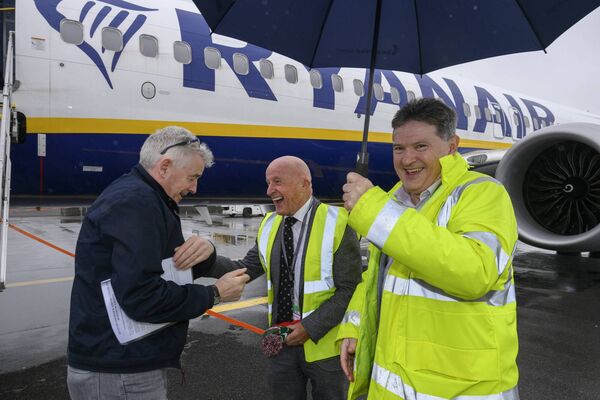
Anyone who has ever used Ireland West Airport will know it is not like other airports. From the ability to make it from the car-park to Departures in less than ten minutes to the real sense of connection that is easier to feel than to describe, the airport is like a beacon in the west.
It is large enough to bring you most places you might want to go and yet small enough to feel homely and personal.
Some staff have been there from the early days while the links with the Irish diaspora in the United Kingdom are deeply embedded in the airport.
Joe Gilmore puts huge emphasis on the fact that this is a ‘west of Ireland airport’, in terms of passengers who use it, the local authority support from councils in the west and north-west and there is a symbiotic relationship between passengers and staff.
“There is an energy here that is hard to put your finger on,” he says.
His natural warmth and sincerity reflect the ethos of the airport.
Keeping that personal touch as the airport prepares to go past the one million passenger milestone is a challenge Joe Gilmore and his team are hoping to overcome. The airport has faced much bigger struggles.
Monsignor James Horan never backed away from a challenge, and forty years on, neither have the airport he built nor the people now guiding it.