Judge calls for more public education on conservation rules
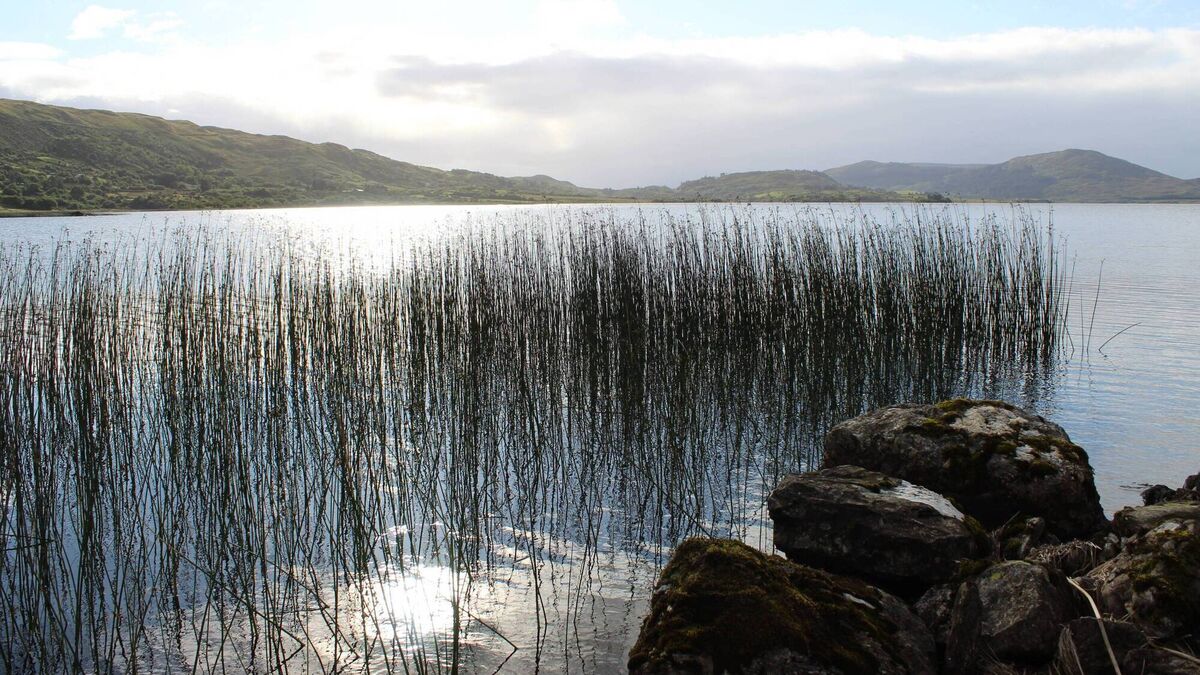
The court heard that Lough Corrib is one of the most significant conservation sites in the west of Ireland.
A man has been fined €2,750 after carrying out unauthorised works involving the clearing of vegetation and the use of machinery within the Lough Corrib Special Area of Conservation (SAC).
The case was brought by the Minister for Housing, Local Government and Heritage against Morgan Costello, of Corrib Glen House, Ballynalty Bay, Ower, Headford, Co Galway, at Castlebar District Court.
Judge Vincent Deane was told that the offences related to activity carried out within the Lough Corrib SAC and Special Protection Area (SPA), one of the most significant conservation sites in the west of Ireland. Costello pleaded guilty to the offences.
Prosecuting barrister Patrick Murphy told the court the matter came to the attention of the National Parks and Wildlife Service (NPWS) on September 19, 2024, following a report made by a member of the public who had been out on a boat. The report stated that vegetation appeared to have been cleared in Ballynalty Bay, an area within the Lough Corrib SAC complex.
The court heard that Lough Corrib is the second largest lake in Ireland and is a protected site, like Lough Carra, due to its status as a marl lake with sensitive habitats.
Irene O’Brien, District Conservation Officer with the NPWS, said she and a colleague travelled to Ballynalty Bay to locate the reported site but encountered difficulty due to the number of hidden bays and private access roads along the lake.
However, after arriving in the area they observed a Komatsu digger on the site and saw evidence of freshly cleared vegetation. The ground appeared to have been tracked and dug up, with spoil heaps visible, and wet woodland species such as birch, alder and hazel had been removed.
Ms O’Brien said they called the nearby house, but nobody was home, and a note was left requesting the landowner to contact them. Mr Costello rang later that evening and confirmed he was the landowner.
Ms O’Brien said she later met the defendant on site, and he claimed he was unaware what an SAC was. Costello told her he had purchased the property approximately five years previously and that it had been heavily overgrown and underplanted with non-native species including leylandii and laurel, along with native vegetation.
She advised him that if he had contacted the NPWS in advance, a woodland management plan could have been prepared. Costello said he had engaged with Teagasc in 2019, but the process did not progress further due to the Covid-19 lockdown.
Barrister Patrick Murphy told the court that Costello became the registered owner of the property on May 10, 2019. He added that information on SAC designations is also issued publicly through notices in newspapers including the Connacht Tribune, Irish Independent and Irish Examiner.
Solicitor Evan O’Dwyer, for Costello, said when NPWS officers first arrived at the property, they were unsure of the exact SAC boundary, with no natural dividing line evident, and the boundary only became clear closer to the lake edge.
Mr O’Dwyer said his client did not intend to cause any damage to the environment. The property was a family home, and the works were carried out in part to ensure safety for children.
Ms O’Brien agreed Costello had been cooperative and said she had returned to the site on January 7 to determine the nature of the habitat present. She said while she could not point to a single specific dead animal due to the works carried out, the legislation related to the likelihood of significant effect on the habitat.
Ms O’Brien said the otter is a qualifying interest of the site and warned that Lough Corrib is already under significant pressure from nutrient enrichment, with disturbance to soil and vegetation increasing the risk of turbidity and nutrient run-off as well as woodland clearance from people who want a view of the lake. She said this in turn can impact habitats and bird life dependent on invertebrates in the lake.
The court heard that otter foraging areas were impacted, along with the protected marl lake habitats.
Judge Deane imposed fines in relation to two matters. Costello was fined for bring machinery onto the Lough Corrib Special Area of Conservation complex and using the machinery for the extraction of natural resources including trees and vegetation, which may have had a significant effect on the Lough Corrib Special Area of Conservation, contrary to Regulation 35(1)(b) of the European Communities (Birds and Natural Habitats) Regulations 2011 to 2023. He was also fined for clearing scrub and rough vegetation within the Lough Corrib Special Area of Conservation complex without the consent of the Minister, contrary to Regulation 28(1) and Regulation 28(9) of the European Communities (Birds and Natural Habitats) Regulations 2011 to 2023.
Judge Deane said the case differed from other matters in that it related to works carried out from a domestic dwelling adjoining the lake. He said it was clear the works had resulted in a much-improved view of the lake but stressed that anyone carrying out works close to rivers or lakes should ensure they are entitled to do so.
He also said there was an educational issue around public awareness of SAC designations, adding that many people may not read notices in newspapers unless they are directly affected.
Judge Deane said that prosecutions were necessary, but that awareness also needed to be built through education.
Judge Deane imposed fines totalling €2,750 with six months to pay.
- Published as part of the Courts Reporting Scheme.