'Well-intentioned' works near Moy tributary lead to hefty fines
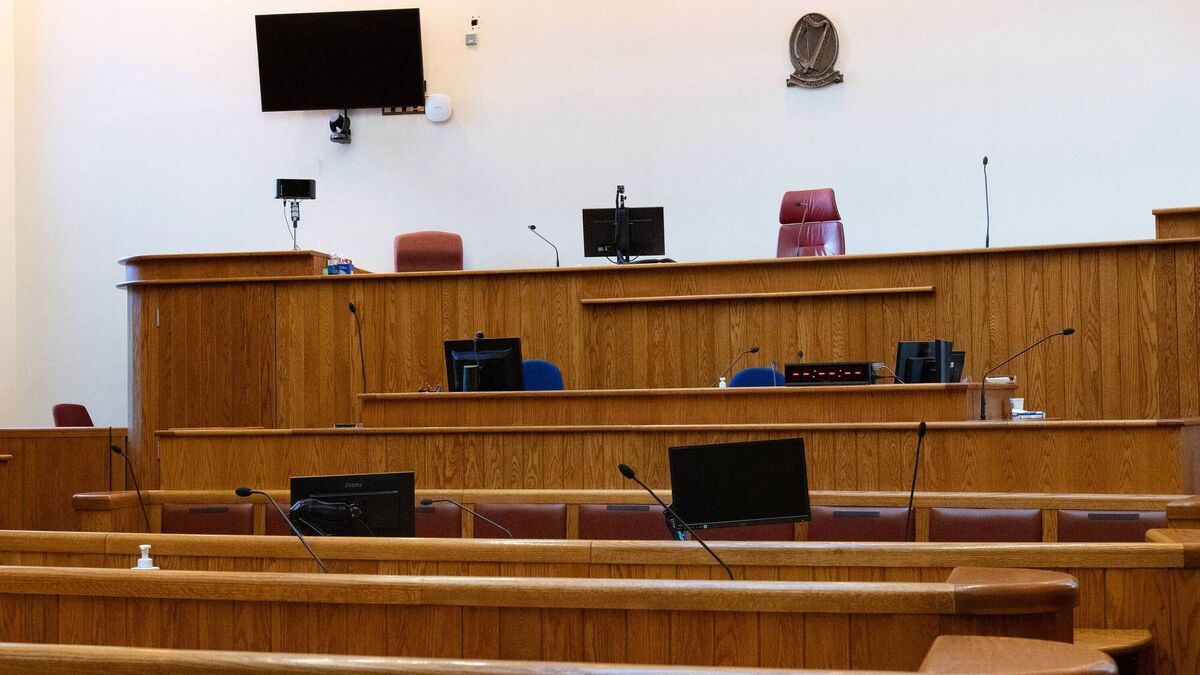
The defendant appeared before Castlebar District Court.
A returned emigrant has been fined a total of €2,750 after carrying out unauthorised works on land within the River Moy Special Area of Conservation (SAC).
The case was taken by the Minister for Housing, Local Government and Heritage against Michael Conlan, of Carragolda, Bohola, who pleaded guilty at Castlebar District Court to several charges.
The court heard that the works were carried out close to the Gweestion River, a tributary of the River Moy, and within an area protected under European environmental legislation.
The River Moy SAC is a designated conservation site due to its important habitats and species, including otter, salmon and freshwater crayfish.
Irene O’Brien, District Conservation Officer with the National Parks and Wildlife Service (NPWS), told the court that activities such as digging, ploughing, harrowing and scrub clearance carried out without consent could have a significant impact on the SAC. She explained that sedimentation caused by excavation can have a "devastating impact" on salmon spawning beds and lamprey habitats.
“If you take out a lot of soil and deepen a drain causing sedimentation in the river, it can suffocate spawning gravel and reduce oxygen levels in the water,” she said.
She also told the court that otters require vegetation and shaded areas along riverbanks for breeding and resting.
Judge Vincent Deane asked what harm was alleged to have been done.
Ms O’Brien said she observed “a lot of soil excavated”, with several soil heaps visible, some of which were “six metres high and 17 metres long”.
She said a hedgerow had been removed and vegetation cleared along the riverbank, which she described as a critical “riparian zone” that protects water quality.
The court heard it was difficult to quantify the precise level of runoff, but Ms O’Brien said evidence of sedimentation was visible and that exposed bare soil could leach into the river over time.
She visited the area on May 9, 2024, after becoming aware of activity at the site. She observed machinery operating close to the Gweestion River and later returned with a colleague from the NPWS. Around one-third of the field was within the SAC.
The NPWS officers approached the machine operator and asked that work stop.
Ms O’Brien said Conlan confirmed his address and told her he lived in the United States and was only in Ireland some of the time. She said he told her he was aware the river was protected but claimed he was attempting to restore the land to how it had been when he was younger.
Ms O’Brien said she explained that consent was required, and that if he had applied beforehand, the NPWS could have assessed the works and imposed conditions.
Prosecuting barrister Brendan McDonagh told the court there were 17 charges before it. However, solicitor Charlie Gilmartin, representing Conlan, entered guilty pleas on a number of counts. Judge Deane ultimately imposed fines in relation to two matters.
The defendant was fined for digging, ploughing, harrowing or removing soil within the River Moy Special Area of Conservation without consent from the Minister, contrary to Regulation 28(9) of the Birds and Natural Habitats Regulations 2011 to 2023 and Regulations 5 and 6 of the European Union Habitats (River Moy Special Area of Conservation 002298) Regulations 2023.
He was also fined for digging, ploughing, harrowing or removing soil which may have a significant effect on the River Moy Special Area of Conservation, contrary to Regulation 35(1)(a) of the Birds and Natural Habitats Regulations 2011 to 2023 and Regulations 5 and 6 of the European Union Habitats (River Moy Special Area of Conservation 002298) Regulations 2023.
Mr Gilmartin told the court that his client accepted he should have obtained consent and stopped work immediately once approached by NPWS officials.
He said Conlan, now aged 71, had emigrated to the United States but remained closely connected to the family farm and travelled back and forth regularly. The works were carried out with good intentions and the defendant referenced the historic Moy Drainage Scheme, claiming it had left the area in poor condition. Mr Gilmartin said his client believed he was restoring the land.
Ms O’Brien told the court that regardless of intention, the works required consent and the key concern was the potential impact on protected habitats.
Judge Deane said there was a reason Special Areas of Conservation exist and that the regulations are in place to protect habitats. He said it did not take “a huge amount of common sense” to know that excavating near a river could cause environmental damage. However, he noted that once the issue was pointed out to Conlan, he co-operated fully and stopped work.
The judge said the situation was an example of the “road to hell being paved with good intentions”.
Judge Deane imposed fines totalling €2,750, giving Conlan six months to pay.
The court also fixed recognisance in the event of an appeal.
- Published as part of the Courts Reporting Scheme.