Limerick school ordered to pay €40k to teacher forced to resign over response to bullying complaint
Seán McCárthaigh
One of the country’s largest special schools for children with learning disabilities has been ordered to pay €40,000 to a teacher who felt forced to resign over the school’s “inadequate” response to a complaint she had made about being bullied by a colleague.
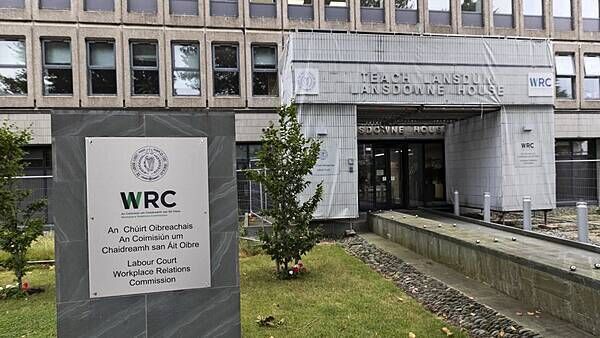
The Workplace Relations Commission (WRC) ruled that the teacher, Susan Quain, had been constructively dismissed by the board of management of Catherine McAuley Special School, Limerick.
The WRC said a delay of almost five years in investigating Ms Quain’s complaint of bullying against a colleague identified only as Ms A was “inexcusable and unacceptable” and represented a clear violation of fair procedures by the school.
It claimed some assertions made by the school against Ms Quain were “at the very least disrespectful".
The WRC noted that the school had suggested the teacher might be categorised as a “serial compulsive complainer” when she had raised valid concerns.
Ms Quain resigned her job in September 2024 after 15 years working at the school.
The teacher claimed she was unable to return to work due to the impact of the unchecked behaviour of Ms A and the failure of the school’s principal Greg Browne and board of management to deal with her complaints.
The WRC said the conduct of the school on how it dealt with such complaints was “so unreasonable as to make the continuation of her employment intolerable".
Counsel for the school, Cathal McGreal BL, had argued that Ms Quain’s claim of unfair dismissal was “fundamentally misconceived".
Mr McGreal claimed the teacher had already made up her mind to leave her job several months before her actual resignation at a time when she had not actually worked in the school for around four years.
'Entrenched'
He claimed the case was not one of bullying but two work colleagues who had fallen out and whose positions became “entrenched".
However, WRC adjudication officer Ewa Sobanska said the school’s response to Ms Quain’s concerns was lacking to such an extent that she was justified in resigning from her job.
Ms Sobanska said the complainant had utilised procedures available to her and had given the school every opportunity to address her concerns.
“It is clear, however, that the complainant’s serious concerns were never addressed appropriately by the respondent,” said Ms Sobanska.
She rejected the school’s claim that it had no control over the time taken by an external investigator, barrister Tiernan Lowey, to complete a report on Ms Quain’s complaint.
Ms Sobanska said the delay and the manner in which the investigation was conducted was sufficient to undermine the confidence and trust the teacher had in the school.
She also expressed concern that the school had not offered any clarification as to why it had not taken any formal disciplinary procedure that had been recommended after a finding against Ms A.
The WRC official said it was also suggested that additional training would be provided to staff but there was no evidence that such training had been provided.
Ms Sobanska said the school was also incorrect to state that Ms Quain was precluded from undertaking work while she was on an approved career break.
She added that it was “somewhat unrealistic” for the school to suggest the teacher had no intention of returning to work because she had sought alternative employment as a means of financial support.
Ms Sobanska said it would be unsurprising if Ms Quain had not considered her employment options having been left waiting for years for an investigation of her complaint to be concluded.
The WRC adjudicator said she accepted that some unsatisfactory attempts were made to deal with the complaint about Ms A when it was first made by Ms Quain in March 2019.
Staff meetings
Ms Quain claimed she was bullied and harassed very publicly, including at staff meetings, over carrying out her duties as the school’s designated liaison person with responsibility for overseeing child protection and welfare concerns.
Ms Sobanska said it also seemed the school took “no meaningful action” in relation to two other complaints by Ms Quain including one that Ms A was not following child protection procedures.
The other complaint was made against the school principal Greg Browne in August 2023 over his alleged failure to investigate Ms Quain’s concerns about Ms A.
The WRC heard that Ms Quain had also made complaints about the same issue to Teaching Council and Tusla, the Child and Family Agency.
Ms Sobanska said she disagreed with the school’s view that it had to conclude one matter before moving to the next one.
She also claimed that the school’s suggestion that it could not address these matters due to the passage of time supported Ms Quain’s view that there had been an unreasonable delay in the case.
Evidence
The teacher also claimed every effort was made to prevent her from accessing the final report into her complaint about bullying which was only released to her in September 2024 after she engaged legal representation and several months after it had been given to Ms A.
In evidence, principal Greg Browne told the WRC that there were periods where Ms A was absent from the school where nobody could do anything.
However, the principal denied that the school’s board of management had deliberately delayed the investigation process.
The chairperson of the board, Michele Dunleavy, expressed frustration at the delay in completing the investigation.
Under cross-examination, Michele Dunleavy admitted she could have overlooked some correspondence from Ms Quain about her complaint against the principal but insisted it had never been intentionally ignored.