Toyota adds an electric C-HR to line-up
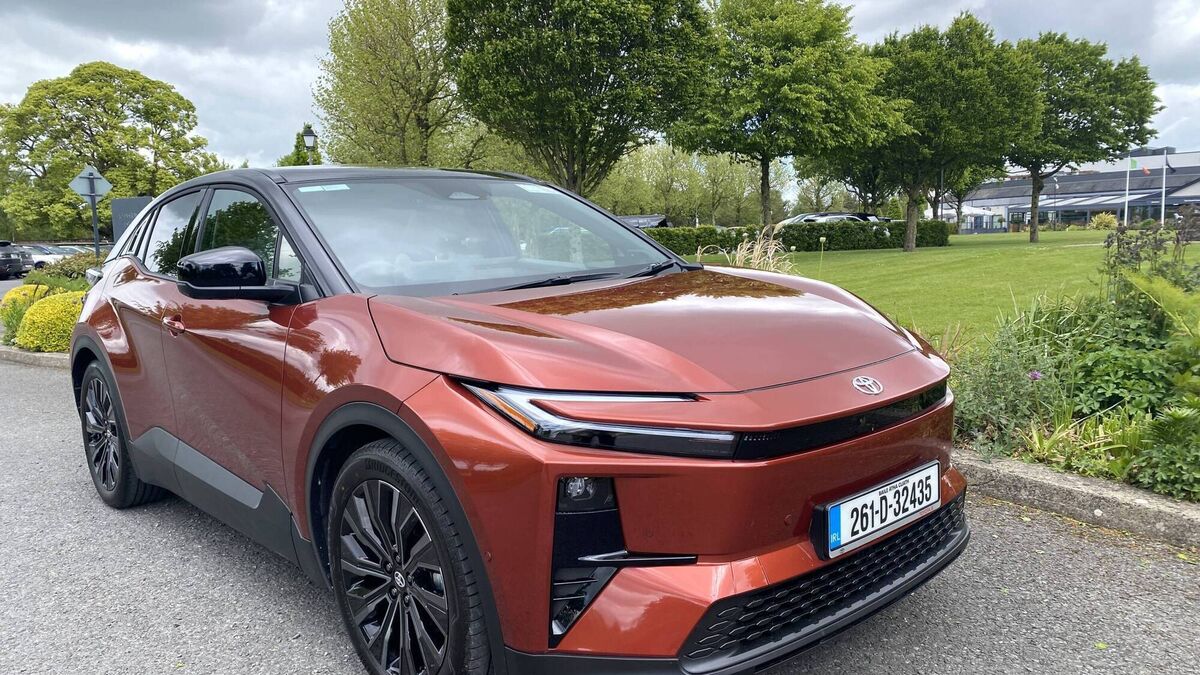
The Toyota C-HR's design features a sleek, sloping roofline combined with the elevated ride height typical of an SUV.
Toyota has maintained its position as Ireland’s top-selling car brand for six years running, thanks to popular models such as the Yaris Cross, Corolla, C-HR, and RAV4 SUV.
The first-generation C-HR made its debut in Ireland in late 2016 as a subcompact crossover SUV. By early 2020, it was exclusively available as a self-charging hybrid, and this year, the all-electric C-HR+ has joined the lineup.
The C-HR+ stands as a distinct model with its own unique body and interior, classified as a coupe-crossover SUV. It is positioned between the C-HR and the larger bZ in Toyota’s lineup, sharing powertrain components with the bZ.
Its design features a sleek, sloping roofline combined with the elevated ride height typical of an SUV.
When introduced to the Irish motoring press last May, I was struck by the updated rear spoiler, which replaced the controversial design of its predecessor with a more refined version.
The car retains the wide stance of the standard C-HR, but the front bumper, grille, and headlight designs are exclusive to this new model. It offers an attractive appearance without being overly aggressive. The steep rear window angle and full-LED rear combination lights enhance things.
My Sport+ grade, with a dark grey exterior, came equipped with 18-inch alloys with wheel covers, privacy glass, rear fog lamps, and was prepared for a towing hook, offering a braked towing capacity of 750kg.
With a 2,750mm wheelbase, the car provides more cabin space than a typical C-segment SUV. Build quality, both inside and out, is impressive. The seats are comfortable, upholstered in a combination of dark fabric and synthetic leather. I felt the cabin could benefit from lighter materials or chrome accents to brighten the look. The front seats feature manual adjustments, with the driver’s seat including lumbar support, and both are heated.
The driver-focused cockpit has a large 14-inch Toyota touchscreen with integrated satellite navigation, wireless Apple CarPlay, and Android Auto. The navigation system offers a journey planning function that calculates routes with convenient charging stations, based on battery status and remaining range.
The driver’s display shows real-time driving data, battery charge, range estimates, and energy efficiency. Physical buttons for key functions and a volume knob are complemented by screen-based shortcuts for quick access to climate control and heated front seats.
A dual wireless phone charging pad and C-Type USB port are located on the flat central console, where the rotary dial gear selector is also found. You push the dial to select Reverse, Neutral, or Park, with buttons for Eco and Snow drive modes nearby. No Sport mode is available.
The three-spoke, leather-wrapped steering wheel is heated and features integrated controls for audio, phone, and voice commands (say ‘Hey Toyota’ to get her attention). Steering wheel-mounted paddles enable regenerative braking. A driver monitoring camera, above the steering wheel, tracks driver alertness, fatigue, and gaze direction as part of Toyota’s Safety Sense equipment. You can adjust the alert settings using the steering wheel controls to access the instrument cluster menu, but the system will reset automatically each time the car is restarted.
Instead of a traditional glovebox, there is a large open area beneath the central console. Ample door bins and the space below the front armrest, which can be opened from either side, also provide storage.
The coupe roofline does not compromise headroom for rear passengers. There are two USB ports and an almost flat floor. The rear seats split 60:40, can fold flat, and the middle seat back can lower to serve as an armrest.
My vehicle featured a power tailgate. With the rear seats in use, the boot capacity is 416 litres. The adjustable floor can be lowered to offer extra height, and there is space beneath the floor for the charging cables.
An energy-saving heat pump is standard, along with auto-fold/power-adjustable/heated door mirrors, blind spot monitors, front and rear parking sensors, a rear-view camera, a 360° camera view monitor, Adaptive Cruise Control, Safe Exit Assist, an Emergency driving stop system, Adaptive High-beam headlights, and an electric parking brake.
The large 77kWh battery provides a rated range of up to 607km (though less in real-world conditions), making it ideal for longer journeys. The battery can be fast-charged from 10% to 80% in approximately 30 minutes.
The car offered comfort for all passengers on country roads and during motorway cruising, with minimal sound entering the cabin.
Toyota provides an eight-year/160,000km warranty for its EV battery, with the option of EV Battery Extended Care up to 10 years/1 million km once serviced with a Toyota dealer.
PRICES: starting from €37,444 (including VAT). My vehicle (after grants, excluding paint) was €41,355.