Providing nest boxes for our garden friends
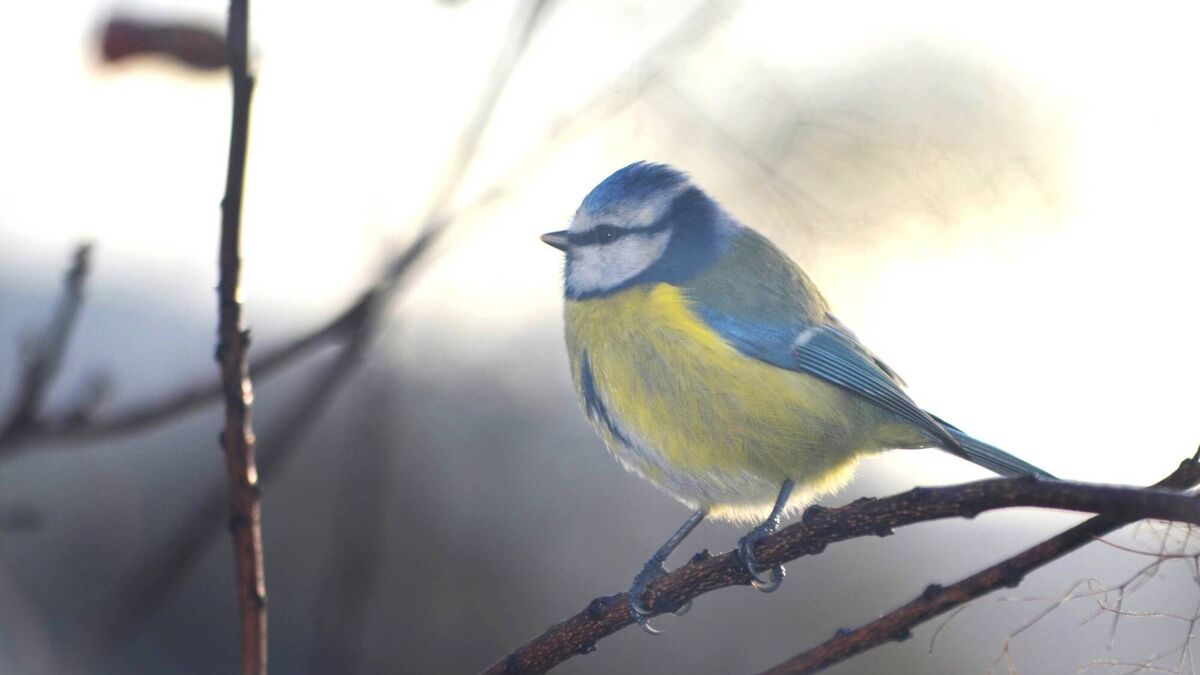
All Blue Tits carry a tape measure, so they always know the perfect size entrance when they see it.
Now that most of us are enjoying the pleasures of feeding garden birds, allowing ourselves to become more familiar with them, an interesting extension of this relationship can be to provide those same birds with spring nest boxes.
No more than feeding the birds, they can probably do without our help but, hey, in these difficult times, who’d refuse a free house? And, if nothing else, investigating the process can increase our awareness of the colourful characters who enhance our Ox Mountain gardens.
In winter, local bird species are attracted to bird feeders and can be watched from the comfort of our own homes. Birdwatch Ireland advise that the most sustainable way to make your garden bird and wildlife friendly is to plant trees and shrubs that will provide natural food, shelter and nesting sites at different times of the year. You can also go the extra mile by introducing something like a small wildlife pond. Our gardens then become a haven for wildlife throughout the year.
During the spring and summer, many birds will nest in trees, shrubs and even garden sheds. According to various surveys, the most popular and widespread garden bird in Ireland is the Robin, often appearing in 99% of gardens. It is closely followed in prevalence by the Blackbird, Blue Tit, Goldfinch, and House Sparrow. There are others, less common, and these are the birds that send us scurrying to our ‘Bird Book’ to clarify their identification. Among these you might find the Green Finch, the Siskin or the Redpoll.
Feeding garden birds is probably a story for another day, but you don’t have be feeding birds in order to provide them with nest boxes. You can simply do this and birds you have never met before will happily avail of your handywork.
Humans have a long interest in, and association with, nest boxes. It is still possible to find old buildings on landed estates with open topped towers with nesting holes for doves and pigeons. These birds, with their long breeding season, provided meat throughout the year.
So, is putting up a nest box still a good idea in this day and age? Some would say the case for providing them has never been greater. Changing weather patterns and damage caused by storms associated with climate change, the use of pesticides, changes in the agricultural landscape and habitat destruction are just some of the threats faced by garden birds.
A good nest box should provide a safe, comfortable environment in which birds can nest successfully. This aim often suffers from conflicting demands; box location must facilitate access for nesting birds, whilst simultaneously providing shelter from extreme elements and deterring potential predators. Get these essentials right however, and both the birds and yourself are in for a nice time. Always keep in mind however, that any nest box is for the birds use and not for your pleasure. Never inspect a box that is in use, or even if you think it might be in use.
All nest boxes should also be positioned so that maintenance and cleaning - both essential - remain simple tasks. It is a bonus if your nest boxes are placed where they can be observed easily, as great pleasure and interest may be derived during the whole nesting, hatching and feeding process.
Certain birds, like Robins, may inspect a newly installed nest box within an hour and take to it quickly, another box may remain empty for several years. This type of response has dented the aspirations of many, but patience is essential for the nest box maker. The choosing process of particular birds may be slow but the potential rewards for the observer are very great. If your local Blue Tits do not nest in your nest box straight away, it is still unlikely to remain completely unused. Birds such as Tits and Sparrows often shelter in boxes at night, safe from the extremes of weather and the paws of predators.
Boxes are especially important during prolonged periods of cold winter weather. Small birds can huddle together at night, reducing the impact of rain and windchill. At dusk, Wrens may gather from far and wide, and it is believed that 30 or more of them can cram into a single nest box. So, your nest box may make the difference between the short-term extinction and survival of a local population and yet, never be used as a nesting site.
Traditionally, nest boxes for small birds are put up in the early spring. Many people find it is helpful to have a fixed time of year when boxes are put up or cleaned out for the forthcoming season, and there is no better time than the second half of February.
In the United Kingdom, National Nest Box Week always starts on St Valentine’s Day because this when the birds are reputed to start courtship. At present, time is getting short so if you are planning to put up a nest box this spring, do it very soon. Put up a good one, either making your own from the best materials or buying a certified one from your local garden centre. Use the correct design for the birds you have in mind; keep with the experts for now, experiment later. When ready, secure the box well and face it in the right direction.
You cannot simply put up a nest box anywhere at all and hope it will suit the needs of a particular bird. Do not but two boxes up in the same place because birds hate the semi-detached model. Consideration should be given to the direction of the nest box entrance, ensuring it is sheltered from the prevailing wind, rain and strong sunlight. In the Ox Mountains, this usually means boxes should be faced north or northeast. Exceptions occur in shady woodland or in cold, north-facing woodlands, when boxes may be best faced southeast to catch the early morning warmth from the sun.
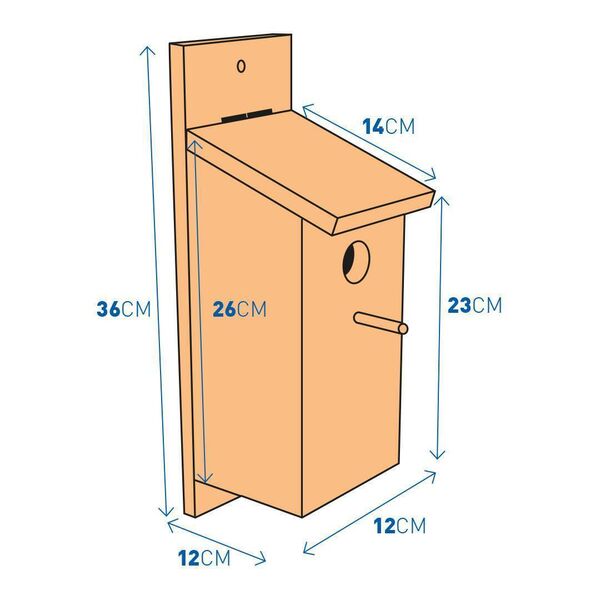
You can probably buy the perfect next box and that’s perfectly fine but making your own nest boxes can be very rewarding, especially if they end up being used. We can feel very honoured indeed if a Blue Tit elects to make her home in our homemade nest box. Just remember the rules and be careful while sawing, drilling or climbing! When it comes to nest boxes, you will have fun in their creation, choosing the right location and you will be doing some little bird family a great service.
Alongside, is a simple design for a nest box. A 28mm hole is ideal for a Blue Tit. All Blue Tits carry a tape measure, so they always know the perfect size entrance when they see it. Certain species have specific preferences, making an ideal situation for one undesirable or unsafe for another.
Some Saturday next May, when the weather is just right, when eggs have hatched and the parent birds are busily feeding their brood, grab a cold drink from the fridge and position yourself where you can observe the comings and goings of your next box. You will feel very satisfied indeed.