BYD Seal 6 Super Hybrid has huge range
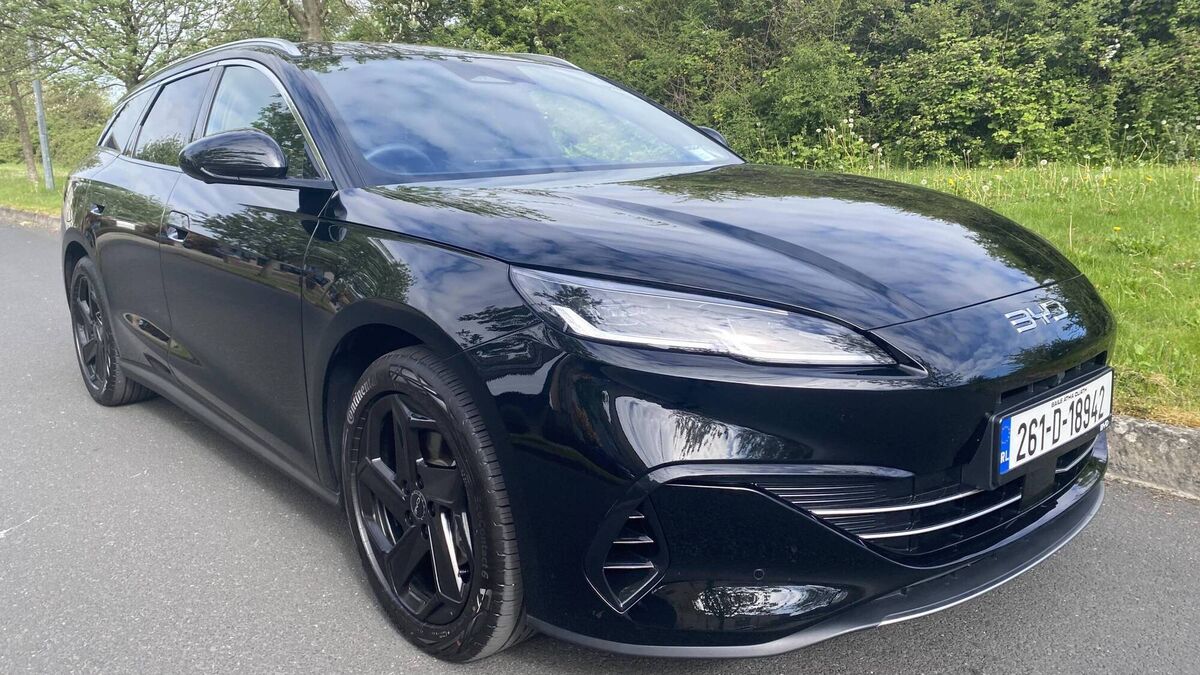
The front-end design mixes flowing shapes and sharp lines in the lower bumper for a sporty look.
BYD’s Seal 6 Super Hybrid is a plug-in hybrid with a huge range for long, worry-free journeys. It can also travel around 100km on pure electric driving, enough to cover most people’s daily work commutes. The model is available as a saloon or as a practical estate version called Touring, which was my review car.
It's a spacious, aerodynamically designed, and well-proportioned car. The front-end design mixes flowing shapes and sharp lines in the lower bumper for a sporty look, while the side profile combines the sculpted waistline with a gently sloping rear roofline and a contrast finish in the D-pillar that creates a ‘floating’ effect. Other features are aluminium roof rails, a chrome detail across the tops of side windows, and 18-inch alloy wheels with the rather ominous name of ‘flying axe’. Rear tail lights have smoked finishes and layered LED-matrix sequences designed to create a flowing visual motion. My car was in the Obsidian Black exterior colour, an expensive extra as are Atlantis Blue and Sandstone colours. Polar White comes as standard.
The cabin is a comfy and spacious place for five adults, thanks to its 2,790mm wheelbase, the same in both body styles. The estate is marginally taller and heavier than its sibling. I’d have preferred a brighter interior colour scheme to the dark grey in my review car. However, the long panoramic sunroof provided extra brightness in the cabin.
Front seats have a sleek one-piece headrest design and lovely vegan leather upholstery. They were comfy and supportive and had power adjustments (6-way for the driver, 4-way for the co-driver). They can be heated and ventilated.
You have to go through screen menus on the 15.6-inch ‘floating’ touchscreen display (12.8 inches in the lower Boost trim) for most of the basic key functions, but you can select shortcuts to regular items. There are permanent screen widgets for the dual-zone climate control. Just say ‘Hi BYD’ pressing the button on the steering wheel to sort out the music or navigation. Built-in 4G allows you to stay online wherever you go.
The driver’s cluster shows fuel consumption, charging capacity, and current speed. Windscreen wipers are, Oceania-Asia fashion, on the left side of the steering wheel, which is confusing in the European market. The transmission selector is located off the steering column, and the Start/Stop button is on the flat of the central console beside the EV/HEV Mode button. Drive modes are Eco, Normal, Sport, and Snow. There's a phone charging pad, two C-USBs front and back, a decent glovebox, good door bins, and a large bin under the front armrest. The steering wheel can be heated.
The rear has a completely flat floor and generous legroom, though little space for feet under the front seats. Headroom is just about OK for tall people. With just two seats in use, the central armrest has two cupholders, and there is a hatch through to the boot. Rubber floor mats are functional and practical, as is the coat hook on each B-pillar.
A power tailgate opens to reveal boot space of up to 675 litres, which can accommodate strollers, full-size suitcases, or camping gear, and is extendable to 1,535 litres. The rear seats are dropped via a lever on either side of the boot. Sturdy hooks can support up to 3kg, and there’s a 12V power socket there.
Both versions are powered by a 1.5 petrol engine paired with an automatic transmission. Boost trim has 184hp, a 10.08 kWh battery pack, a claimed combined range of over 1,500km and an electric range of 55km. The Comfort model upgrades to a 19 kWh battery pack, 212hp, and a claimed range of circa 1,455km, including an electric range of 105km. The 0-100km/h time is 8.5 seconds. You can recharge the battery at home or opt to DC fast-charge the larger battery from 30% to 80% in 23 minutes. All models have a peak torque of 300Nm.
BYD’s DM-i drivetrain prioritises electric power with minimal reliance on fuel. When the battery is fully charged and switched to EV mode, the car drives like a pure electric. When the charge is low, it changes into a standard hybrid. BYD claims an average fuel return of 1.7 L/100km (in ideal use on commuting distances), but during my time with the car, I achieved an average of 4.4 L/100km, which is good.
I turned off many of the annoying alerts to do with speed limit change prompt tones, lane departure warnings, etc, but I very much appreciated the good blind spot monitors. The reversing camera, all the parking aids, including the 360-degree camera, as well as front and rear traffic alerts, all contributed to the model being awarded a full five-star Euro NCAP rating.
The ride could be quite firm on not-so-good country roads, and a fair amount of road noise filtered through on motorway driving.
PRICE: Touring from €38,990; Saloon €37,490. Warranty on the BYD Blade Battery is eight years or 250,000 km.