Knowing the why in sport
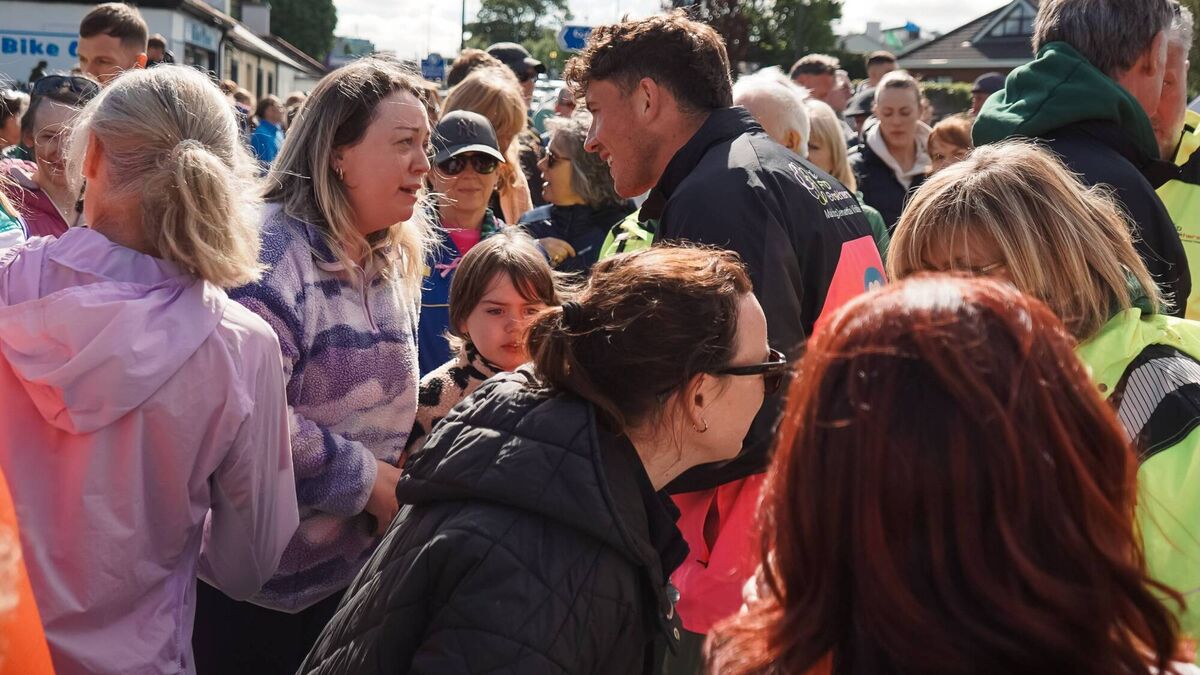
Jordan Adams meeting well wishers in Castlebar last month during he and his brother Cian's mission to run 33 marathons in 33 days across Ireland, to held raise awareness of dementia, which Jordan completed on Thursday last.
We all have different reasons why: why we do certain things, why we choose a particular career, why we live where we do, why we make certain decisions and why we play the sports we play. It leads me to think about why people push themselves to different levels by choice, sometimes to extremes: training relentlessly, missing important occasions for a match, or shaping their lives around their chosen sport. Everyone has different reasons, and at different stages in life those reasons change. It can be the focus, the achievement, the wellbeing, the goals — and much more besides. It is what gets us up each day, what gets us out in bad weather, when we are not feeling it, when nobody else is going, when all the obstacles seem stacked against us. And sometimes that is exactly what makes it worthwhile. The tougher it is, the greater the achievement. There is no better feeling than hitting that wall, getting over it and finishing — winning, or simply completing the challenge when the chips are down — because the sense of achievement is even greater. Some of us are driven by challenge, by focus, by success and by knowing what accomplishment feels like. Once you feel it, you want more.
On the days when Pádraig O’Hora was relentlessly making his way up that beast, Mount Everest, he captured the attention of followers all asking the same question: why? I can understand his expedition because he clearly explained his reasons. Reading about his daily endurance, I can, in some very small way, relate to what he was saying. Those mountains of mine may be tiny in the bigger picture, but the loneliness is real. Yes, he had a team, but in so many ways you are still alone. When the tough times come, that is when you need your why — your inner strength — because those are the demons that can catch you and tear you apart. Mental strength takes as much training as the physical side of it.
Westmeath beat Dublin. They knew their why, and when their chance came, they drove on in extra-time, which Armagh also needed to beat Monaghan. These are the things teams work on now: focus, belief and finding that extra 10 per cent when it matters most.
There is a Japanese philosophy called Kaizen — the belief that if we improve one small thing by 10 per cent, and then the next week add another improvement, progress begins to build. There are so many things in life we can all improve on. The key is to focus on one this week, then another the following week, and keep going. In sport, it might mean jumping higher for the ball this week, then practising the block next week, then the dummy after that.
The “why” in sport is your core purpose. It is the personal, intrinsic motivation — the joy of competition, the pursuit of growth, the connection with others — that drives you to train, compete and overcome setbacks. Staying connected to that purpose helps prevent burnout and builds mental resilience.
When the marathon runners carrying a fridge on their backs pass through our counties, and you understand their why — their cause — you begin to understand the need behind it. For many people, it seems unimaginable. But for those living through hardship, it makes perfect sense. The FTD Brothers ran a marathon every day for 32 days across Ireland because both were diagnosed with a rare and aggressive early-onset form of dementia. The same illness claimed the life of their 52-year-old mother (who had very close ties to Co Mayo) and 12 other family members.
They carried a fridge to symbolise the heavy, invisible and crushing burden of dementia.
Understanding and refining your “why” anchors your dedication. In sports psychology, motivation generally falls into distinct categories that shape an athlete’s journey:
There is inner motivation: the pure love of the sport, the desire to improve, to learn, and to discover what you are capable of by pushing your limits.
And there is external motivation, driven by outside rewards such as prizes, recognition, photographs and status.
Knowing why you are doing something makes it easier to push harder when you are tired, when motivation begins to dip and when the pressure starts to build.
My own smaller whys can change from time to time, even day to day depending on how the body feels, but the bigger reasons probably stay the same. I have a love for many of the things I do because I genuinely enjoy them. I take on challenges in life, sporting and otherwise, because deep down I know I can meet them. My family used to say, “She never leaves the road.” I was always fond of movement, of adventure, of having something to aim for. I run because it makes me feel good and sets me up for the day. It gives me time to myself, because most of my day is shared. I love my family, my home and my work, and when I head off, everyone knows they will get more out of Paula when she comes back — I am like Duracell plugged in.
As the weeks move on, I need things to focus on, things to aim for. Sometimes it will be work, sometimes writing, sometimes trying something new, but it is the challenge in running that keeps the days flowing. The mini-challenges achieved in training each morning, even on a bad winter’s day, make daily-life problems seem smaller. They make hardship feel less overwhelming and suffering a little easier to bear. On the open road, on hills and mountains, there is no contact and no coverage; time stands still. And when it comes to competition, when the greater challenges arrive, it is the embracing of it, the facing of it, the enduring of it, the toughness and the energy — that feeling of euphoria — that nothing can replace. You are on a high for days, and then the next challenge begins in the mind, the next journey is planned, the next training cycle starts. The whys keep coming, the days roll on, and the negatives fade because you are doing something you love.
Sometimes, if we step back and really think about why we are doing something — who we are doing it for, whether it is for ourselves, whether we are enjoying it, whether it is fulfilling our ambition, whether it is doing us good — the answer becomes clearer. Throughout life, our why will change, but if we know the reasons behind it, success is far more likely to bring self-fulfilment — at least for now, anyway.