Fuel Protests: Around 650 filling stations still dry across the country
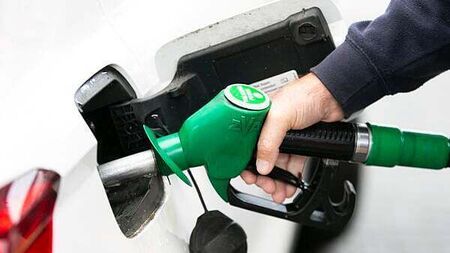
Michael Bolton, Sarah Slater, and PA.
- Transport Infrastructure Ireland has said that all motorways across the country are now clear.
- Public transport is back up and running as normal
- Government to face no-confidence motion over fuel costs
- Government to undertake ‘fundamental security review’ after fuel protests
- Spokesperson for protestors said they have "achieved something small".
- Garda Commissioner has directed that all rest days be cancelled until 7 pm tomorrow.
- Go-slow fuel protest by trucks on the N4 main dual carriageway south of Sligo town.
- MEP calls for the Government to introduce free public transport.
- Close to 650 fuel stations across the country are without fuel.
5pm
Minister for Transport Darragh O’Brien has approved an extension of the temporary derogation from certain driving hours and rest period requirements to cover the delivery of all goods within Ireland.
This is to provide some flexibility for drivers in these urgent and exceptional circumstances and support the full recovery of the national energy and food supply chain during a period of intensive pressures, while balancing driver welfare and road safety objectives.
It widens the derogation approved on 11 April for road hauliers transporting liquid fuel used for home heating oil or as a propellant within Ireland.
Minister O’Brien said: “The transport of goods of all types within Ireland has been severely disrupted by blockades at ports, rolling protests, and closures across our road network.
"While we have restored access to ports and fuel infrastructure, the transport sector continues to be affected by the cumulative impact of the blockades. Government is actively working to support recovery, and my approval to extend the derogation follows representations from agricultural representatives, retail representatives, and other Government departments highlighting the cross-sectoral impacts of recent events. Officials in my Department will continue to monitor this situation closely.”
Minister of State with responsibility for International and Road Transport, Logistics, Rail and Ports, Seán Canney said: “The haulage sector is of national strategic importance.
"This derogation brings much-needed flexibility and reassurance to those working right across the logistics and supply chain, supporting them to return to normal business practices as soon as possible.
“Of course, the safety of drivers and other road users must not be compromised, and these extensions are for use only when necessary."
The derogation was granted pursuant to Article 14 (2) of Regulation (EC) No 561/2006, as follows:
The following derogations will be applied from 13 April 2026 for an initial period of 08 days to all drivers involved in the road transport of all goods within Ireland:
- The daily driving limit is increased from 9 hours to 11 hours.
- The maximum weekly driving limit is increased from 56 hours to 60 hours.
- The fortnightly driving limit is increased from 90 hours to 102 hours.
- The rules relating to weekly rest are being relaxed by allowing drivers to take a reduced weekly rest of at least 24 hours in each consecutive week during the relaxation period.
- There will be no obligation on a driver to take at least one (1) regular weekly rest period in any two consecutive weeks until the derogation expires. Furthermore, there will not be any requirement for compensation where reduced weekly rest is being taken.
4:45pm
Tipperary Independent TD Mattie McGrath outlined that he believes the Government has “clearly lost the confidence of the people”.
Deputy McGrath outlined that across the country, families, workers, and communities feel “ ignored, unheard, and left behind”.
He continued: “The people who stood in protest this week were ordinary hardworking citizens of this country who deserved respect and engagement. The government’s heavy-handed and dismissive handling of the fuel protests is just one clear example of how out of touch they have become with ordinary people struggling to make ends meet.
“For that reason, I intend to vote no confidence in this government.”
The deputy explained that while he stood with the protestors in Cahir and Cashel last week he became unwell and was admitted to hospital on Friday, and at present remains in hospital where he will undergo a procedure on Tuesday morning (Tomorrow).
“We have received no information on the time of the vote, which is expected tomorrow. I am still hoping to travel to Dublin to represent the people who have lost confidence in the government, but this will only be possible with the permission of my medical team,” he added.
Deputy McGrath noted that he “sincerely” hopes that he will be in a position to vote and that he is “doing all” that he can to be there.
He said that he was “very grateful” for the good wishes, support and understanding of the people of Tipperary during his “health difficulties” and hopes to be back to “full health” before too long.
4:15pm
The number of fuel stations still without petrol or diesel stands at around 650 across the country, as the industry works to restore supply, reports Hugh Dooley.
Kevin McPartlan, the chief executive of Fuels For Ireland, told The Irish Times that the number of stations without fuel has reduced today, from 700 to 650, but that progress in restoring normal operations should hasten.
He said the fuel supply network is still operating at reduced efficiency on Monday: “Today, we have been operating at only about 60 per cent of normal efficiency across nationwide distribution because of broad traffic issues and enhanced security protocols slowing drivers’ entry to fuel infrastructure sites.”

Limitations on the number of hours drivers are permitted to conduct are understood to be clogging up the recovery efforts. Many of the drivers’ workable hours were used during delays, diversions, and long waiting times due to the fuel protests over the weekend.
A derogation on drivers’ hours is expected to be granted later in the afternoon, which would be “exceptionally helpful in speeding up recovery”, the industry group chief said.
Supply chain blockages, which hit the national fuel distribution network during the blockades of ports and fuel depots, are being ironed out now.
4pm
Danny O’Gorman, general manager at Freenow by Lyft, on the Government fuel support package, said: "While the Government’s fuel support package and excise duty cuts are welcome, targeted support for the taxi industry is essential.
“Rising fuel costs directly threaten driver livelihoods and deter prospective drivers. To provide sustainable support, the Government must increase funding for the eSPSV Grant Scheme. This supports drivers switching to EVs, reducing reliance on fuel.
“It is disappointing that eSPSV Grant funding was slashed from €12.5m to €7m for 2026. With 37 per cent of drivers citing high vehicle costs as the primary barrier to going electric, further investment is vital."
3:15pm
Ireland South MEP Michael McNamara is calling for the Government to introduce free public transport across Ireland, following the IMF’s warning that “all roads lead to higher prices and slower growth worldwide” should the conflict in the Middle East continue.
“The Government’s call on households to cut fuel use is meaningless unless it concentrates on encouraging the public to use alternatives,”
“Public transport needs to be made free for users for the next six months. This would cost up to €275 million, based on a 2023 report commissioned by the National Transport Authority (NTA) from Ernst and Young.

“It must be acknowledged that this is a significant sum of money, but it is less than the amount the Government is expecting to spend on the upcoming six-month EU Presidency and is small compared to the billions of euros thrown around by the Government during the Covid era.
“Making buses, trams and trains free is a relatively easy measure for the Government to implement and one that will make a difference to ordinary people, as it will result in a new focus on public transport alternatives,” McNamara said.
2:30pm
The vote of no confidence to be tabled against the government is a “big test” for independents who are part of the coalition, a TD has said.
Sinn Féin, the country's largest opposition party, are tabling the motion of no confidence in the Government on Tuesday.
It criticises the government for not reconvening the Dáil last week and not engaging directly with the protesters, while also calling on the government to take the “maximum action necessary” to cut fuel prices.
The Social Democrats, Labour, People Before Profit, and Independent Ireland have said they would back the motion.
It is unclear how several independents who have supported the Fianna Fáil-Fine Gael coalition government will vote.
People Before Profit TDs Richard Boyd Barrett and Paul Murphy said government-supporting independents will need to “decide which side they are on”.
2:18pm
Transport Infrastructure Ireland said that all motorways across the country are now clear of protests.
The Irish Examiner reports that several rolling protests slowed traffic during rush hour this morning, particularly around Dublin, all of these have cleared.
Protest activity caused significant disruption on key Cork routes on Friday morning, with traffic delays reported on the N28, particularly around the Shannon Park roundabout.
The junction is a critical access point for the Port of Cork and a number of major pharmaceutical companies, leading to knock-on delays for commuters and commercial traffic.
However, by 10am, protesters had lifted blockades around Cork city, allowing traffic to resume somewhat normally.
A strong garda presence remained in place at several key locations, including the Lakeview roundabout on the N25, as authorities continued to manage the situation.
Separately, the N25 was temporarily closed around lunchtime to allow the movement of seven oil tankers under garda escort.
The convoy was facilitating the transportation of fuel from the Whitegate refinery, as efforts continue to maintain supply chains amid ongoing disruption.
In Meath, the M3/N3 between Junction 11 Kells and Junction 9 Navan, going southbound has been reopened as well.
ROAD CLOSURE UPDATE!
M3 : ROAD REOPENED
M3/N3 between J11 - KELLS and J09 - NAVAN Direction Southbound
Enjoy your journey.#TIITraffic @GardaTraffic pic.twitter.com/ULKrrHW4dT
— TII Traffic (@TIITraffic) April 13, 2026
1:30pm
There is another go-slow fuel protest by trucks on the N4 main dual carriageway south of Sligo town, which started at 7.30am this morning.
Trucks held up traffic in both directions, causing traffic disruption at rush hour. Gardaí are on scene and directing traffic along alternative routes.
1:25pm
The chief executive of business group Dublin Town said O’Connell Street must never again be closed off in the same fashion.
Large-scale, future lengthy protests in the capital should take place at a designated site away from O’Connell Street, Richard Guiney said.
Dublin Town represents over 2,500 businesses in the City centre and works to improve the city's commercial environment, promote it as a shopping and leisure destination, and runs initiatives to attract visitors.
Mr Guiney said while the organisation wholeheartedly accepts the right to peaceful protest, particularly in the capital city, what had transpired during the fuel protests on O’Connell Street, its premier artery, had been utterly unacceptable

“While totally accepting the need and right to protest in the capital city, disrupting public transport and bringing its major thoroughfare to a halt for a protracted period of time is simply wrong.
“Business was impacted, public transport was disrupted, and hospital appointments were missed. In other parts of the country, protesters minimised such disruption, but not in Dublin.
“Recent changes to traffic routes ensured that the closure of O’Connell Street effectively paralysed College Green, Henry Street, Middle Abbey Street and a huge area of Dublin.
“Three quarters of its customer base uses public transport to access the City centre, and O’Connell Street feeds people to all kinds of businesses and public facilities.
“The protest led to a decline in footfall in the city centre during the Easter school holidays as well as disrupting medical schedules in nearby hospitals and severely discommoding many commuters, shoppers and tourists," he said.
1pm
The Garda Commissioner sent a message to all Garda personnel during the protests saying: "Since the start of the fuel protests, you have been working hard to deal with many challenging policing situations all across the country. You have done this with great professionalism and dedication, and I wish to thank you all sincerely for this. I completely understand the really difficult situations many of you have faced with.
"Thanks to your efforts we have broken the illegal blockades which were interfering with access to our critical national infrastructure. This has meant that our emergency services, hospital and fuel supply network were able to continue to operate.
"I also want to thank you for responding to our calls for additional personnel needed to deal with this situation. Again, I appreciate many of you made personal sacrifices to answer this call to duty. Your Representative Associations are to be complimented for the level of co-operation that they have provided during this unprecedented period.
"I am concerned to hear about attempts in person and online to threaten and intimidate Gardaí who are engaged in their lawful work. I have viewed some of this online material myself and have been absolutely appalled by it. This will not be tolerated and will be fully investigated to bring those involved to justice."
Today, Garda Commissioner Justin Kelly had this message for Garda personnel. pic.twitter.com/fskmylYCds
— An Garda Síochána (@GardaTraffic) April 13, 2026
12:20pm
Minister for Agriculture, Martin Heydon, acknowledged there was “frustration out there” and that people had been driven to protest due to “a really significant shock to their energy bills”.
As the Irish Examiner reports, Mr Heydon said that a narrative had formed on social media that the government “don’t understand” and was “not listening”, but he said they were “reacting in real-time” to the war in the Middle East.
“I would very much counter that, we are reacting in real-time, but as a government, we absolutely listen and have to respond when an awful lot of people protest – protests and blockades are two different things,” he told .
“I absolutely, fundamentally respect and will passionately fight for people’s right to protest and tell me they disagree with me, but when people block critical infrastructure, that is different.”

Mr Heydon said that, along with the 7.2c cut on excise on green diesel, he had secured a new €100 million subsidy scheme for high fuel users, which would see a further cut of 20c a litre.
“Government has put €100 million behind us, the same way they put €140 million behind the package for the hauliers, at the same time as helping every citizen of the state who drives a car or who relies on the cost of white diesel,” he said.
“We now see further reductions, cumulatively now: 32c per litre is the reduction on diesel; 27c per litre is the reduction on petrol, as well as the clearing of the remaining excise on green diesel and the subsidy on top of that.”
11:18am
A convoy of slow-moving vehicles is now moving into the Tallaght area and will soon be reaching the M50 interchange.
10.17am
A Facebook page where information about the protests had been shared posted information on Sunday night, both suggesting the protests should continue on Monday and that “all protestors and gardaí go home”.
Although blockades at fuel depots and Ireland’s only oil refinery have been lifted, smaller protests continued on motorways around Dublin.
Social Protection Minister Dara Calleary said the protesters had not won as engagement had been ongoing with farming and transport representative groups on further support before the protests began on Tuesday.
He told Raidio na Gaeltachta that the two packages announced by the Irish government were among the largest in Europe, and that the measures would have an influence on the government’s budget in October.
10.10am
There are a number of tailbacks in towns across Mayo this morning as the national fuel protests continue.
Traffic delays are being reported in Castlebar and Ballina with a large presence of trucks, tractors and commercial vehicles in both towns.
Traffic is at a standstill in Ballina town centre this morning as the protest continues.
10.08am
Sean O’Neill of Transport Infrastructure Ireland has urged motorway protestors to keep hard shoulders clear for emergency vehicles and highlighted how the rolling protests across the Irish road network are fluid and evolving.
Speaking on RTÉ Radio before 9am, he said that “on the M1 southbound, there is congestion between junction 12 and junction 9, so that’s earlier at Drogheda, and that’s a go slow, there are people protesting there.
“And then on the M3 we have a full closure now, which wasn’t fully closed earlier today, and that is between Kells junction 11 southbound and junction N9 in Navan is fully closed in both directions. He said there was “a go-slow movement” on the M7 leading onto the Long Mile Road this morning, but it was cleared, although not before it caused “significant congestion”.
He added that there was also a go-slow on the N28 Cork to Ringaskiddy, “Anyone listening and people out on the network, we do ask that they keep the hard shoulder open. It’s for emergency vehicles and emergency trips. Whatever your actions are on the motorway network, please keep those open, because it’s just unacceptable. People need those it’s for emergency needs.”
9.40am
Volunteers of a soup kitchen say they were intimidated in Dublin at the weekend’s fuel protest.
The Muslim Sisters of Éire host a weekly soup run on O'Connell Street, to provide food and hot meals to people experiencing homelessness.
The charity says last week's run 'took a deeply upsetting turn' when they experienced verbal abuse from a group of people protesting outside the GPO.
Chairperson Lorraine O’Connor says the situation turned hostile, and thanked the homeless community for stepping up to protect them.
9.08am
The chief executive of Fuels For Ireland Kevin McPartlan, has said fuel trucks are moving around the country following the lifting of blockades over the weekend but he warned that it could take 10 days before supplies return to normal levels and he called for secure access to supplies for his members following days of what he said ere “intimidation and threats and insults to drivers”.
He said drivers had been identified and intimidated by protesters, and family members had been contacted “when they’re sitting waiting to load. It’s really poor. I’m not suggesting that everybody involved in protests is involved in that stuff but there are [some] still doing that.”
He told Morning Ireland that the next key thing “is to make sure that the road network across the country is unhindered so we can actually get fuel to the people who need it.”
He said that in the long term “what has happened over the last few days has kind of created a precedent that people could see these as targets for the future so I think they’re going to need to be conversations around the security of those sites and the way the State manages that that security.”
8.25pm
A spokesman for the Dublin fuel protest has said that they “achieved something small” in €505 million worth of government measures, but said he has “no control” over further protests.
Blockades at fuel depots and Ireland’s only oil refinery have been lifted, but traffic disruption continued in parts of the country on Monday due to some protests.
“Nobody knows what the plan is, that’s being straight out there,” said John Dallon, a Kildare farmer and agriculture contractor who was at the Dublin protest.
He said that he welcomed the reduction in green diesel, but the government “should have done something” on kerosene.
“This protest is out of my hands, it escalated to somewhat so big, and I don’t know where it’s going to end, but it’s the government’s fault,” he told Newstalk radio on Monday.
“We achieved something small, but this is something way bigger now, and I have no control over it, and that’s exactly where I’m coming from.
“It’s gone to the stage that it seems like, looking out there, that the people of the island of Ireland have no confidence in this government anymore.”
8.10am
The following Bus Éireann routes have been cancelled.
Route 101
09:00 Dublin to Drogheda - Cancelled
09:40 Dublin to Drogheda - Cancelled
Route 105
09:45 Navan Rd Stn to Drogheda - Cancelled
Route 109
08:15 Dublin to Dunshaughlin - Cancelled
10:25 Dunshaughlin to Dublin - Cancelled
Route 160
Delayed departures may be expected
Route 167
Delayed departures may be expected
Route 168
07:59 Annagassan to Dundalk - Cancelled
Route 354
09:30 The Clock Tower to Dunmore East - Cancelled
10:20 Dunmore East to The Clock Tower - Cancelled
Route NX
08:00 Navan to Dublin - Cancelled
08:40 Navan to Dublin - Cancelled
Route B1
7.53am
Slow-moving convoys and road blockages by fuel protestors are continuing this morning.
In Meath, there is a full road closure on the M3/N3 between Junction 11 Kells and Junction 9 Navan going southbound.
Significant delays are likely, and Transport Infrastructure Ireland is advising drivers to use a different route.
In Cavan, the N3 southbound is solid behind a convoy on the Kells side of Virginia.
In Kildare, the M9 northbound is busy at Jctn 3, Athy, where protestors have gathered.
In Louth, there are convoys on the M1 southbound before Jctn 14 Ardee and Jctn 12 Dunleer.
In Cork, the N28 Ringaskiddy Rd westbound is busy between Shanbally Cross and a protest near Rafeen bridge.
The opposition is slamming the decision to call off two practical exams on Monday
The State Examinations Commission is deferring Leaving Cert Music and Junior Cycle Home Economics' practical examinations.
Social Democrats Education spokesperson Jen Cummins says it's come to late to call off today's practical exams.
"My understanding is that they were nervous that not only students but examiners would not be able to make it to the schools.
"If they had those concerns over the weekend, they should have made that decision sooner. Why leave it to the last minute, where stidents are coming to school and only finding out in the last minute they have cancelled an exam.
The M9 is currently blocked off northbound at Junction 3 Athy, and traffic is being diverted off to the old N9 up to Kilcullen in Kildare.
There are long queues heading into Kilcullen as a result.
The N81 in Wicklow is operating with a slow go protest heading north from Hollywood in the Blessington direction, with a large amount of tractors involved.
The Garda Commissioner has extended the declaration of an 'exceptional event' until Tuesday.
Justin Kelly has directed that all rest days are cancelled until 7 pm on Tuesday and extended to 8 pm tonight.
'Exceptional Events' are declared when the Commissioner decides there is a security threat against the state.
It is understood Gardaí were informed by their representative bodies last night of the extension.
Dublin Bus is back operating as normal on Monday morning.
The Luas Red and Green Line is also operating as normal.