Fianna Fáil councillor says Dublin is a safe city following fatal stabbing
Vivienne Clarke
Fianna Fáil councillor for the Pembroke electoral area in Dublin, Rory Hogan, has expressed his belief that Dublin is a safe place and is becoming even safer.
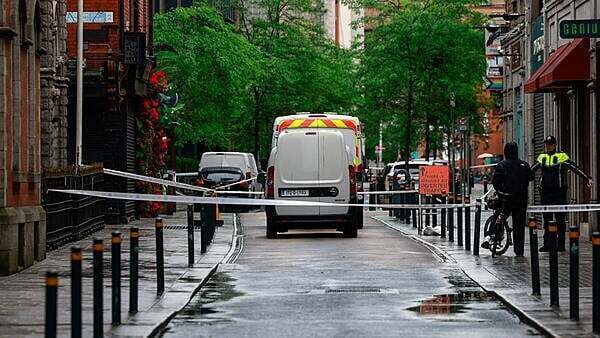
Hogan was commenting after a 21-year-old man, Qayyum Balogun, died following an assault in Dublin city centre in the early hours of Monday morning.
Speaking on RTÉ radio’s Morning Ireland, Hogan called on anyone who had information on the incident to contact the gardaí.
“This is a deeply disturbing incident and one that nobody wants to see occurring on the streets of Dublin. Incidents like these have profound impacts not only on the victim's family but also on the wider communities.”
When asked if he believed Dublin was safe, Hogan said he did, adding that because of the high visibility policing actions and changes that have occurred in recent years, the gardaí were on the scene within minutes.
“The gardai have done the best job that's possible to be done, and they were there within minutes. They were providing assistance shortly after the incident occurred. So I do believe Dublin is a safe city.”
Hogan acknowledged it was difficult to believe that the city was safe when incidents like this occurred.
“When incidents like these occur, we need to be sure to separate the emotional reaction to an incident like this to the overall statistics.
“The overall crime statistics in Dublin is down year on year and Dublin is becoming a much safer city than what it was a number of years ago. And I would commend the gardai for the actions that they've taken to reduce the crime statistics in Dublin.”
The incident will be discussed at the next meeting of the Dublin South East Local Community Safety Partnership (LCSP), of which he is a member.
“We need to understand whether there are any wider lessons to be learned and whether additional measures are needed to improve the safety in the area.
"The LCSP is a meeting with multiple agencies and multiple representatives of the community. And I think that's not necessarily the Garda on their own needs action, but sometimes there might be a multi-pronged approach to tackling this issue.”
It was important not to stigmatise young people because of the actions of a small minority, he added.
“The overwhelming majority of young people in Dublin are law-abiding and make positive contributions in their communities. And it's also important to note that while serious incidents do occur, they remain relatively uncommon and the overall crime trends have been improving in many areas.”
Hogan said the LCSP was a forum where the community could engage with the gardaí and where issues of concern could be flagged.
“One of the things that the LCSP is doing, has trialled in the North Inner City, is community safety wardens.
"It started in 2022 in the North Inner City, and it's basically a proactive and supportive approach to de-escalating events that traditionally lead to crises like this.”
Labour Councillor for Dublin Bay South, Dermot Lacey, Chair of local community safety partnerships, has said that more needs to be done to reduce violence in Dublin city.
“We need to find ways to encourage people to be able to use our city, and it confirms to me that we need to make judges and the courts understand the level of violence in the city and the need to tackle some of the lower levels of violence because lower levels spiral into larger levels of violence,” he told Newstalk Breakfast with Anton Savage.
“In particular, I believe we need to tackle the carrying of knives. I mean, what rights does anybody have to go out on a knife with a knife in their possession? That really needs to be tackled because if you don't carry a knife, you can't use it and I think that the penalty for carrying knives in particular needs to be strengthened.
“It really confuses me the fact that our judiciary don't seem to understand this. I mean, there's a lot of talk about the need for more gardaí and I would welcome more Gardaí on the streets of Dublin, but in my experience, the gardaí do follow up these cases, bring them to courts and the courts don't, and I'm not talking about any individual case here because there's so many of them, the courts don't seem to understand that if you carry a knife, if you go out with the intention of engaging in a fight, if you go out with the intention of robbing something, the impact on another person's life is absolutely devastating and I really need, if we can get any message across today, for me anyway, it is to our judiciary, please understand low-level antisocial crime and murder is not low-level, but carrying a knife, for some people, might be.
“Low-level crime, antisocial behaviour is really serious and if we don't tackle low-level crime, antisocial behaviour, that sort of behaviour will escalate, and things will get worse, and that's what we need to do, we need to tackle them in the courts,” he said.