Crayfish plague confirmed in Dublin as Minister warns: ‘Clean your kit to protect wildlife’
Kenneth Fox
Minister for Nature, Heritage and Biodiversity, Christopher O’Sullivan, is urging people using rivers and lakes to ‘Check, Clean and Dry’ boats and fishing equipment to protect wildlife.
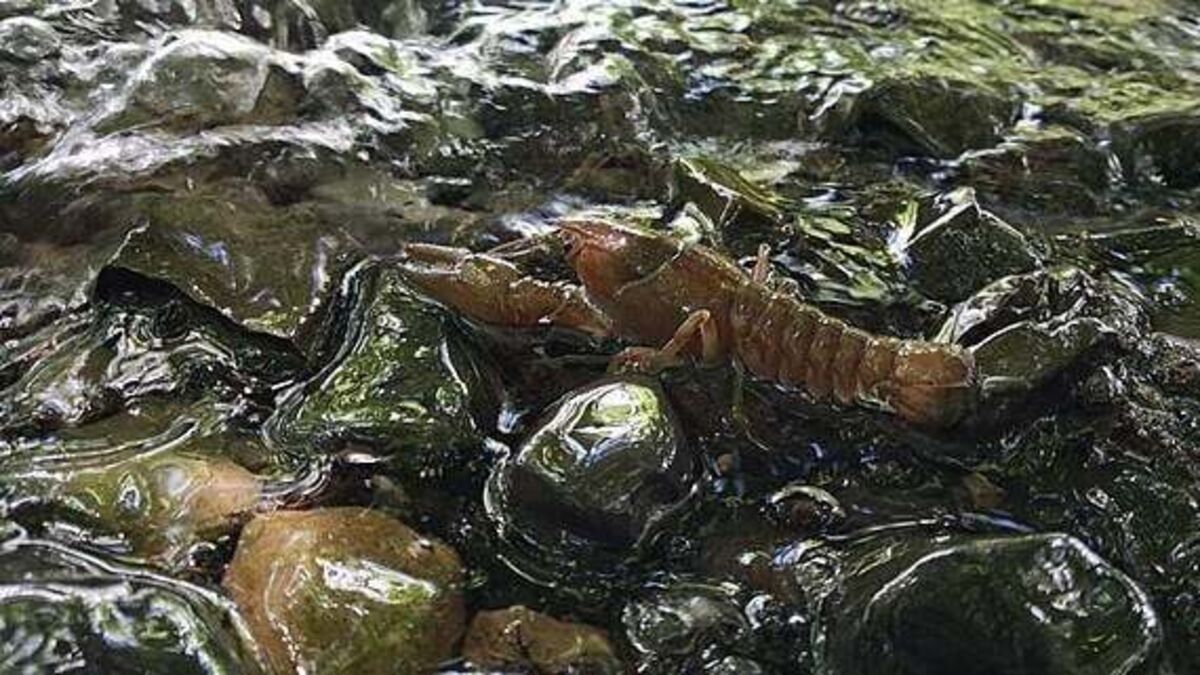
The outbreak of plague is affecting the threatened white-clawed crayfish confirmed at the River Camac in Dublin
Water users are asked to ‘check, clean and dry’ boats and fishing equipment when leaving the river and before entering other waterbodies
This follows recent reports from the Marine Institute confirming the presence of a plague caused by a water mould (fungal-like organism), affecting the native white-clawed crayfish in the River Camac at Corkagh Park, Clondalkin.
White clawed crayfish are a globally threatened species protected under the Wildlife Act and listed on Annex II and Annex V of the Habitats Directive.
They are found in rivers, streams, and lakes around the country. Outbreaks since 2015 have shown that this disease results in the complete elimination of white-clawed crayfish populations in affected waters.
It is not a risk to humans, pets or livestock, but it is difficult to manage and control in affected waters. All users can protect our waterways and wildlife by following the Check, Clean, Dry method.
Minister O’Sullivan said: “Ireland hosts some of the largest surviving populations of the rare, white-clawed crayfish in Europe. This vulnerable species plays an important role in keeping our waterways clean and provides food for wildlife around our rivers and freshwater habitats.”
“This disease outbreak is of great concern as it is within a previously unaffected catchment and is a real threat to Ireland’s only native crayfish species, as it can spread extremely easily to other waters.”
“The National Parks and Wildlife Service is leading efforts and working with stakeholders in the catchment area to understand the impact of this disease and engage with people using the river.
So I’m asking all water users to implement the Check, Clean, Dry principles to help stop it from spreading. Please check, clean, and thoroughly dry all equipment and clothing that comes in contact with the water before entering water again.”
It is not known how the disease spread to the Camac River, but it was likely through contaminated equipment.
The disease can be carried on wet equipment.
The National Parks and Wildlife Service, National Biodiversity Data Centre (NBDC), and other organisations and stakeholders, such as the Marine Institute, South Dublin County Council, Dublin City Council, Local Authorities Water Programme (LAWPRO), Inland Fisheries Ireland, Waterways Ireland, OPW, and Friends of the Camac, are working together to try to manage and contain this outbreak as effectively as possible.
Members of the public who see dead crayfish in the area are asked to inform the NPWS by sending reports to info@npws.gov.ie or by logging records directly to the National Biodiversity Data Centre at www.invasives.ie.