The story of butter... from ancient nomads to festive dinner
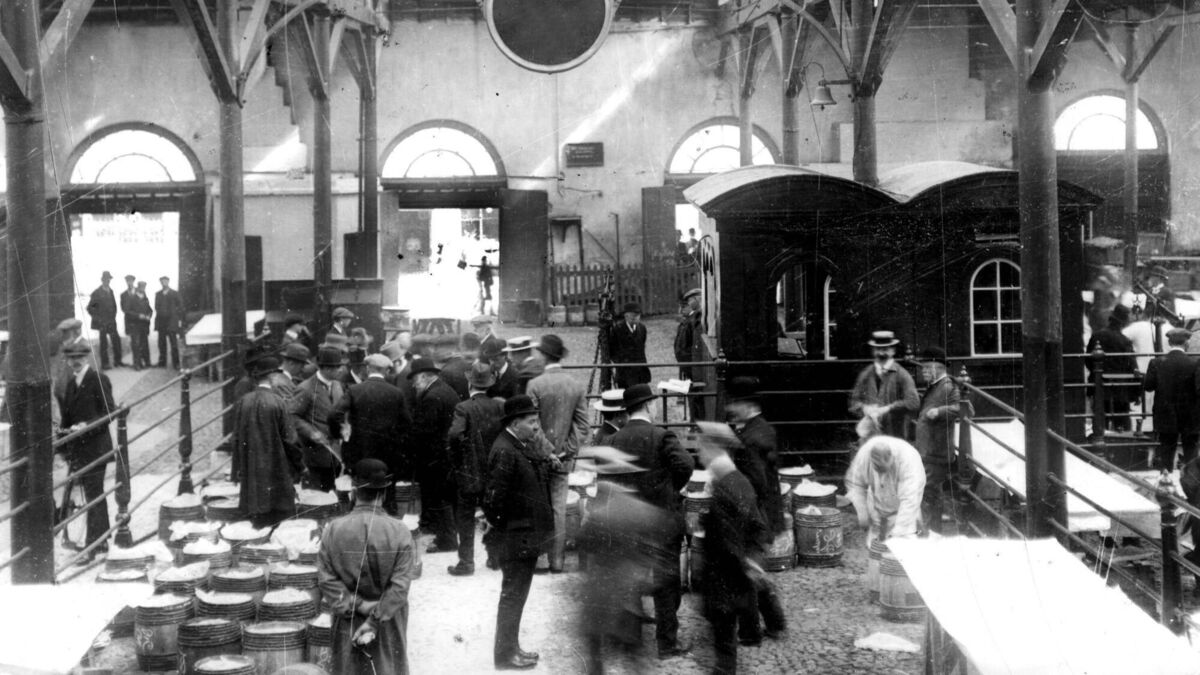
The Old Butter Market in Cork in the 1920s.
There is no doubt that butter is a very significant food; a symbol of goodness, quality and richness. The old television ad for Kerrygold Butter, from the 1980s, shows an over enthusiastic Frenchman asking an attractive Irish girl, “Is there something I can help?”
She keeps Andre interested by suggesting he could, “Put a bit of butter on the spuds.”
Irish butter isn’t just good food, it is an indulgence, part of what forms our relationships – like precious gold or a gift at Christmas.
The tradition of butter making has been around for thousands of years. From Europe to Africa, from South America to Asia, butter has been a staple of many cultures the world over. I have often wondered what was that first person was doing when they created that very first glob of butter. Jojo Frey in an article, (USA, 2014), seems to have the answer and, like most great discoveries, it seems it happened quite by accident.
ButterJournal.com elaborate further on the history of butter in a blog that takes us from earliest times right up to the late Middle Ages. They say that butter is as old as Western civilisation.
Although some of the earliest records of butter consumption come from Roman and Arabian sources, Mediterranean people have always favoured oil in their cooking. Butter, it seems, was the fat of choice for the tribes of northern Europe. Climate played a key role in regional tastes, as the cool weather of northern climes allowed people to store butter for longer.
Here in Ireland, butter was also firmly on the menu, going right back to the days of the first cattle. As well as being the ideal way to preserve the excess milk production of summer, such valuable reserves could be easily stored. Right up to this day, containers of ancient Irish butter are found buried in bogs and are among our most common archaeological finds. It is not known why the butter was buried in this way. It could have been a simple storage place with a cold and constant temperature, it may have been to age the butter or it might even have been an offering to the gods.

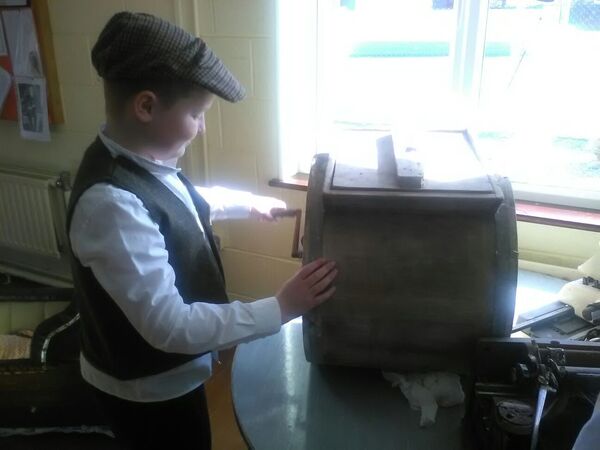
Churning Butter is, of course, made by churning cream. The cream is agitated in a container until the fat solids separated from the liquid, forming butter. In times past, this process was completed by hand and required significant effort and time. The procedure often took up a full day and was generally conducted by the woman of the house, with help from some of her stronger children.
An excellent account of butter making, which take the reader from milking to market, was provided by Mary Small, a teacher in Carnaleck school near Cloonacool, Co Sligo, in the 1938 Schools National Folklore Collection.
Mrs Small goes on to describe the fear that many people had that someone would arrive during the churning to steal the butter. This did not mean literally taking the butter but causing the butter not to form in the usual way. The thief was often described as a witch and the fairies were also prime suspects. All manner of rituals and precautions were performed to avoid such a catastrophe.
If an iron were placed in the fire while a churning was being made, no butter witch could take the butter. The people believed that the iron would burn into the witch’s heart and caused her great suffering and thus prevent her stealing their butter.
Mrs Small also provides us details of how the butter was packed and sold and she refers to the considerable value that was placed on the finished product.
By the 12th century, the butter business was booming across northern Europe. Records show that Scandinavian merchants exported tremendous amounts each year, making the spread a central part of their economy.
In Ireland, butter was so critical to the Irish economy that merchants opened a Butter Exchange in Cork to help regulate the trade. Cork Butter Market was an important part of Cork city for 150 years, from 1770 to 1925. The butter went through a strict process of testing before it was categorised into five types, 'first' being the best and 'bishop' being the worst. This made Cork butter very popular, as the strict quality control meant that people knew exactly what type of butter they were buying.

Today, the brand name most associated with Irish butter is Kerrygold. The brand was created by Sir Anthony (Tony) O’Reilly in 1962, when he was CEO of, what was then called, An Bord Bainne. His vision for the brand was to establish it as a premium brand, highlighting the rich quality of Irish milk. Agriland, is a piece under the heading, (2016), describe the success story since then.
My mother was reared on a farm along the River Moy at the foot of the Ox Mountains. In its time, it was a progressive farm; her father and uncle sharing a real interest in embracing new agricultural trends and maximising profits. Their mainstay was dairying, even though their herd was small by today’s standards.
Despite the presence of a creamery only a few miles down the road, the men decided there was more money to be made from their milk by churning the cream and selling the butter to some of the merchant houses in nearby Tubbercurry. It would seem, from conversations with my mother in later years, that she was the chief cook and battle washer when it came to churning. She had a great knowledge of the process, knowing all the various pieces of equipment as well as knowing the importance of cleanliness and temperature in the process.
No more than the man who made the first butter, I have no idea how my mother figured out that she could churn butter in a washing machine. However, given that I once made an incubator powered by horse manure, I sort of know now how her mind was working.
The machine was a top loader with an auger type gadget at the bottom. From her churning experience as a young girl, she would have deciphered that this gadget would eliminate all the hard work of churning while retaining all the mechanical benefits. Following all the rules of careful preparation, she churned a very acceptable butter in the old washing machine. While I was never gone on the slightly tainted taste of country butter, her butter was gobbled up by neighbours and friends in a matter of days. It seemed to remind them of times past in a way that nothing else quite could.
The celebrity chef Jamie Oliver has a nice Christmas Butter recipe that might give your turkey a traditional twist this holiday season.
“An experiment of mine I’m happy to say really worked out was this flavoured butter. It looks beautiful, gives a delicate sweetness and holds the skin away from the meat so it gets extra crispy as it cooks. This butter is a job for Christmas Eve," he explains.
The ingredients are 1 x 250g pack of butter, 75g dried cranberries, a few sprigs of fresh thyme, four fresh rosemary sprigs, a few sprigs of fresh sage and one clementine.
Here are Jamie's instructions:
The story of butter has come a long way since that hardy nomad joggled the first globules of butter into existence. Despite bad press about its association with supposed health problems, regardless of all its ‘improved’ substitutes and replacements, butter has held it place. For those of us who like the tradition, who still like the taste of real butter, there really is nothing quite like it.
- If you want to read more articles like this, pick up the , available in all local newsagents.