'Adverse weather' will continue until the weekend, ministerial meeting hears
Ellen O'Donoghue and Vivienne Clarke
A meeting of senior ministers, attended by the Taoiseach, Tánaiste, and Minister of State Seán Canney, has heard that "adverse weather" will continue throughout the week and into the weekend.
Minister of State Kevin 'Boxer' Moran informed the meeting that he has asked local authorities to identify interim measures to address the immediate challenges facing communities.
The Minister said 100 flood relief schemes are underway, but interim solutions are required.
Earlier, the National Emergency Co-ordination Group (NECG) and its related subgroups met again to continue to assess the flooding situation and prepare for the risk of further flooding this week.
Dublin, Louth, and Wicklow are under a status yellow rain warning until 9pm on Tuesday night.
Carlow, Kilkenny, Wexford, Cork, and Waterford's yellow rain warning expired at 3pm.
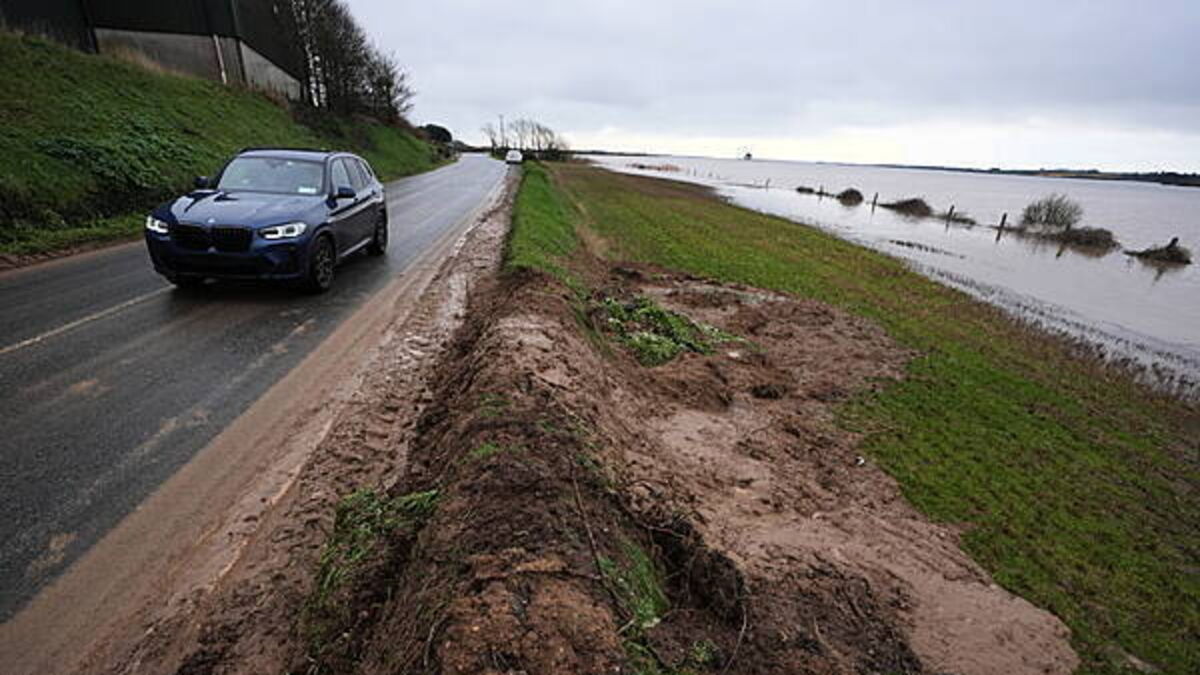
Met Éireann said further heavy rain falling on already saturated ground, combined with high river levels and high tides, will lead to localised flooding, river flooding, and difficult travel conditions.
The NECG said relevant departments, agencies, and local authorities are on alert for difficult conditions over the coming week that may result in flooding in some areas.
They are working to put in place measures to mitigate the impact of further rain, and to ensure readiness to respond to any flooding incidents.
High spring tides over the coming days, combined with strong winds and surge, may cause wave overtopping, coastal and estuary flooding.
Public advice
The NECG is urging the public are urged to be alert for flooding as the situation can change very quickly and even small amounts of rain could result in significant impacts in areas where river levels are high and/or where the ground is already saturated.
People are urged to check their local authority website and social media channels for information on road closures, flooding updates, and community alerts.
Local authorities are carrying out assessments on roads that were affected by the flooding and, in some instances, roads may need to be kept closed due to damage.
Allow for disruption when travelling and plan extra travel time. When driving, reduce speed, expect surface water, debris and poor visibility. Do not bypass ‘Road Closed’ signs or drive through floodwater; turn back and use another route.
Flooding may impact transport services, and the public is advised to check with operators before their journey.
Supports
If you are affected by flooding and in need of help, you should contact your local authority. Out-of-hours emergency numbers operate throughout the weekend. Contact details are available on local authority websites.
There is an Emergency Response Payment is available to provide support to those living in properties directly affected by flooding.
Community Welfare Officers are active on the ground in affected areas to support the humanitarian response. The date for receipt of applications for Stage 1 of the Emergency Response Payment is Wednesday, February 11th, 2026.
Any household affected by severe weather can access this support by contacting the Community Welfare Service on 0818 60 70 80.
An Emergency Humanitarian Flooding Scheme is also open for small businesses and community, voluntary, and sports organisations affected by flooding.
The upper limit for payments under the scheme has been increased from €20,000 to €100,000 for the most impacted premises. Eligibility for the Scheme has also been extended to organisations of up to 50 employees.
Road safety
The Road Safety Authority (RSA) is advising road users to take extra care when using the roads amid the further rain warnings.
Road users in areas affected by the flooding are recommended to check local traffic and weather conditions before setting out on a journey.
The following advice is being given to road users on foot of the current weather warnings:
- Drivers need to slow down and allow a greater braking distance between themselves and the vehicle in front in wet weather conditions. This is especially important on high speed roads such as dual carriageways and motorways where there is increased danger of aquaplaning;
- Take special care when driving behind goods vehicles as they generate a considerable amount of spray which reduces your visibility, hold back to where you can see their mirrors;
- If the road ahead is flooded choose another route, do not attempt to drive through it. Flooded roads that appear shallow could be deeper than you think. The verge may have subsided and there may also be trees or branches that have fallen that may not be visible;
- Do not bypass Road Closed signs – the road ahead is unsafe, the damage may be hidden beneath water, and you may be putting your life at risk. Road users should always follow recommended routes and obey signs closing roads to traffic that have been put there by the local council or An Garda Síochána;
- After going through water, drive slowly with your foot on the brake pedal for a short distance - this helps to dry the brakes;
- Drive with dipped headlights at all times.