Local Notes: Ballyhaunis Class of '95 enjoy reunion

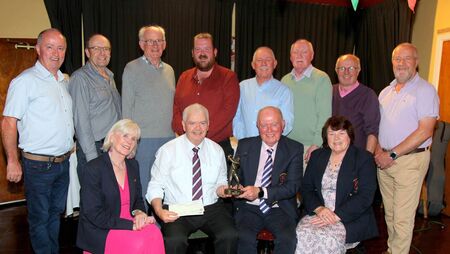
The Class of 1995 from Ballyhaunis Community School held a very successful reunion on December 28th last.
Ballyhaunis along with Lifford in Co Donegal are jointly the second least expensive Eircodes in the country in which to buy a house, according to Central Statistics Office (CSO) data released just before Christmas. The median price of a house in both towns in the 12 months to October 2025 was €170,000.
The cheapest Eircode in the country in the period was Castlerea, with a median house price of €150,000. Underlining the relative affordability of Ballyhaunis properties nationally, the median house price in the period was €381,000 while in Mayo the figure was €226,000.
The most recent data also shows the rate of growth in local property prices in recent years. Only four years ago, in 2022, the median price per property in Ballyhaunis was €125,000.
Significant works have been completed on a new building at the Castlerea Business Park to host postal sorting services, which are set to be moved from Ballyhaunis later this year.
Located near the civic amenity centre, adjacent to a town park and industrial site hosting multinational medical devices firm Harmaq, the new postal sorting centre has been built adjacent to an older postal sorting building. This suggests that the plan to amalgamate the Ballyhaunis operation with Castlerea has been in planning for some time.
Some 13 employees from Ballyhaunis sorting office will join 35 workers already in situ in Castlerea in the new building. Speaking in the Dáil late last year, Sinn Féin Deputy Rose Conway-Walsh decried what she saw as the social and environmental damage engendered by the move.
“Should the relocation proceed, staff would be required to travel 27km each way to Castlerea, resulting in over ten additional vehicles commuting daily,” said Deputy Conway-Walsh. “This would significantly increase carbon emissions, directly contradicting both An Post’s and the national climate action plan’s commitments. Moreover, any electric vehicles based in Castlerea would still have to return to Ballyhaunis to deliver post, adding unnecessary mileage and increasing energy use and operational inefficiency.
“Beyond the environmental concerns, this decision could lead to a loss of an early and efficient postal service for Ballyhaunis businesses, many of which rely on timely deliveries to operate effectively. The knock-on effects would be felt right across the local economy from restaurants and cafés to service stations and shops, all of which depend on daily trade generated by local employment.”
While it operates independently of government, An Post receives €10 million per year from the state to distribute to the national network of post offices (which operate separately from the sorting centres), most of which are run independently by sub-contractors.
The launch of Ireland’s auto enrolment pension system this month is an attempt to put the national pension pot on a more sustainable footing. Growth in incomes, as well as rampant inflation in recent years, have questioned the adequacy of old age pension payments in European nations, even as governments across the European Union (EU) squabble over how to reform state pension payments as populations age.
Amid worries over the long-term viability of public pension systems in ageing western societies, the average state pension paid in Ireland has meanwhile struggled to keep pace with growth in average salaries -and prices – driven in some part by government-mandated increases in minimum wages.
The latest edition of the EU’s Pension Adequacy Report suggests an increasing number of pensioners are at risk of poverty in the EU.
The average pension paid in Ireland is only 39% of the average late-career income whereas the figure in Spain is 77% and in Italy it is 75% while in Germany a pension is worth 49% of the average late-career (aged 50 to 59) income. The average across the EU was 58%. according to research by the EU, based on 2023 data, meaning someone who earned €100,000 between the ages of 50–59 would receive €58,000 in pension income between the ages of 65–74.
Ireland ranks above the EU average in terms of government expenditure on pensions with an average €1,906 spent per pensioner each month versus an EU average of €1,294. The figure in Spain is €1,450 and in Poland it is just €590.
The Pension Adequacy Report shows Ireland pays more than most EU states towards long term care of the elderly, thus cushioning pension incomes of older people.
Government has sought to assuage smaller rural schools that they will remain viable even as shrinking demographics means the population of primary school going children is set to fall over the coming decade.
Primary schools with fewer than 60 pupils will be paid the capitation and the ancillary grants on the basis of having 60 pupils, Minister for Education Hildegarde Naughton announced just before Christmas. Higher rates will also be paid to schools for pupils with special educational needs and Traveller pupils.
The current standard rate of capitation grant is €224 per pupil in primary schools and €386 per student in post-primary schools. The Irish National Teachers Organisation has called for the grant to be raised to €400 per student for schools to remain viable. The Programme for Government pledges the capitation grant will increase to €274 within four years.
A six percent drop in tourist numbers arriving in Ireland in 2025 was perceptible locally, according to Martin Waldron, proprietor of West Craft in Knock.
“We had a good trading year in 2025,” said Waldron whose shop stocks original works by Irish craftspeople. “However, we have seen a change or a shift in tourism trends.
"A lot of our business would be Americans, or British visiting friends and relatives, mainly coming through Ireland West Airport.
"There was a falloff in American trade in 2025, and a more significant drop off in trade from the UK. This I would take as the long-term effect of Brexit and UK spending power.
“However, our business out of the Shrine, repeat customers and increasing local trade has more than compensated for the fall off in international tourism trade.”
Worsening humanitarian conditions in Gaza amid harsh winter weather is a source of great worry to a Ballyhaunis-based native of the city, Salma Alsharqawi.
“As we enter 2026, the humanitarian crisis in Gaza has reached a deeply alarming stage. Now in the third year of a prolonged conflict, Gaza’s 2.1 million residents are no longer focused solely on the prospect of a ceasefire; for many, daily survival has become a struggle against winter conditions, displacement, and the erosion of humanitarian support.”
With most of the city’s population forced to live in tents, the arrival of the harshest days of winter “has brought heavy rains that have flooded displacement camps and turned living areas into muddy, waterlogged ground,” explained Salma, who has family members in the Palestinian enclave which has been largely cut off.
Families shelter on soaked floors, while children endure the cold in tents that offer little real protection from wind or rain. These conditions are not temporary inconveniences, but ongoing realities for a population already exhausted by months of instability.
The political situation remains dangerously stalled as the American government struggles to source the peacekeepers or technocrats to oversee a rebuilding of Gaza promised under last year’s peace deal under which Hamas is to disarm and Israel leave Gaza.
A recent move by Israel to further restrict the operations of major international aid organisations have intensified concerns about widespread deprivation, said Salma.
“Humanitarian agencies have warned that reduced access to food, shelter materials, and basic services could leave civilians increasingly vulnerable to cold, hunger, and preventable illness during the winter months.”
Gaza today is not asking for sympathy, said Salma, “but for accountability and justice - principles long valued by Irish society and reflected in its humanitarian traditions.”
It is a call for dignity amid destruction, and for sustained international engagement that prioritises civilian protection and humanitarian access. As winter deepens, the question facing the international community is whether Gaza will be met with meaningful action, or left to endure another season defined by hardship, neglect, and political inaction.