Traveller caravans ordered to leave the Curragh grounds
High Court Reporters
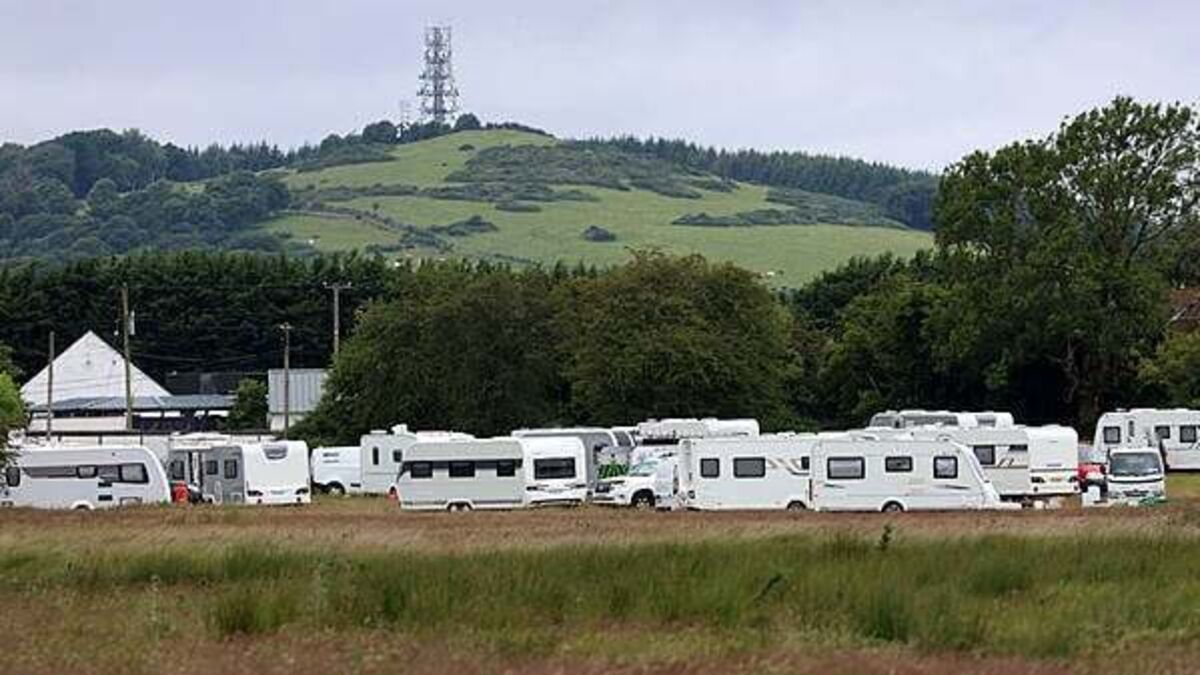
The High Court has made orders that around 70 Travellers’ caravans parked on lands in the Curragh, Co Kildare, should leave immediately.
Some of the caravan dwellers were hostile when security company personnel, accompanied by gardaí and military police, served papers on them notifying them of injunction proceedings brought against them by the Minister for Defence, who owns the land, the court also heard.
The servers "encountered some hostility from some who were refusing to leave and said they would remain there no matter what", Kelley Smith, prosecuting barrister for the minister, told the court.
Thursday's orders were the latest in a number that have been made since Travellers’ caravans began arriving in the last couple of months on the lands which have a number of uses, including related to the racecourse and Defence Force training.
Caravans parking on the land each summer have been a problem for decades because of the interference with those activities as well as the large amount of waste left behind by the caravan dwellers.
Clean-up costs in the past have run into the tens of thousands of Euros and more.
The Travellers come from the UK and Ireland and as far afield as France and Belgium. Some seven caravans from Belgium and France were found on the land this week, the court heard.
A major Mass for Travellers is also held around nearby Monasterevin in June, and this year two marquee tents were erected on the land, the court has also been told.
Judge Cregan noted on Thursday that none of the named and unnamed defendants had appeared before the court to answer the interim non-trespass orders against them.
He said he was satisfied that the order should be made interlocutory, which means it remains in place pending full hearing of the case.
It also gives the minister the option to seek the attachment and committal to prison of anyone who refuses to comply with it.