TDs who brought unsuccessful ‘super junior’ case argue that they are entitled to legal costs
High Court Reporter
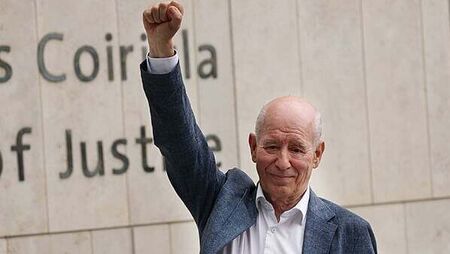
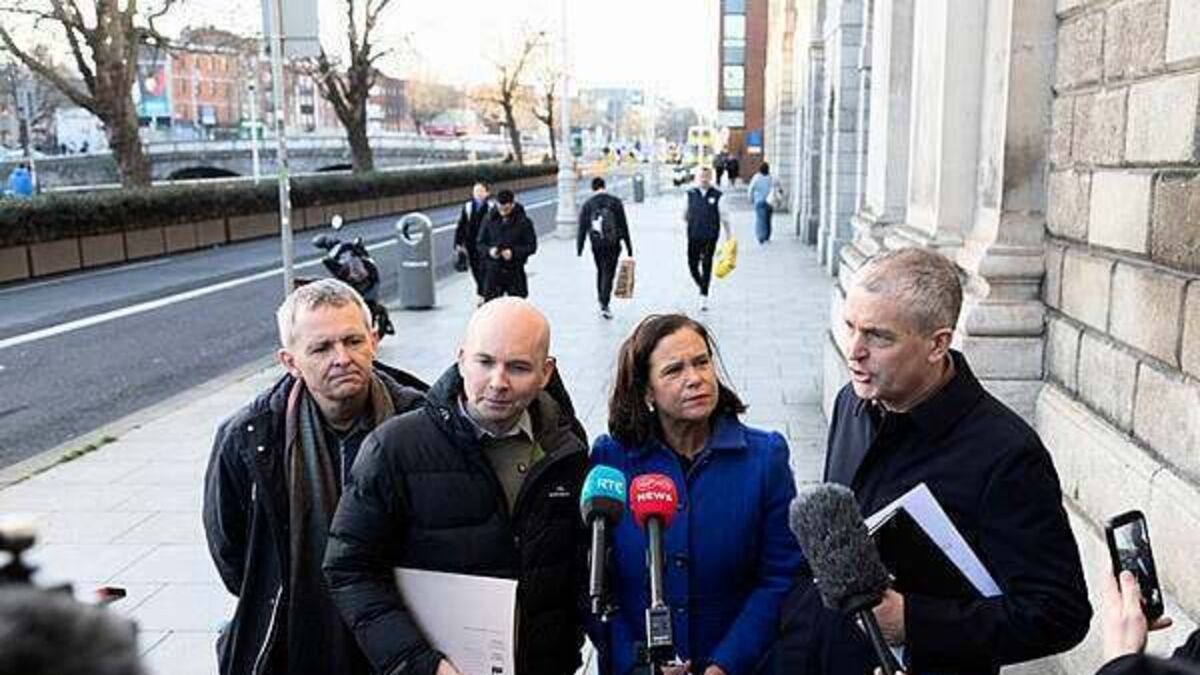
Sinn Féin’s Pa Daly and People Before Profit-Solidarity TD Paul Murphy have argued that they are entitled to legal costs incurred in their unsuccessful High Court challenge to the constitutionality of “super junior” ministers’ attendance at Government meetings.
They submit that their cases raised issues of constitutional and public importance.
The deputies brought separate but similar challenges arguing article 28 of Bunreacht na hÉireann limits the number of government members to 15 and that the attendance of super juniors goes against this.
A three-judge High Court, comprising the court president Judge David Barniville, Judge Siobhán Phelan and Judge Conleth Bradley, in December held that no provision of the Constitution is breached by the attendance and participation of the junior ministers at Cabinet meetings.
It remains open to both TDs to seek permission to appeal the High Court’s judgment.
Ministers of State attending Cabinet (or super junior ministers) are appointed by the Government on the nomination of the Taoiseach.
Super junior ministers participate in Government meetings but do not vote.
On Wednesday, lawyers for the deputies referred to Supreme Court authorities outlining circumstances when the court can depart from the default costs rule – namely, that a successful litigant should be awarded their costs, or “costs follow the event”.
The authorities point to cases when an order for legal costs should not be awarded against an unsuccessful litigant, and when an unsuccessful litigant should be awarded their legal costs.
Certain cases that raise issues of constitutional and public importance are examples of when such orders can be made.
Feichín McDonagh, counsel for Daly, appearing with barristers Brendan Hennessy and John Biggins, and instructed by Rogers Law Solicitors, said his client’s case raised fundamental constitutional issues, and was a case of “conspicuous novelty”.
He said his client had no personal or proprietary interest in the case.
McDonagh said his client’s action fell within the rubric outlined by the Supreme Court relating to instances when the court can depart from the default costs rule.
John Rogers, counsel for Murphy, appearing with barristers Paul Gunning and Molly Higgins and instructed by KM Solicitors, submitted that his client’s case was of “systemic constitutional importance”.
He said the case was concerned with the legal propriety of Government decision making.
“I respectfully submit that nothing could be of higher public importance than a politician seeking direction of the court as to the propriety of Government action, pursuant to the Constitution,” Rogers said.
Rogers said that reading the State’s submissions on the costs issue, one would have the impression that “really there’s nothing in this case”. Counsel said this was a “profoundly” misleading submission, and didn’t “do justice at all to this case”.
Attorney General Rossa Fanning submitted that given the State won both cases comprehensively, the default assumption must be that the State is entitled to its costs.
Fanning accepted that the court has discretion to vary from this assumption, in particular when it comes to public interest litigation.
However, he submitted that the deputies’ cases cannot fall into the “very rare” category that allows for an award of costs in favour of an unsuccessful litigant.
He said it was the State’s position that the court should not depart from the default “costs follow the event” rule.
If the court does decide to depart from this rule, the court should make no order as to costs in the case, the attorney submitted.
The attorney submitted that these were “obviously weak cases”, and said it was very clear there was never any “clear, credible basis” for them. He said it was clear long before the cases came to trial that they were doomed to fail.
He said the court could have regard to the fact that the deputies’ motivation in bringing the cases was “at least in part their own political advantage”.
Barnville said the three-judge court would deliver its ruling on the costs issue at a later date.