Snail-paced justice system exacerbates trauma on families and the accused, Martin says

David Raleigh
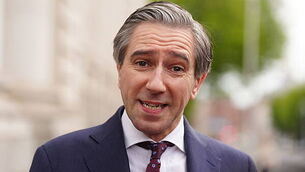
The Taoiseach has said that the criminal justice system, and the length of time it takes for prosecutions to go through the courts, can put extraordinary “pressure” and “trauma” on persons involved, including accused persons.
Micheál Martin was addressing questions from reporters in Limerick, including about the circumstances that led to a Garda National Bureau of Criminal Investigation probe into gardaí in the Limerick Division, in which gardaí were acquitted of criminal charges in one case, had criminal charges withdrawn in another case, and were suspended for six years without being charged with any offence in two other cases.
The Garda Representative Association (GRA) as well as solicitors for the gardaí involved have called for a full public inquiry into the circumstances of why the investigation and prosecution were pursued.
Martin said he supported an internal Garda review of the situation, and he said, that while he did not have the “full background to the entire situation”, he added, “the length of time that all of this takes puts enormous pressures on families and people”.
Martin described the time it takes for the wheels of justice to move and reach a conclusion as being “a real problem”.
“The criminal justice system and the length of time it takes can exacerbate the trauma on people.” The Taoiseach said.
Martin said the situation involving the gardaí that were suspended over six years and who were found to be innocent of any wrongdoing should be reviewed by “Garda management”.
“Issues like this always get reviewed, and we should be reviewing situations like this with existing mechanisms and institutions,” he added.
The Taoiseach indicated today that he did not favour a public inquiry into the matter.
He said: “The Director of Public Prosecutions is independent and politicians cannot interfere in the work of the DPP or its office or indeed in the operational running of An Garda Síochána.”
“I understand fully the concerns and the anger of many people in terms of what transpired (in the GNBCI probe and prosecution) but the courts did acquit and the courts dealt with the situation,” he said.
“We have to be careful about having public inquiries on so many issues. The existing institutions of the State should deal with issues like this.
“Public inquiries take an inordinate length of time, cost an enormous amount of money, and often do not give solace to those who sought them in the first instance, so I think we do have to be focussed on making sure that existing institutions can do whatever reviews people deem necessary at any given time.”
In respect of the GNBCI probe, four serving gardaí and a retired Superintendent were acquitted of charges of perverting the course of justice in respect of being involved in giving alleged preferential treatment to individuals who were facing potential or pending road traffic prosecutions.
Three more gardaí were told this week that after six years of being suspended from the force, the DPP was dropping the charges against them and they were free to return to work.
And, two additional gardaí, who were also suspended for several years without being charged with any offence, were also informed their suspensions too had been lifted and they were free to return to work.
A number of civil litigations for damages have arisen as a consequence of the outcome of the investigation and failed prosecutions.
In total, 130 garda members in the Limerick Division were interviewed as part of the GNBCI probe into alleged unlawful squaring away of traffic offences.
The Garda Representative Association (GRA) said the gardaí involved were suspended and prosecuted for doing their job. It argued this included a Garda’s lawful use of “Garda discretion” a long-standing practice in community policing.
The GRA described the GNBCI investigation and charges against the garda members as a “witch hunt”.
Garda Headquarters has not responded to these claims.
The cost of the GNBCI investigation, as well as the subsequent nine-week trial of five out of the 10 Garda members, estimated to be in the millions of euro, was also criticised by the GRA.
The GRA is to put forward a motion to its delegates, officially calling for a public inquiry, at its annual conference in Westport, Co Mayo, in three weeks time.
The Garda Commissioner and Minister for Justice have each indicated that they do not support the call for a public inquiry. They said a lawful investigation was conducted and that the criminal justice system had taken its course.
Frank Thornton, GRA Representative Limerick Division said: “The Garda Commissioner and the Minster can say what they want but this is not going to go away.”
“We want to know how all this happened, why it happened, who allowed it to happen and who allowed it to continue knowing what it was,” said Thornton.