‘Little Joe’ - a magnificent Mayo man in 1970s’ London
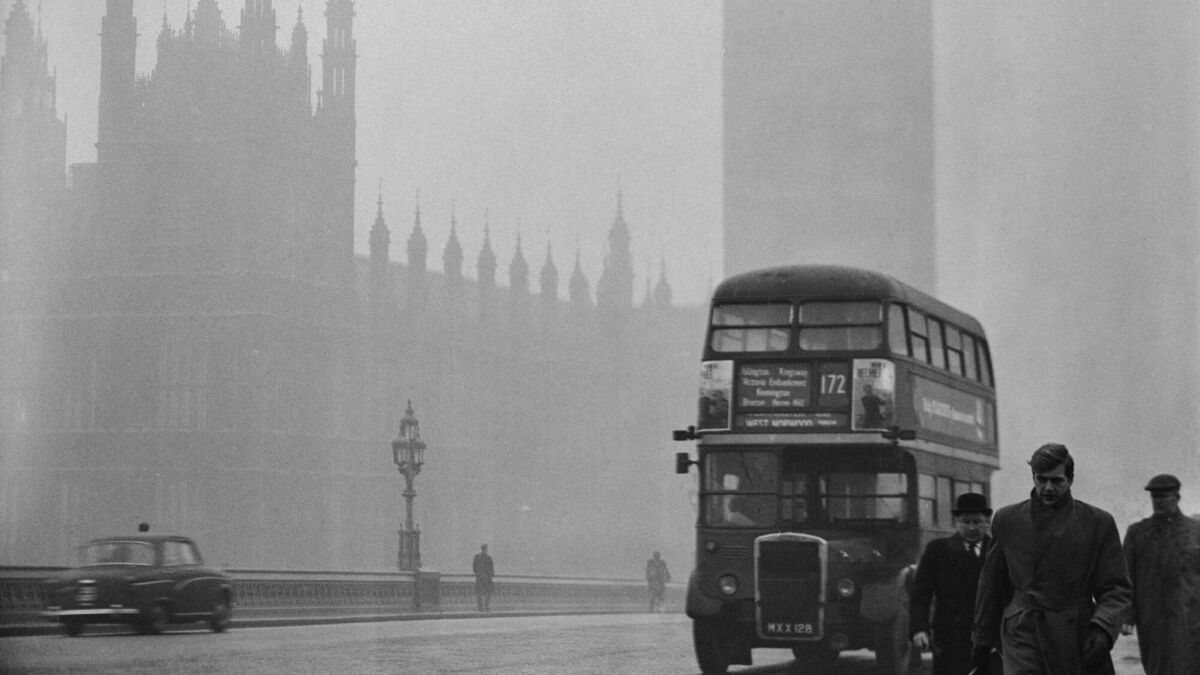
A view of the fogbound Houses of Parliament and 'Big Ben' from Westminster Bridge, London, in January 1970. Picture: Peter King/Fox Photos/Hulton Archive/Getty Images
‘Little Joe’ was a man whose image and countenance filters across my mind quite often. The generous magnificence of that small Mayo man shines like a beacon despite the passing of half a century.
Heroes don’t always appear, charging on white steeds leading armies into great battles. They don’t have to be prodigious warriors immersed in noble struggles to save their tribes. Sometimes they can be quiet and unassuming everyday folk, hardly noticeable in the mainstream of life.
I first got to know little Joe many moons ago in London in the mid-1970s. It is fair to say few people knew him well. I would hazard a guess; very few were actually acquainted with him during his lifetime! I would also reckon few if any now remember the noble son of Swinford existed.
One would not perhaps have occasion to look at little Joe a second time. He was of very slight build. Though balding, grey-haired and ageing, he was nimble on his feet and kept very much to himself. He wore a tidy tweed cloth cap and was generally neat and dapper even in his work setting. He rarely frequented the construction canteen preferring his own privacy with his flask and sandwiches. Unusually for an Irishman I don’t think he ever drank alcohol.
I encountered him during the construction of Ivy Bridge Estate close to Twickenham Stadium, the famous home of English Rugby. It was a huge construction site employing many hundreds of men in the mid-1970s. Mowlem’s were the main contractors and they were one of the largest construction and civil engineering companies in England.
The construction site was a huge one with major tower blocks stretching to the heavens, some lower level blocks of flats and necessary amenities.
That was where I met Little Joe, a fellow Mayoman among many other countrymen and nationalities. For me, from rural Mayo, it was a strange sensation meeting other nationalities. Unbelievably I had rarely if ever seen a person of colour before emigrating to London!
I was employed initially as a carpenter’s labourer and later as a construction ganger whose duties it was to load the various floors of the skyscrapers with all the timbers - studding, skirting, architraves, fire-check doors and materials necessary for first and second fixing carpentry and snagging.
Together with an affable young Indian Sikh man called ‘Lal Singh’, I used the iron-caged hoist to stock up the floors in the various blocks. ‘Delroy’ was a friendly Jamaican fellow whose full-time job was operating the mechanical hoist which ferried up the materials to each level on a particular block. Though highly competent, there was always a pungent odour of “weed” around Delroy. Perhaps he needed a boost to cope with the multiple “up and down” daily dull routines of a lift operative’s life.
After offloading, I often skipped speedily around the stairways, checking the material requirements with the various carpenters on my way back down to the plainer and saw-shed in order to organise another wood delivery.
Little Joe was a permanent fixture on the stairways. He was the most accomplished ‘concrete finisher’ I ever encountered. Before the advent of current power polishing tools, Little Joe with his finishing trowel, mixes and sponges, achieved the smoothest of smooth finishes. There were no “frogs eyes” visible on the concrete surface Joe perfected, but rather a glossy satin-like finish of which Joe was always very proud.
Gradually we got to know each other - surprised that we were “townies” and both from the land of the Yew Tree. Little Joe’s story, though sad, is magnificent, selfless and surely entitled him to an eternal reward in the Golden Boulevard of Paradise.
“I was born near Swinford, myself and my sister was all that was in the family. There was but three years between us. We had a small farm, 24 acres, two cows and rearing a few sucks up to stores and a dozen ewes or so. We kept a few pigs, ducks and hens as well.
“The land was poor, snipe grass and twas hard for my father and mother to make a pound. Money was scarce in those days. My father used to cross over and back for work in the early years. My mother passed away when we were relatively young and I guess that broke the auld man’s heart. He never did a day’s good after.
“He lost interest and he followed her under clay when I was just seventeen. Myself and my sister were left all alone in the world.
“I did alright, I managed fairly well. Four or five years passed, my sister started going out with a local lad, the second son in a decent local family. They had a great grá for each other… I could see that. I wasn’t one for stirring out myself and I began thinking ‘what am I doing here?’ I knew they planned to marry someday... but I had nothing to give them... except maybe, a start in life. My sister was a wonderful girl and he was a fine young fella.
“Quietly I put a few pounds together, hard done in them days. One night I packed my suitcase and left them a note with a few pounds in it and I wished them well. I took the boat over here and I don’t regret it since. I never met anyone, I wasn’t the type, too quiet and within myself I suppose.
“My sister married and they made a great go of the holding at home. I helped as I could. They had three gásurs and a girleen! They are all fairly grown up now, well-educated and the youngest will soon be flying the nest.
“I visit back home every couple of years or so and sure there is a great welcome for me entirely. But I’ll soon retire, my day is almost done and I will soon be for the digging.
“They will bury me in Kilconduff with God’s help.”