Ambitious plan for Mayo's coastal economy
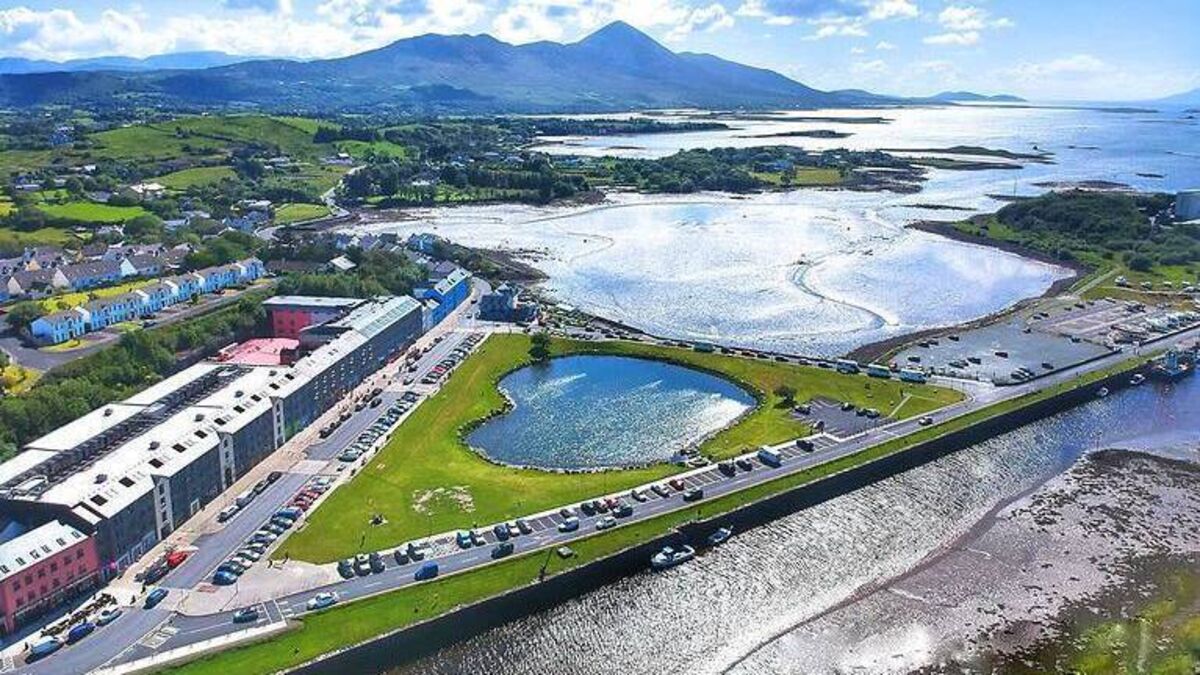
A marina at Westport Quay is one of the more ambitious coastal projects proposed for Mayo in the years ahead.
A stand-out feature of an ambitious new maritime strategy that is designed to put Mayo on the map as a top marine destination is that the many works planned and set to be overseen by Mayo County Council are designed so that the local authority won't be covering the costs involved.
The 32-page draft document, which received the approval of local councillors in the run-up to Christmas, notes that “the strategy is designed to be cost-neutral for Mayo County Council by leveraging existing national and EU funding streams, and stakeholder-led initiatives”. However, the council will “coordinate, govern and facilitate, ensuring strategic alignment and community benefit without requiring direct financial outlay".
Head of Marine with the council, Michael O’Boyle, referred to this financial accounting aspect during his presentation of the draft strategy to council members as he commented that “resources are low and we (Mayo County Council) are not a funding authority".
“It all hinges on influencing government to finance piers and infrastructure, and building up momentum on that," he added.
In other words, while the new strategy documents an exciting list of coastal works and ventures to be carried out, currently there is zero direct funding to back them. What there is however is a host of new government capital programmes set to come on stream following on from initial funding opportunities announced back in 2022 when Bord Iascaigh Mhara (Ireland’s seafood development agency) launched the government’s €25 million Brexit Blue Economy Enterprise Development Scheme, offering grant funding to coastal communities to restructure, reconfigure, retrain and diversify post-Brexit.
That scheme was delivered through the existing Fisheries Local Action Groups (FLAGs) with then Minister for the Marine, Charlie McConalogue, stating: “The Blue Economy is the beating heart of Ireland’s rural coastal communities."
He announced that the funding was on offer for activities around seafood, coastal tourism, boat building and maintenance, marine recreation and renewable energy initiatives.
The new Mayo Marine Strategy targets similar activities for further growth around our coastline, with its planned actions including the promotion of renewable offshore to onshore energy; climate research; marine biotechnology; data infrastructure; supporting wellbeing and livelihoods through initiatives such as Blueway and Greenway expansions, coastal amenity upgrades and local enterprise support for coastal communities.
Strategic specialisation initiatives highlighted include works for Ballina Quay, Westport Quay, a Renewable Energy Precinct, a Local Food to Fork drive, a Digital Harbour at Killala, a Safe Haven at Ballyglass, a Research and Development Hub, a North Mayo Blue Way, an Achill Maritime Forum and an Ireland West Airport project.
Crucially, the strategy stresses the need to first strengthen Mayo’s coastal infrastructure “by means of emerging government capital programmes designed to address critical gaps in infrastructure, ferry access and coastal protection”, with a key starting point here being the announcement last September by Minister for Rural and Community Development and the Gaeltacht Dara Calleary of over €150,000 to prepare a Strategic Assessment Report in relation to the upgrading of Roonagh Pier in Louisburgh.
In a foreword to the Mayo Maritime Strategy 2040 – Five-Year Implementation Plan (2025-2030), Belmullet native and Cathaoirleach of Mayo County Council, Cllr Sean Carey, states: “From the harbours of Ballina and Westport to the islands off the west coast, this plan charts a course for a sustainable Blue Economy that reflects our values and ambitions. What makes this plan truly special is the spirit of collaboration behind it. Communities, businesses, and public bodies across Mayo have come together to shape a shared vision for our maritime future. That spirit of partnership is the key to success and together, we are building a future where Mayo’s relationship with the sea remains strong, respectful and full of promise.”
Council chief executive Kevin Kelly equally recognises the collaborative effort required, stating: “The success of this strategy will depend on partnership. Through the Caibleadh Mhaigh Eo network (stakeholder group to include members of coastal communities, fishing/ ferry/coastal enterprise/academic representatives etc) and in close cooperation with national agencies, local enterprises, academia, and our coastal and island communities, Mayo County Council will act as a convener and enabler.”
At its core therefore, the new Mayo Marine Strategy is very much an aspirational document that highlights a myriad of concrete works and investment programmes that could be carried out around our coastline to optimise its offering. The report itself also provides a valuable record of the many natural assets we are lucky to have along our shores and puts into words the missing links required to join everything together as a functioning Mayo Blue Economy.
Stakeholder involvement in terms of fulfilling the arduous task of laying out the details of specific grant applications for individual projects will be pivotal to the strategy’s success and it will certainly be interesting to look back on this strategy in future years, bearing in mind its stated vision: “By 2040 Mayo will be renowned as a place enriched by the ocean, harnessing the sea locally in unique and innovative ways, driving prosperity and wellbeing, sustained by a valued and pristine natural marine environment.”
- Published as part of the Local Democracy Reporting Scheme.