Murderer died in prison from fatally high level of methadone, inquest hears
Seán McCárthaigh
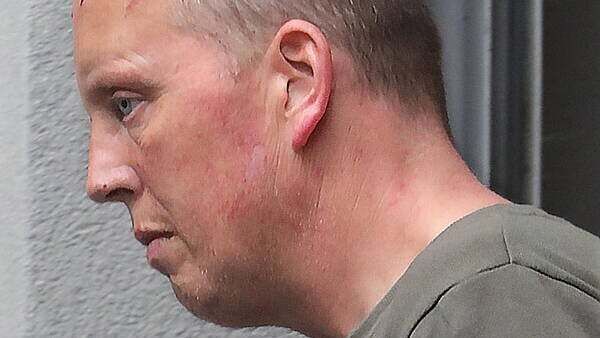
A convicted murderer who collapsed in the shower area of Mountjoy Prison less than five months into his life sentence died from a fatally high level of methadone in his body, an inquest has heard.
Mark Whelan (48), a father of three from Castlecurragh Heath, Mulhuddart, Dublin 15, was pronounced dead at the Mater Misericordiae University Hospital on May 3, 2022, less than two hours after becoming unwell in prison.
An inquest into his death at Dublin District Coroner’s Court on Wednesday heard another prisoner alerted prison staff about Whelan after the deceased had asked him to get medical attention.
The inquest heard the other prisoner had found Whelan “struggling to breathe and grey in the face” in the shower area on Mountjoy’s A1 landing.
The former prisoner told the inquest that he had also noticed Whelan suffering a shortness of breath in the prison yard in the days before his death, but otherwise he appeared “happy and grand.”
Prison staff gave evidence that the alarm about the prisoner’s condition was raised at 2.38pm, with nursing staff arriving to assist him three minutes later.
Prison officer, Aaron Kelly, told the hearing that Whelan’s voice was “panicky”.
He claimed the prisoner was treated for about 40 minutes in the prison before being transferred to Mountjoy.
The inquest heard Whelan suffered a cardiac arrest at 3.31pm and was pronounced dead an hour later, shortly after being brought to the Mater.
Mr Kelly recalled that the deceased regularly refused to avail of exercise in the prison yard, as well as being a heavy smoker.
“He didn’t look the healthiest,” he added.
A prison nurse, Eamonn Kelly, who attended the deceased, said Whelan was “coherent and rational”, but his breathing was getting progressively worse.
Mr Kelly noted that the prisoner’s vital signs were “not great” with a high pulse and low blood pressure.
He said Whelan told him that the inhaler he used to treat his asthma was having no effect, and a decision was taken to give him some oxygen.
In reply to questions from coroner Myra Cullinane, the nurse said the prisoner had shown no signs of a drug overdose. “Absolutely not,” he remarked.
The inquest heard he had been prescribed a number of drugs, including methadone and an antidepressant.
Whelan, who had been in custody since being remanded in April 2019, had his methadone dose increased over a four-month period to 70ml daily while in Cloverhill Prison.
The inquest heard the same level was maintained when he was transferred to Mountjoy after his murder conviction.
State pathologist, Linda Mulligan, said the results of a postmortem on the deceased showed he died from “acute methadone toxicity” with heart disease and acute pneumonia as contributory factors.
Prof Mulligan said the level of methadone in Whelan’s body was “within the fatal range” even for someone who might have developed a tolerance for the drug.
She observed that the level of methadone could have built up due to other underlying medical conditions of the deceased.
Dr Cullinane reminded a jury of five women and one man that there was no evidence that the prisoner had taken any more methadone other than his normal daily dose.
The jury recorded a verdict of death by misadventure and recommended that all prisoners enrolled on a methadone programme should be assessed for pre-existing medical conditions.
Offering her condolences to the deceased’s relatives, the coroner said she would convey the jury’s recommendation to the Irish Prison Service.
In December 2021, Whelan was sentenced to life in prison for the murder of his daughter’s partner, Noel “Noelie” Whelan (22), in his home in Castlecurragh Heath on March 30, 2019, following a jury trial at the Central Criminal Court.
The court heard that Whelan was “high on a cocktail of drugs” when he stabbed his victim 18 times.
The trial judge, Ms Justice Tara Burns, said the case clearly highlighted the danger of drugs where “a gentle giant can turn into a demonic murdering hulk.”
The court heard evidence that Whelan left the scene topless and covered in blood and went to the nearby home of a brother-in-law before going to Finglas Garda station where he said. “I shouldn’t have done that. It’s me you want.”
The director of the Central Mental Hospital testified that he had found that Whelan had no mental health disorder.
However, it was accepted that the accused had experienced a drug-induced psychotic episode at the time of the offence.
In a victim impact statement, Whelan’s daughter, Sharon, who was pregnant at the time her partner was killed, accused her father of running her life and claimed his victim would never get to see or hold their daughter.
The court heard Whelan had one previous conviction for larceny from 1995.
Meanwhile, the Irish Prison Service did not accept a recommendation made by the State’s prison watchdog following an investigation into Whelan’s death that contact should be made with a prisoner’s next-of-kin on committal or as soon as possible thereafter to obtain their consent to be recorded as a family contact and to check their details.
The IPS told the Office of the Inspector of Prisons that such a measure would impose “an inordinate administrative burden” on the organisation.
It also pointed out that such a procedure “would not be considered common practice across the public sector.”
The recommendation arose after OIP inspectors heard nobody was living in the recorded address for Whelan’s next-of-kin when a chaplain called to the property to notify them of the prisoner’s death.
The IPS said it would consider another recommendation by the OIP to streamline procedures for allowing nominated next-of-kin to easily update their contact details.