Ireland’s donor conception laws leave families in legal limbo, campaigner says
By Bairbre Holmes, Press Association
A woman’s one-year-old son is among “thousands” stuck in a legal limbo because of Ireland’s laws around donor conception, the campaigner says.
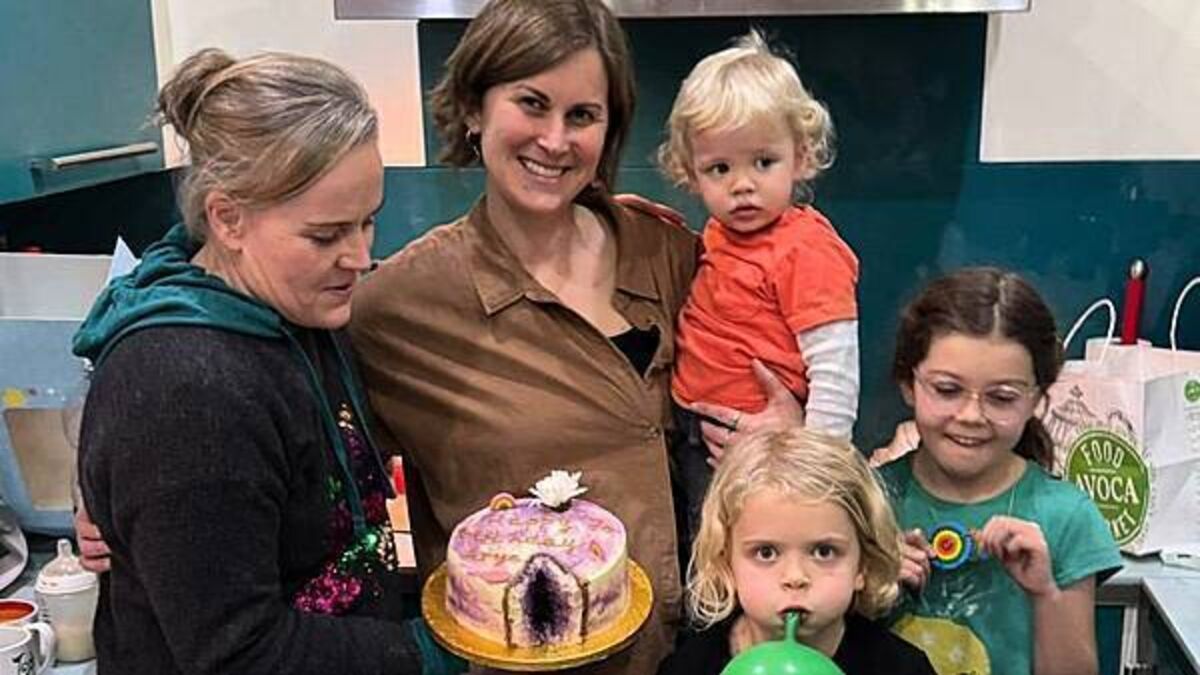
Baby Ali was born through a process known as reciprocal IVF, during which Ranae Von Meding, 38, became pregnant with an embryo created using an egg from her wife Audrey and donor sperm.
But, because this process was done abroad, only Ms Von Meding can be registered on his birth certificate.
She says it has led to a bizarre situation where she says: “If I walked out there today and got hit by a car, he would be orphaned,” despite his biological mother, who has raised him, still being alive.

On a day-to-day level, it also means her wife cannot undertake some of the practical tasks of parenting, such as making medical decisions or enrolling her child in school.
The couple have been campaigning for better protection for their children for almost a decade.
It led to Ms Von Meding co-founding advocacy group Equality for Children, and she was named LGBTQ+ Person of the Year at the 2024 GALAS awards for her work.
Together for 17 years, the couple were married and had their first child, Eva, in 2016, months after the landmark referendum legalising same-sex marriage.
They assumed their marriage would afford them the same parental rights as a married heterosexual couple, but discovered only a mother and father could be recognised as the legal parents of a child through birth.
She said the experience of trying to register Eva’s birth was “devastating and soul-crushing”, describing it as “one of the worst days of our lives”.
Legislation was commenced in 2020, which meant some same-sex couples could be registered as parents through birth, but Ms Von Meding says it “fell short of what our community needed, in that it would only cover a small percentage of queer families”.
An “amnesty” in the legislation meant she and her wife could finally both be registered as legal parents of their first two children Eva, nine, and Arya, seven.

But despite this legislation retrospectively covering the two girls, it did not allow for children who were later born through donor conception abroad to be registered as their own.
She says her son is “genetically identical to his siblings and born into the same happily married family unit” but “because of a technicality” is “treated differently from his older sisters”.
Now they are waiting for The Health (Assisted Human Reproduction) Act 2024, which was signed into law in July 2024, to come into force.
She says families are “again” in a situation where legislation exists, but it has yet to come into force so no one can benefit from its provisions.
However, as it stands, she says that legislation also “leaves a lot of people out”, including her family, as “it doesn’t include same-sex female couples who use international clinics or who have their children abroad”.
The Department of Health said while the Bill was progressing through the Oireachtas, “issues were identified”.
In October 2024, the Government approved drafting of an amending Bill to address these issues and they say that is at an “advanced stage”.
They say the Bill’s provisions will “apply equally” irrespective of whether the parents are a same-sex couple or an opposite-sex couple, or a single parent.
In October, a report by the Joint Committee on Health found “the journey towards robust legislation” in this area has been “a long and winding one spanning over a quarter of a century”.
It recommends “in cases of international donor-assisted human reproduction, the Bill must provide a mechanism for second parents to have their parentage recognised”.
In a debate on the matter on December 18th, TDs expressed their frustration with delays, with the committee chairman criticising the a lack of a “clear timeline from the minister of state”.

Until the legislation is published families such as Ms Von Mending’s, who have accessed fertility treatment abroad will not know if it will resolve their situation.
She says many people use clinics abroad for “myriad reasons” – when she and her wife wanted to start their family in Ireland reciprocal IVF was not available in Ireland.
Now that it is, she says many continue to choose fertility treatment abroad because of cost, as same-sex couples are still excluded from the HSE’s free Assisted Human Reproduction service.
Others have started undergoing fertility treatment when living abroad, and later returned to Ireland.