Government working on ’round of grants’ for specific businesses, Minister says
By Cillian Sherlock, Press Association
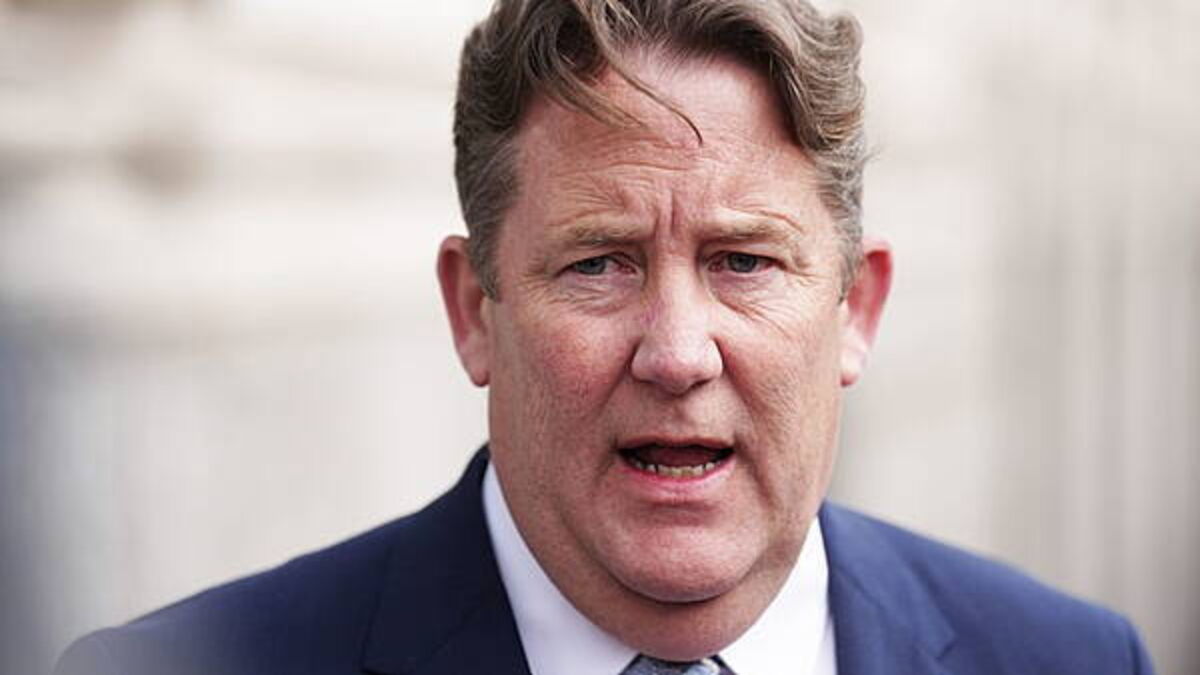
The Government is working on a “specific round of grants for targeted businesses” amid energy price pressures, Minister Darragh O’Brien has said.
Mr O’Brien said the grants would be on the “energy side and the energy retrofitting side”, as he said other measures relating to the operation of plant equipment on construction sites were “being worked through right now”.
The Energy Minister said the financial allocation of the plant equipment measures had not yet been decided, but said the construction sector would benefit from many elements of €220 million in support schemes announced at Government Buildings on Wednesday.
Meanwhile, Tánaiste and Finance Minister Simon Harris has said the Government is “going to be able to do more in the Budget” to assist people – but added he was not “fixating” on what tax to reduce.
Harris said the Government is going to look at “how we can help people with tax” and “through public-sector pay talks too”.

While saying interventions cannot be made every single week, he said social welfare measures could not be the only answer to the cost-of-living crisis.
“There will be a personal income tax package. The composition of it – what you do with the USC, what you do on thresholds, what you do with rates, what you do on tax credits – they’re all, as you’d expect, a matter for proper to detailed discussion across Government.”
Asked about pressure to introduce further universal energy credits, the Tanaiste said it would be “foolish and arrogant” for the Government to rule out anything “right now”.
Speaking to Newstalk, Harris also doubled down on floating possible one-off payments for switches to electric vehicles and heat pump adoption.
He said he had asked the economics team in his department to look at “what policy levels are at our disposal”.
Pressed on whether floating the measure slowed down adoption of EVs and heat pumps, Harris said: “No, I don’t believe so.”

Asked if the Tánaiste had spoken to him in advance of first proposing the measure, O’Brien said: “All of us will look at other things that we can do to accelerate electrification and retrofitting.”
He added: “We discussed this regularly at Cabinet committee on Infrastructure and our climate Cabinet committee.”
O’Brien denied he was under pressure to implement the proposals – stating there had already been “a substantial increase” in EV registrations so far this year, adding that he had been working on “potentially other measures” for those in rural areas.
On heat pumps, he said grant amounts had already grown since March 1st – with an increase in applications.
O’Brien was speaking as he announced details of schemes which form part of the wider package announced for affected industries following protests earlier this month which strangled the distribution of fuel across the country.
The €120 million Road Transporters Support Scheme (RTSS) for hauliers as well as bus and coach operators will initially apply for March 2026, with further payments for April and May depending on average diesel prices exceeding €1.99.
O’Brien said average payment for the haulage sector over those months would be around €14,000.

Applications can be made through an online portal, expected to open in May.
The €100 million Fuel Support Scheme for farmers, agricultural contractors and fishers will cover the months of March up to the end of July and is an income support scheme aimed at those most impacted by the sudden increase in the cost of Market Gas Oil (MGO), also known as green diesel.
Farmers and agricultural contractors will benefit from a support rate equivalent to approximately 20c per litre or €200 per 1,000 litres of green diesel on verified fuel usage in 2025.
Under the scheme there will be one payment per applicant to cover a full five-month period rather than monthly payments.
Agriculture Minister Martin Heydon said a fuel support scheme for fishers and aquaculture will be operated separately by Bord Iascaigh Mhara on behalf of his department, with a view to opening in May.
The schemes come on top of a reduction in excise rates for fuel, the National Oil Reserves Agency levy, and the increased rate allowed under the Diesel Rebate Scheme.
The Government also launched a communications campaign designed to support householders and businesses to manage their energy costs – similar to a strategy following the energy shocks arising out of Russia’s invasion of Ukraine.
O’Brien said: “What the campaign will do is provide specific examples to people about how they can reduce energy, about when they should use energy, about looking not to use energy where they can at peak times – particularly between 5pm and 7pm and looking at off-peak hours to use things.
“I think this is known by many people.”
O’Brien said the campaign will also highlight supports available to people, including through retrofitting and solar PV grants.