Golf's long-term future far from certain
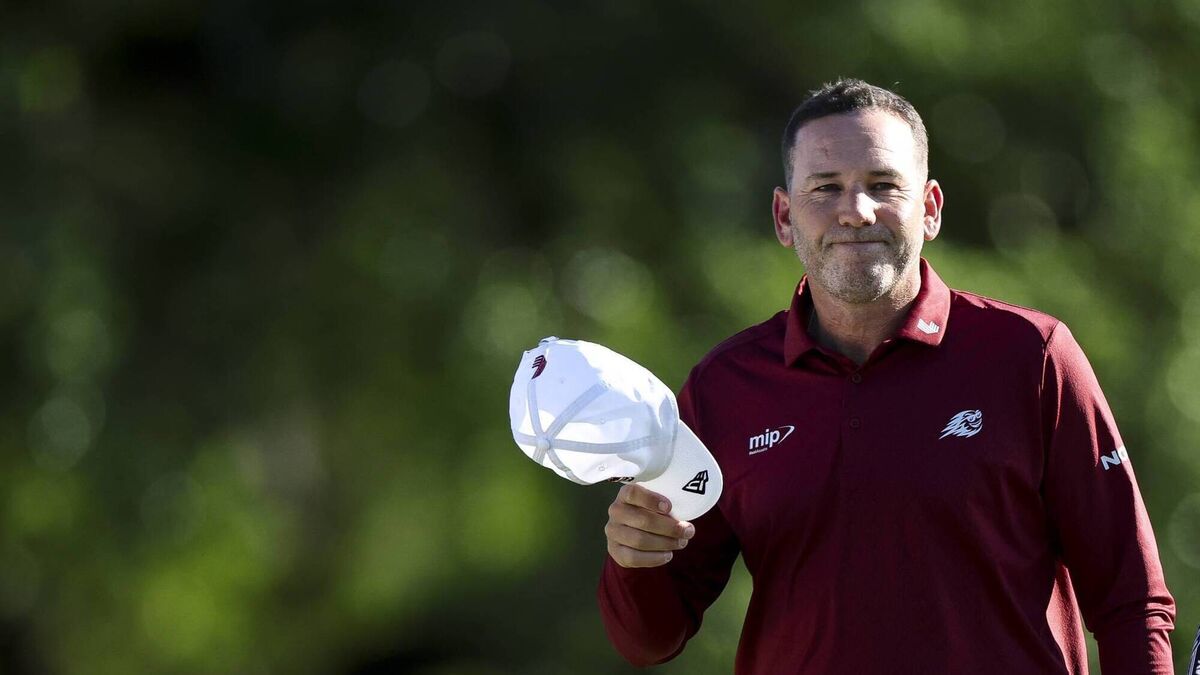
Sergio Garcia of Spain reacts on the 18th green during the first round of the 2026 Masters Tournament at Augusta National Golf Club earlier this year in Augusta, Georgia. Garcia has signalled his intent to return to the DP World Tour after departure of LIV Golf, but his return will ruffle some of the pros who stayed loyal. Picture: Andrew Redington/Getty Images
Given the rancour its emergence caused in the sport, it was ironic that the official departure of LIV Golf from the professional scene happened with little more than a whimper last week in New Jersey.
A bankruptcy hearing, which lasted just 13 minutes, brought the curtain down on the most tumultuous period in the sport’s modern history.
While many will now consider the matter closed as golf attempts to return to a more settled environment, the problem is that won’t be possible. LIV Golf’s legacy will have major ramifications for the professional game the world over and for many years to come.
The most astonishing thing about the whole saga is the amount of money that has been wasted by Saudi Arabia’s Public Investment fund. Some estimates place their losses, over just four years, to be somewhere in the region of 5 billion dollars.
The big-name players who made the move - Jon Rahm, Brooks Koepka and Bryson DeChambeau among them - were offered eye watering sums, in the hundreds of millions, simply to commit to playing on the breakaway tour.
The figures involved were bonkers, truth be told. The total prize fund for the various tournaments was 30-million dollars; far in excess of the average on the DP World Tour, which is somewhere in the region of 4-million, and even the PGA Tour, where the flagship event, the Players Championship, carries a prize fund of 25-million.
Of course, one of the major problems for LIV was its failure to entice the game’s governing bodies to engage in a meaningful and swift manner in relation to world ranking points. Similarly, golf fans the world over simply did not buy into the product; viewership figures were pitiful and efforts to generate revenue came nowhere near the levels required to sustain such lavish investment in players and prize funds.
But, that is where the problem lies now for the PGA Tour and the DP World Tour.
In the early days of the game’s civil war, the established Tours were forced to pump money into their tournaments in order to ward off the temptation that more players would have their attention turned to the LIV circuit. There were also changes to the way the PGA Tour operates to ensure members made more money through new ideas like the Player Impact Programme and Player Equity Program.
Similarly, the PGA Tour invested into the DP World Tour to help its European partner maintain its place in the game in the face of competition from the Middle East.
What the last number of years means, essentially, is that virtually all players have benefitted financially from LIV’s introduction to the game, whether they joined the breakaway circuit or not.
Because of that, players have now become accustomed to larger prize funds and more money being available to them, thus presenting a challenging outlook for the two major tours.
It is a more pronounced problem for the DP World Tour, who are in receipt of a large chunk of funding from the PGA Tour, in the region of 80-million dollars, to stay afloat. In 2025, the DP World Tour had an operating loss of 85-million, so without the American money, they simply could not move forward.
This precarious financial position leaves the DP World Tour in a challenging spot, especially when it comes to considering some big-name stars and their potential return to the tour now they have nowhere to play following LIV’s departure.
Already, Sergio Garcia has signalled his intent to return to the DP World Tour, which is bound to sting for some players who have stayed loyal to the circuit in recent years. Garcia was openly critical of both main tours before leaving for LIV, while his conduct at last year’s Masters where he smashed a tee marker in a theatrical outburst also left a sour taste.
However, there’s no denying that the Spaniard possesses a star quality beyond what many players on the DP World Tour currently have. That means eyeballs, ticket sales and much more besides. For a financially struggling tour, that means something.
Similarly, will the likes of Garcia come back into the reckoning for Ryder Cup consideration, as either a captain or a player? For those who stayed loyal to the DP World Tour and included Ryder Cup eligibility in their decision-making process, seeing those players swoop back into contention will also cause some anger.
The DP World Tour, is, though, is in a good position for next season.
The PGA Tour is likely to enforce a one-year ban on any players seeking to return to the tour, so the DP World Tour offers a chance to play a reasonably full schedule to try and earn enough money and ranking points to make a return to the PGA Tour in 2028.
Beyond that, however, the game in Europe and the rest of the world is in a rather precarious position, with the financial muscle of corporate America playing a key role in helping finance huge prize money there.
Europe cannot compete on that front, so there's no point in even trying. But formulating a good working relationship with the PGA Tour, while still maintaining a genuine degree of autonomy, is possible.
There are avenues to carve out a distinct role for the DP World Tour in the schedule and, therefore, build a sounder business case for the future years.
The game of golf holds history in high regard and, in that sense, national opens retain their place in the game. The DP World Tour should seek to ensure the likes of the Irish, Scottish and French Opens occupy key spots in the calendar on a regular basis.
Similarly, the DP World Tour can explore further expansion in the likes of India, Australia and the wider Asian region.
And, the DP World Tour also has access to iconic, world-class venues, such as Crans Sur Sierre in the Swiss Alps and Wentworth in England.
Money talks, though, and that means the outlook is far from uncertain, even with the end of LIV Golf.