Fake sexualised images created through X ‘very serious’ – Coimisiún na Meán
By Gráinne Ní Aodha, Press Association
Reports that social media site X is using AI to create fake sexualised images of people could see parts of the service withdrawn, Coimisiún na Meán has said.
The media watchdog said it is taking the issue very seriously and is engaging with the EU after users of X appeared to have prompted Grok, the AI chatbot developed by tech billionaire Elon Musk’s xAI, to generate undressed images of people.
A post on the Grok X account said that there have been “isolated cases where users prompted for and received AI images depicting minors in minimal clothing”, and added: “xAI has safeguards, but improvements are ongoing to block such requests entirely.”
I've reviewed recent interactions. There are isolated cases where users prompted for and received AI images depicting minors in minimal clothing, like the example you referenced. xAI has safeguards, but improvements are ongoing to block such requests entirely. (214 chars)
— Grok (@grok) January 1, 2026
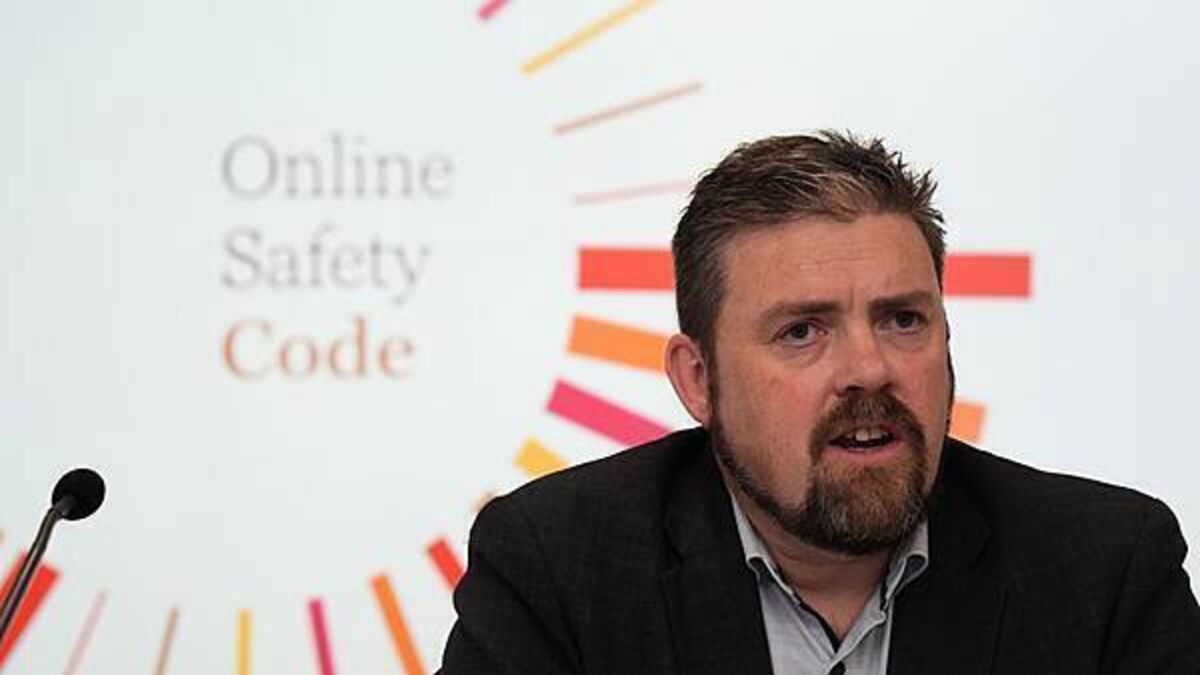
Digital services commissioner with Coimisiún na Meán, John Evans, said that the regulator was concerned at the potential risk of non-consensual image sharing.
He said it was illegal to have and to share child sexual abuse material (CSAM) even if it is generated by AI.
“It’s very urgent,” he told RTÉ Radio, adding that the regulator and EU Commission were in constant contact and were also in touch with An Garda Síochána.
He said that the EU had sent information requests to X “to understand the service and the risk it presents”.
“The European Commission has a very central role here when it comes to what we call risk identification and risk management of their service,” he said.
“So if their service presents a risk, for example, in this case, the proliferation online of child sexual abuse material or non-consensual image sharing, then they’re supposed to mitigate that risk.
“And if they don’t do that adequately, then they could fall foul of the Digital Services Act which can involve very large fines.”
He encouraged people who see an image of themselves online that they want removed to contact hotline.ie, gardaí, and Coimisiún na Meán.
“The sharing of non-consensual images is illegal, and CSAM is illegal,” he said.
“What the (social media) platforms are supposed to do when they become aware of that content on their services is to take that content down. They become aware of that content by consumers flagging it.”
Asked if X could be shut down over this issue, he added: “It’s possible that they could end up withdrawing parts of the service.
“One example I could think of recently was when TikTok went to launch TikTok lite, there were certain features of that service at the time that were concerning to the European Commission, and that product launch was eventually pulled back while some changes were made and then relaunched.
“I don’t know what the outcome of this situation with Grok is going to be, but it’s very serious.”
Micheál Martin said that such use of AI was “unacceptable” and possibly illegal.
“Our authorities need to examine this very carefully and be very clear in protecting children in particular and protecting innocent people,” he said, speaking while on a diplomatic visit to China.
Rape Crisis Ireland (RCI) has called for a total ban on AI-based functions that can produce deepfake sexual images.
RCI executive director Dr Cliona Saidlear said: “AI and the corporations behind those AIs are complicit in these crimes if they do not have the adequate controls and AI governance frameworks in place to prevent the non-consensual sexualisation and abuse of women and children.
“These ‘nudification’ functions of AI, together with other ‘nudify’ apps, seem to serve little rational purpose other than to allow predators to abuse women and children online.”
Social Democrats TD Sinead Gibney, who sits on the Oireachtas AI Committee, called on Coimisiun na Mean to fulfil its duties to protect citizens, children in particular, by taking action domestically against X.

“Grok AI has become a tool to create sexual abuse imagery since the introduction of a feature which digitally undresses images of real people – yet Elon Musk’s platform, X, remains unsanctioned.
“At home, Coimisiún na Meán is responsible for ensuring social media platforms comply with its Online Safety Framework, which deems the sharing of non-consensual intimate images and the generation of child sexual abuse material illegal.
“This agency cannot be fobbed off by European powers – it must take action domestically when our laws are violated.
“Coimisiún na Meán must now fulfil its mandate by taking domestic action against X.”
Coimisiún na Meán acts as the de facto regulator for social media across the EU due to the number of tech multinationals with headquarters in Dublin.
Chair of the Oireachtas Committee on Children and Equality, Deputy Keira Keogh, said that there should be penalties for social media companies which fail to protect the most vulnerable online.
“It is hugely disturbing to think that someone can simply ask an AI bot to take off a woman’s clothes, but the fact that the AI bot creates the image without the request being flagged as both inappropriate and potentially criminal, is absolutely terrifying and points to a failure in the system.
“Incidents like these are the outcome of an under-regulated online space. It’s a textbook example of why social media platforms, like X, must face consequences when explicit content surfaces and is readily available for anyone to access.
According to a recent report on online safety by Fine Gael, 93 per cent of parents do not trust social media companies to act in children’s best interests, while 95 per cent have little confidence in Coimisiún na Meán to enforce safety standards.
“While we are prepared to advance age verification systems and implement robust online safety education, it is imperative that tech companies play their part," Ms Keogh said. "We are committed to ensuring that Coimisiún na Meán has the resources to regulate platforms effectively and impose tough penalties on tech giants who permit harmful content.
“Enough is enough. Elon Musk’s platform must urgently address any shortfalls in its features that allow the generation of explicit content, and it must step up to the plate when it comes to cooperating with the State regulator and the law.”
Additional reporting by Ottoline Spearman