Explained: How to make a St Brigid's cross from rushes
Eva Osborne
Something many of us will remember from primary school - the making of St Brigid's crosses is a lasting tradition.
Perhaps the most painstaking part of manufacturing the crosses lies not in their making at all, but in trying to source quality rushes.
For those living in urban areas, this may be difficult. A journey out to the countryside may be required.
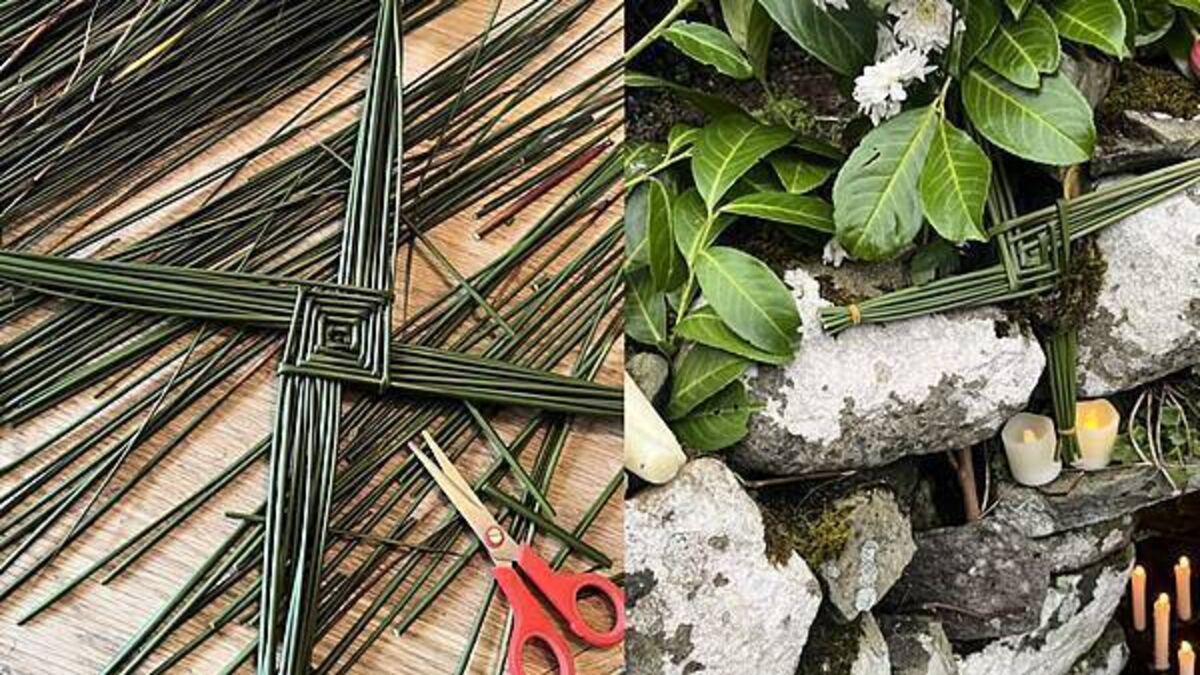
Once you have acquired your rushes, you need to lay a solid foundation for your cross.
For me, this means placing one rush horizontally, then bending a second rush over it to form a 'V' or 'T' shape, and keeping them in place with my thumb in the centre.
To start the weaving process, continue adding rushes, bending each new rush over the previous one, and rotating the entire cross 90 degrees clockwise after each addition.
This creates a central, tight diamond shape.
I keep a tight hold of the centre of the cross, keeping the place where each rush is bent firmly in place, to ensure that the middle of the cross stays tight and does not fall apart.
Continue weaving until you have a strong cross, with at least eight or nine rush ends on each arm of the cross.
Tie each end with elastic bands or string and snip the ends of the rushes to make them all the same length.
You should have the perfect St Brigid's cross then, at least this method has never failed me.
If you want to go the whole way, take your cross to one of the many St Brigid's wells across the country to get it blessed by its holy water.
Hang it up in your home and make another if you have any animal sheds. The crosses are believed to invoke St Brigid's protection against fire, evil, and disease, with new crosses traditionally replacing old ones.
If you still need help, here's a handy tutorial!